
KidTech and toys on the road: analog where you can, screens where you must
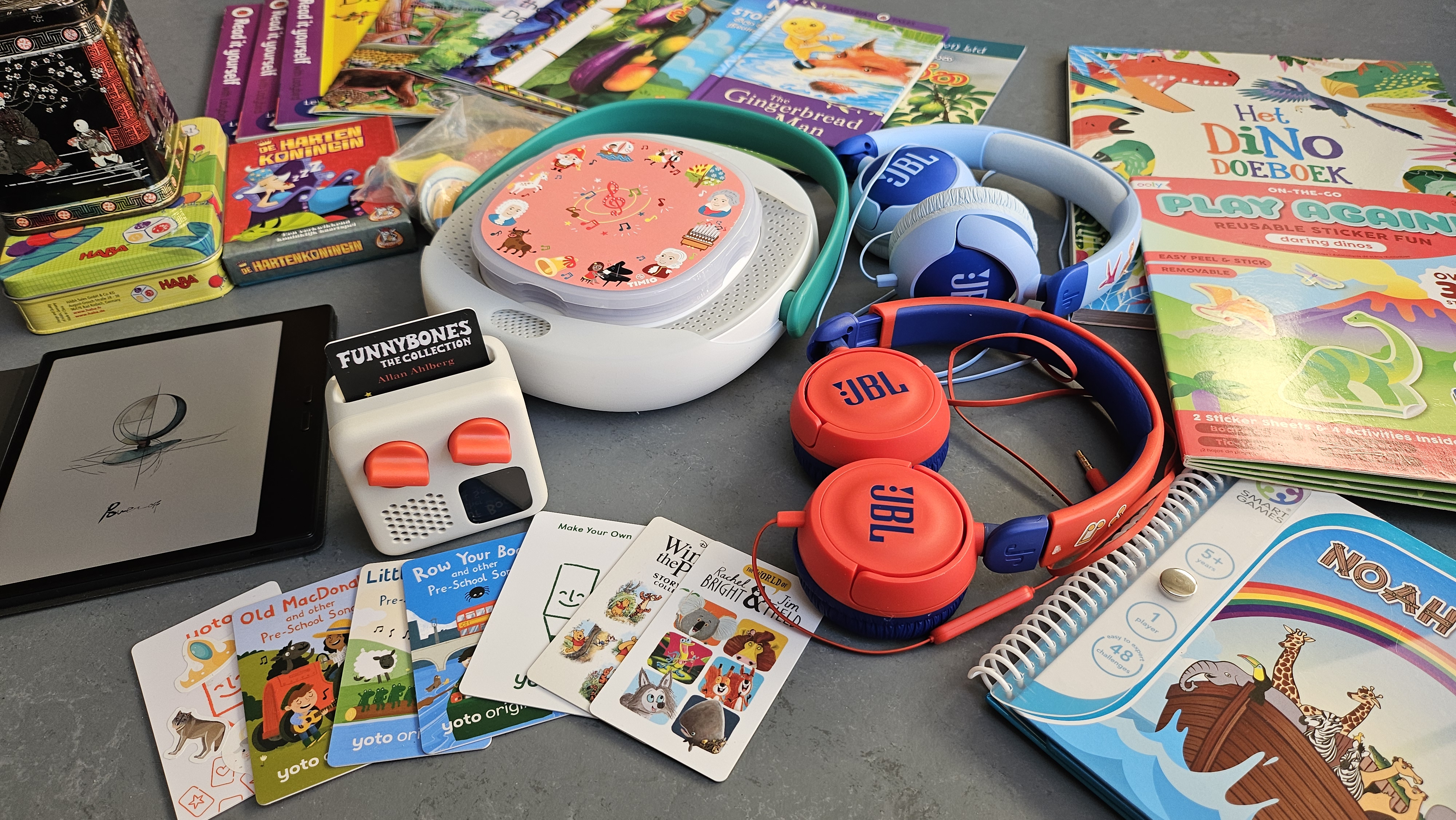
**On the plane, my four-year-old is already glued to the screen before the seat belts click. For my two-year-old, it’s a lift-the-flap book, a magnetic drawing board and a fairy-tale comic book; after arrival, I buy thin bilingual paperbacks every week to top up the stack. Dragomino lives in a tea tin, Dobbelrups in a zip-lock bag. Screen-free is not the goal, but we play analog wherever it fits.
In short (~30 seconds)
- What: A packing playbook for a multi-stop holiday with a toddler (2) and preschooler (4).
- No scorecard: Screens are tools. More audio at home, more video during tough travel legs.
- The sibling split: The oldest gets the seat-back TV; the youngest gets the analog carry-on. And I pack two pairs of headphones.
- Car vs. plane: In the car, one hour of phone video max; in the air, all restrictions go out the window.
- At the destination: Compact games, e-reader (Onyx Boox) and local bilingual books.
Screen-free is not a holiday goal
I love technology. The Yoto Mini and TIMIO Player are used regularly at home, and for my blog I happily dive under the hood of the latest KidTech. Which device is allowed to travel with us, I check in the bedroom check. But the moment we pack the suitcases, the dynamic shifts. On the road, fixed rules go out the window and the mix between screens and analog play changes. That is not failure; it is simply survival mode. The ideal mix differs with every child and every kilometre. Outside of travel days, there is so much to see and do outdoors that the TV only goes on when they flop onto the sofa at the end of the day, tired but satisfied.
One hard rule for me is that my own phone does not become a digital toy shop. There is no kids’ app ecosystem on it, and therefore no risk of accidental in-app purchases on my device. The few games the children do play (like Mahjong or Pokémon Go) live on Grandpa and Grandma’s phone. On a very long car ride, I might use my phone as a video screen for an hour at most, then it goes away again. I do not think we need a tablet yet; on holiday we use the phone and the plane screen selectively. More on my kids’ tablet considerations in my tablet post.
Travelling with two different ages also means travelling at two speeds. My four-year-old turns into an enthusiastic TV zombie on the plane, locked onto the screen in the seat in front of him. Because of his unlimited plane screen time, he even looks forward to flying. My two-year-old, on the other hand, still gets by on holiday with a stack of books, small games and hopefully a decent number of hours of sleep. No guilt, no anti-screen manifesto, just packing with intent.
Screen anarchy at Grandpa and Grandma’s
And those strict rules? They go out the window the moment Grandpa enters the picture. When my son stands next to Grandpa’s bed at 6 a.m. like a white-haired ghost, he simply gets a phone pressed into his hands so Grandpa can sleep in a bit longer. Bad for the screen-time scorecard? Maybe. But children are surprisingly good at separating contexts. They understand perfectly: at Grandpa’s, Grandpa’s rules apply. That flexibility is all part of the holiday.
Car trips between stops, not epic road trips
Our holidays are not eight-hour non-stop drives to a single location. We move roughly once every three days or once a week, and the drives usually last two to four hours. In that window, I deliberately allow about one hour of videos on my phone for the eldest. The rest of the time, the kids stare out the window completely content, sing, eat snacks, or we stop every hour for a drink or a short sightseeing break.
Last summer, my youngest sat in the back row and spent every drive in a zen state, staring out the window or sleeping, with no screen or separate entertainment of his own. Recently, we got a built-in screen in the back of the car that I can turn on during longer drives. Most of the ride, though, we are still pointing out animals and windmills.
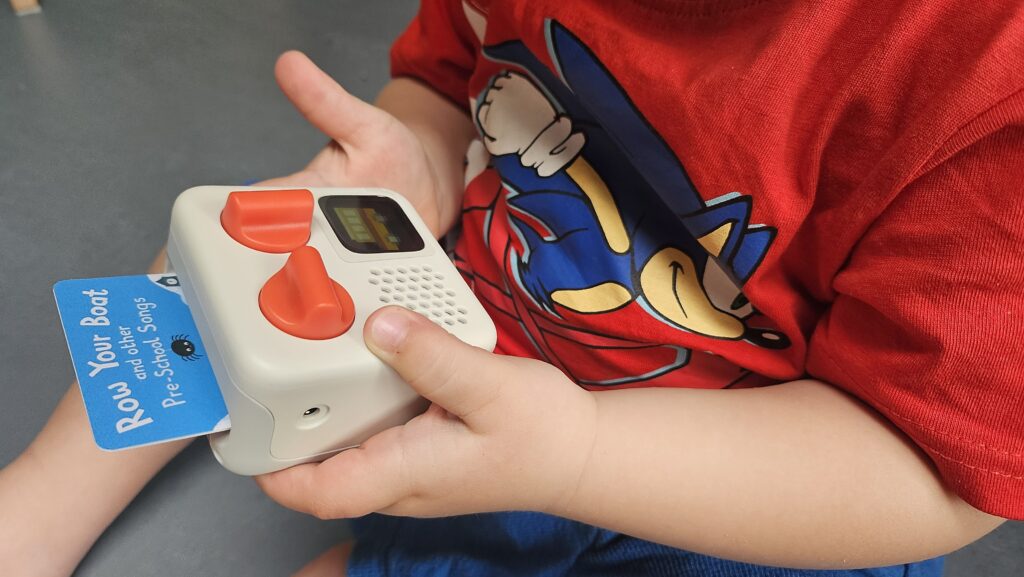
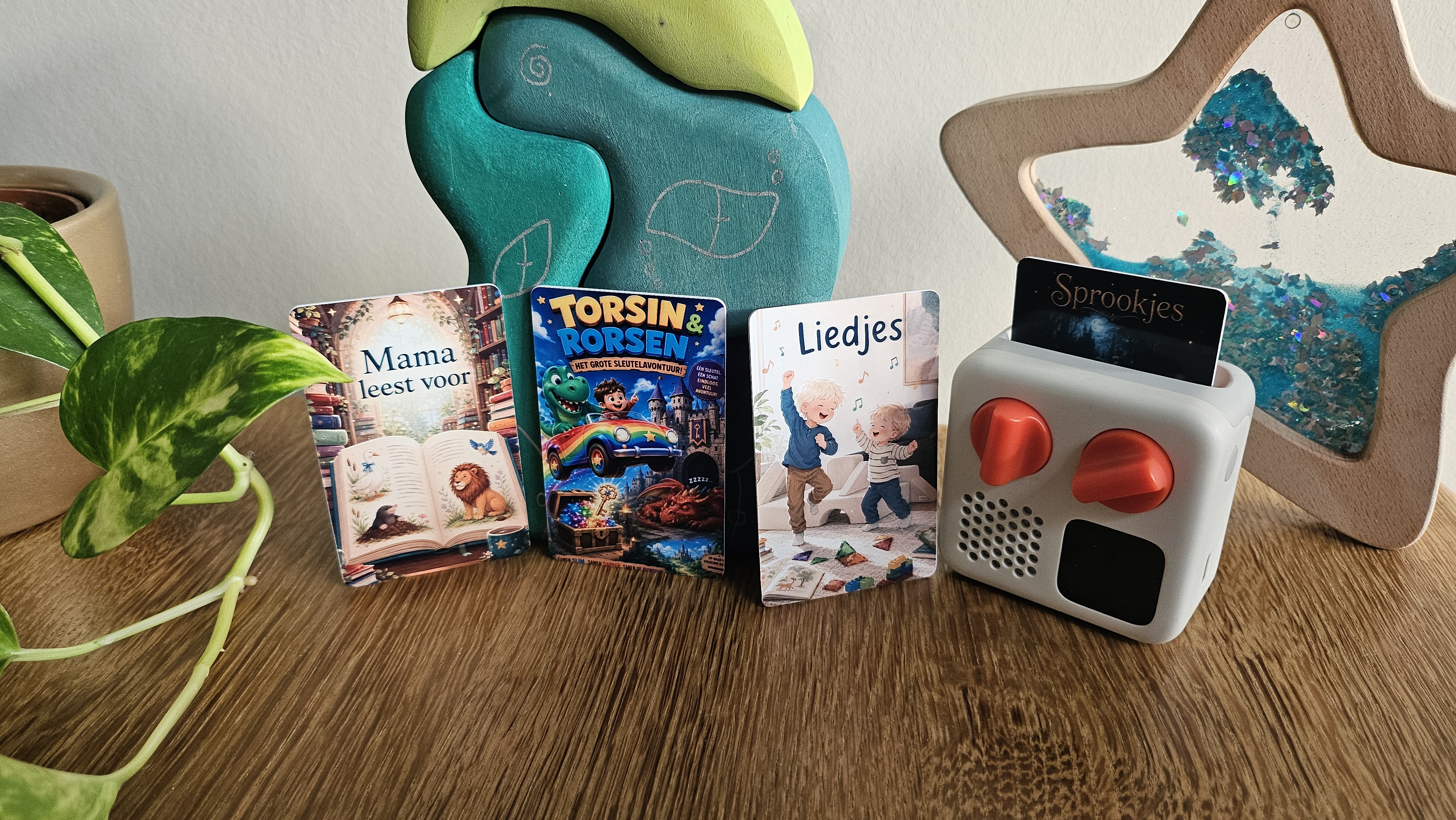
For audio at home, I use audiobooks or music via YouTube Music a lot. For the upcoming holiday, I want to bring the Yoto Mini. With the headphones plugged in, I think it will work well when we have to wait somewhere for a long time. The TIMIO feels a bit too bulky for the toddler in the car seat, but it’s very suitable again once we are at the holiday rental. I only have the starter discs for now, but I am buying a new set before our autumn holiday.
Plane trips: two kids, two strategies
On the plane, screen-time restrictions go completely out the window: the children may watch films without limit on the entertainment system. But a screen is only a tool if your child can actually settle for it. With a two-year-old and a four-year-old, that calls for two totally different strategies.
For my four-year-old, that seat screen is not a fallback but the highlight of the trip. He loves flying, settles into his seat with his own JBL headphones (wired, with a volume limiter) and stays quiet for hours. I pack books and games for him too, but those only come out of the bag at our destination. His flight is fully screen-first.
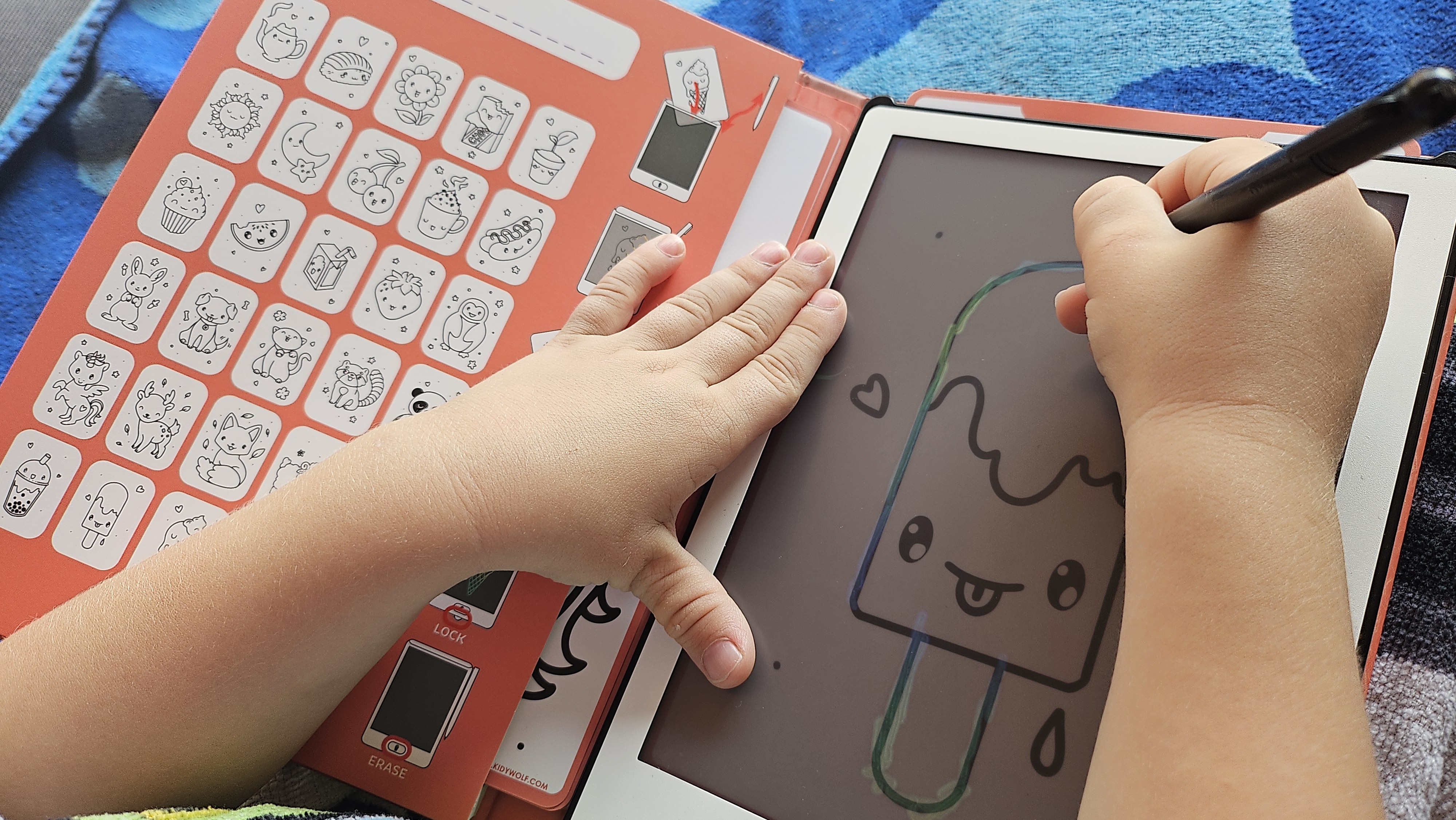
That does not work (yet) for my two-year-old. He doesn’t have the concentration to sit through a whole film and mostly uses the screen to swipe for hours, watching precisely two minutes of each movie. His carry-on is therefore deliberately analog-first. He mainly wants to be entertained by me, so I pack lift-the-flap books, a magnetic drawing board and fairy tales in comic form. This year we are adding the Yoto Mini so he can listen to audio through his own headphones. My challenge before the holiday is to make a few cards especially for him, so he has something new to discover. The screen may go on for him too, but real calm comes from the bag.
So I am deliberately not writing that we fly screen-free; that simply is not true for our family. Flying and holidays should be a treat, and that includes unlimited TV for a day once in a while. I enjoy my own occasional binge-watching on cold December evenings too.
Settling into the holiday rental
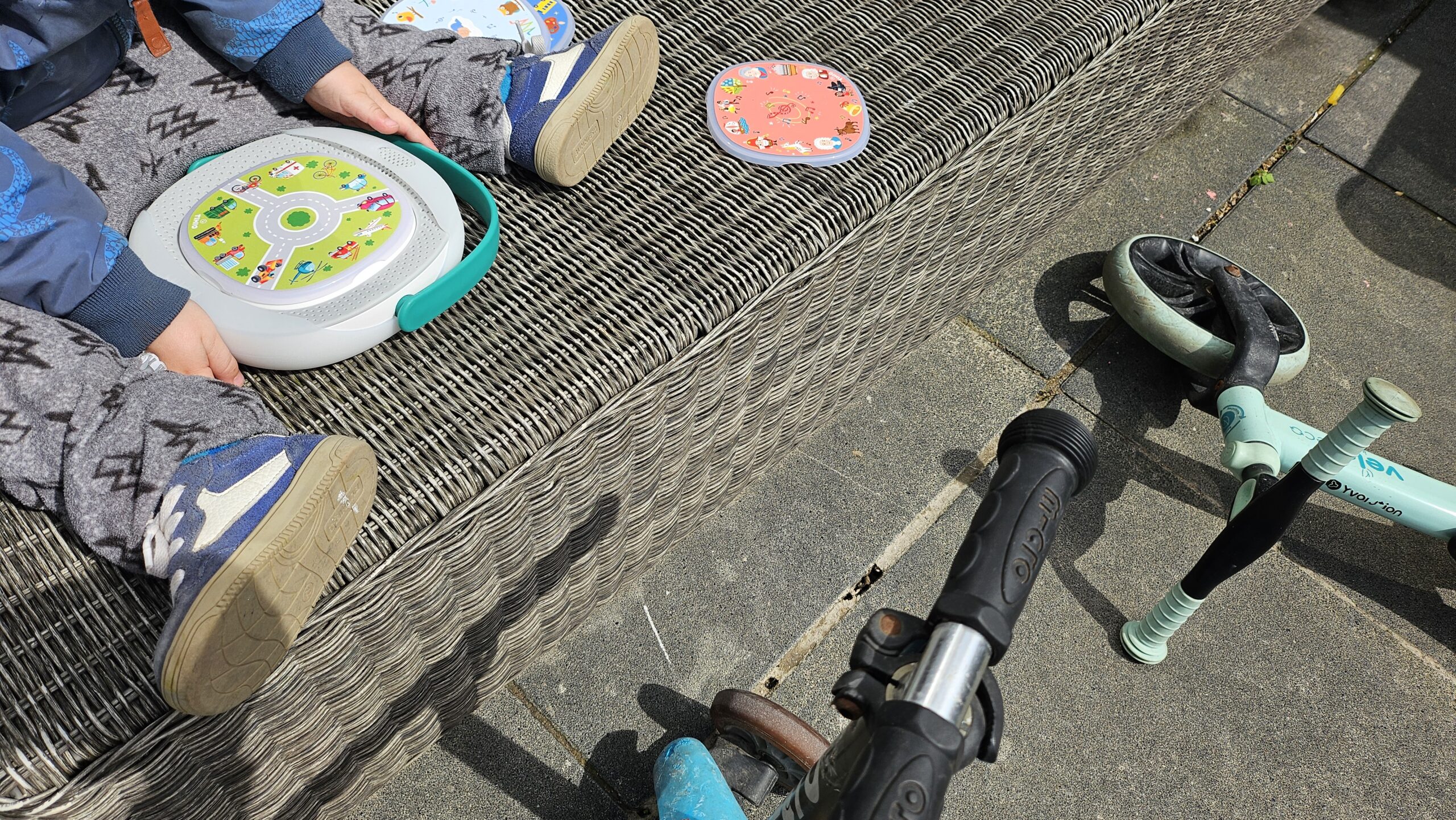
At the holiday rental, the push toward analog is strongest: compact games on the table, read-aloud time and outdoor play (backyard logic works fine in a subtropical park too). The TV may go on briefly when everyone is wiped out; sometimes I need to recover too.
Bilingual souvenirs as an analog firmware update
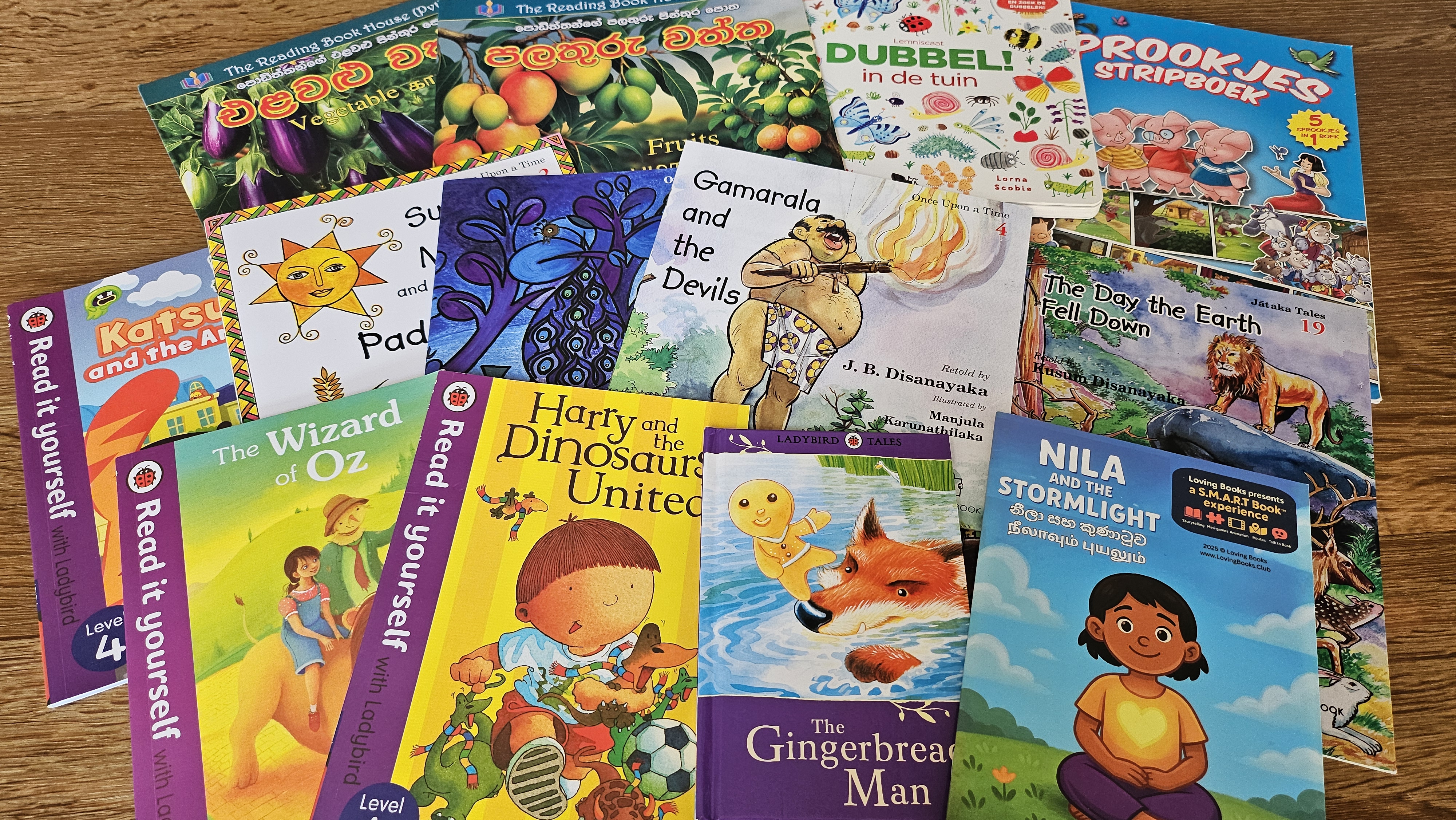
Books always travel compact and thin with us: a fairy-tale comic collection, a few thin paperbacks and an activity book. But my favourite packing hack is that I only buy half the book collection ahead of time.
Every week at our destination, I buy a few thin bilingual paperbacks (English-Chinese for our upcoming trip) or other thin English titles. These are the analog content updates for the language base we lay at home digitally and through audio. For now, I still read them aloud in Dutch (translating live from the English page), but in a few years, these are exactly the books they will pick up themselves for English practice.
It fits seamlessly with the English Yoto and TIMIO cards we run at home. Holiday is the ultimate chance for passive language exposure, and these thin books weigh nothing in the suitcase on the way back. At home, they become a tangible memory on the bookshelf: a physical souvenir that works like an analog firmware update for their vocabulary.
The psychology of the lost Dragomino egg
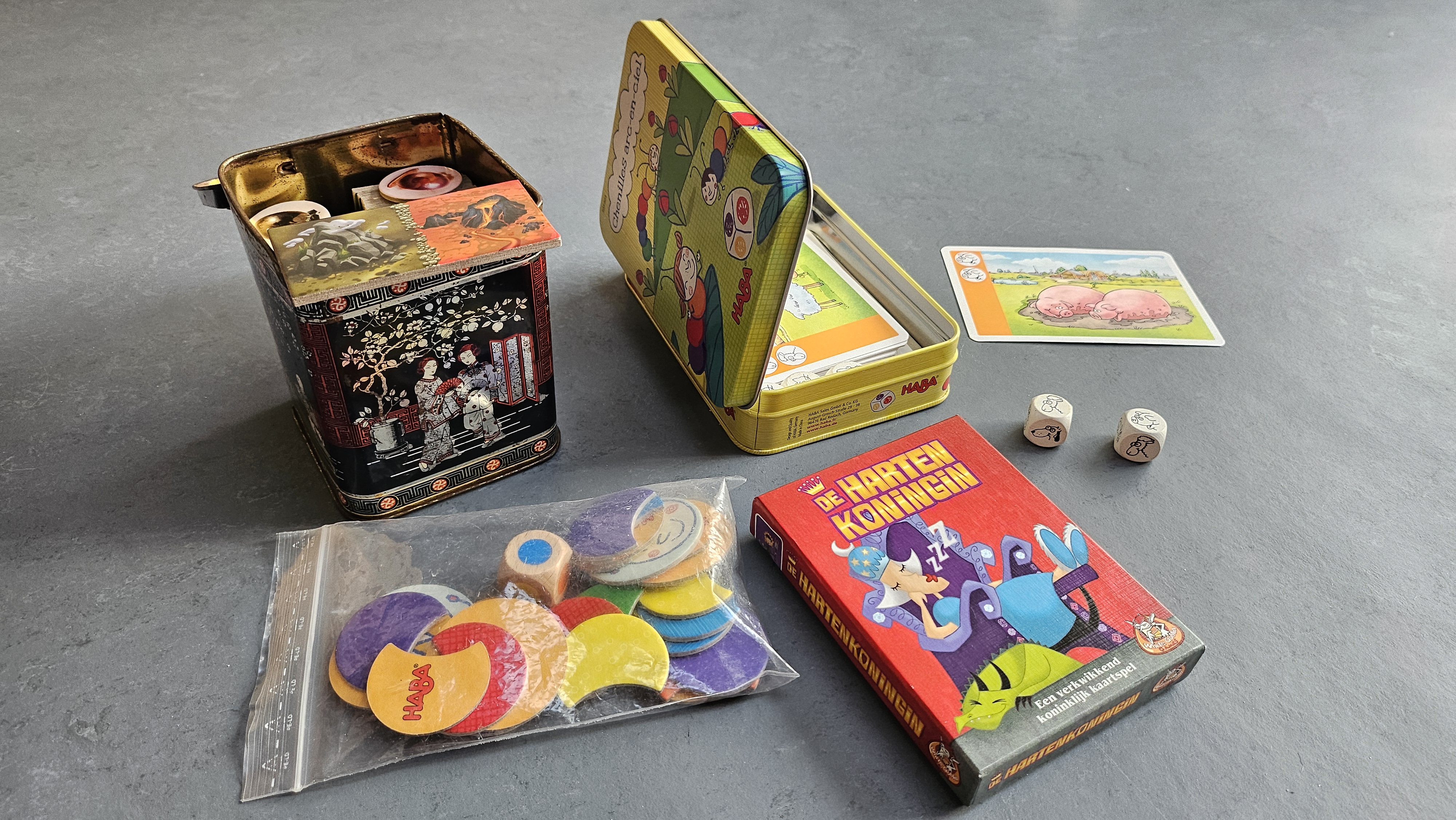
I pack compact games even more compactly with the following hacks. Partly to save space, but certainly also to keep the boxes intact.
| Game | Compact packing |
|---|---|
| Dragomino | In a tea tin |
| Animal Party | In the Dobbelrups tin |
| Dobbelrups | Loose in a zip-lock bag |
| Hartenkoningin | In its own box inside a zip-lock bag |
| Noah’s Ark | Original packaging |
The toddler can easily join in with four out of five games.
On holiday, toys get lost. That is a law of nature. In several holiday homes, we have lost a few Dragomino eggs. And that loss changes the whole system.
Dragomino is pure statistics for preschoolers at its core. At home, I could still steer the game as an adult by calculating the odds: I knew exactly how many dragons and how many empty eggs of each colour were left in the pool. Red (volcano dragons) has a higher success rate than gold (desert dragons), so you aim there. But now that eggs are missing, our database is corrupt. The underlying data no longer adds up, which unintentionally levels the playing field completely. I simply no longer know the odds, so we all play with the same blind spot now.
Instead of frustration over a broken game, this broken mechanic pushed us toward a new strategy. The youngest (2) picks tiles at random and is just as happy with an empty egg as with a dragon; the oldest (4) compensates for the missing statistics with optimism and the sacred conviction that he will still find a dragon because maybe there are more than we think.
It proves again: a physical game is flexible. When data is missing, you rewrite the rules together on the floor of your holiday rental. With a physical game, a corrupt database is not a crash but a feature that forces creativity. Try that with a glitchy app.
The e-reader as a Trojan horse in the hotel room
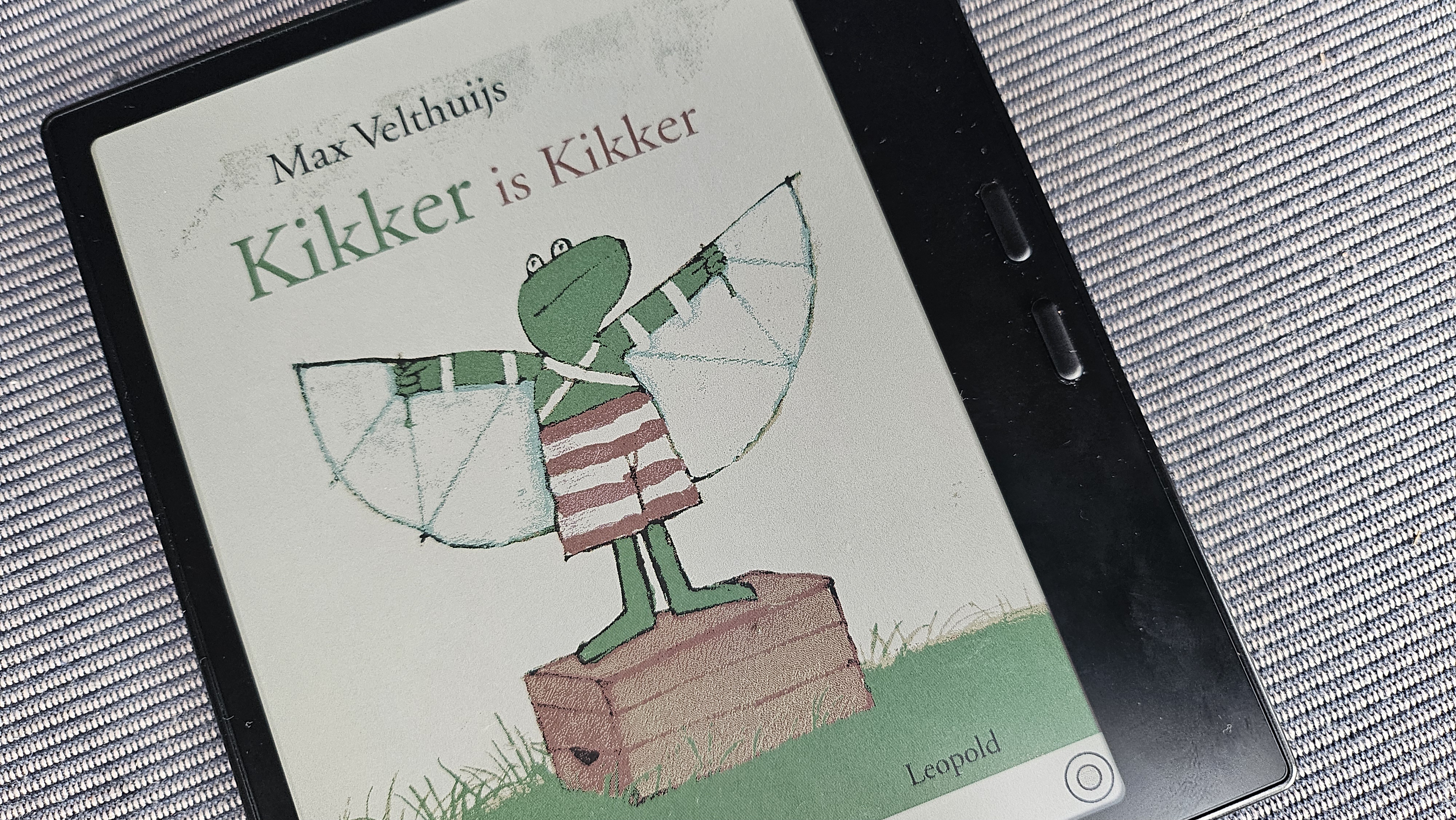
Why do I haul an Onyx Boox Go Color 7 Gen II along, but a traditional tablet does not get into the suitcase? The secret is in the screen technology. E-ink is the ultimate form of calm tech.
It gives us access to our full digital library on holiday via the Dutch Library app and the Kobo app, in colour, so we can read picture books endlessly without dragging an extra suitcase of paper. And all of that without the downsides of an iPad: no pop-ups, no tempting YouTube icons and, crucial in a dark hotel room, no blue light that disrupts a tired toddler’s body clock. It is digital comfort with the psychological calm of paper. No YouTube, no kids’ profile; just books. (I conveniently forget those Mahjong sessions on Grandma’s phone.)
Departure playbook
- Know your sibling split: Decide per child who gets screen mode and who digs into the analog bag; for me, that already cuts plane hassle in half.
- Plan per mode separately: Plane ≠ car ≠ holiday rental. In the car, one hour of phone screen is fine; fill the rest with audio, books and stops. On the plane: pack analog for the youngest, but bring two pairs of headphones so you leave the choice to him.
- Keep your own tech clean: My phone only has videos for the road; it does not become a kids’ app palace.
- The book hack: Always pack three thin books and plan suitcase space to expand the collection at the destination with local (bilingual) finds.
- Pack games smart: Put games in a tea tin, game tin or zip-lock bag and welcome the challenge of a game with fewer pieces.
- Drop the scorecard: Do not run a rigid screen-free scorecard at the end of the day; aiming for analog where it fits is more than enough.
Closing
Holiday is short. The intent when packing matters more than tracking perfect screen-time minutes. If you use lots of screen alternatives at home, you can make different choices on the road, and vice versa. In five years, I am curious whether analog still holds its ground in my suitcase or whether I reach for smart tech because it can do so much and takes so little space.
Related articles
More articles on a similar topic.
Comments (0)
No comments yet. Be the first!
Leave a comment
Comments are moderated before they appear.