
Playing at two speeds: asymmetric co-op with a 2- and 4-year-old
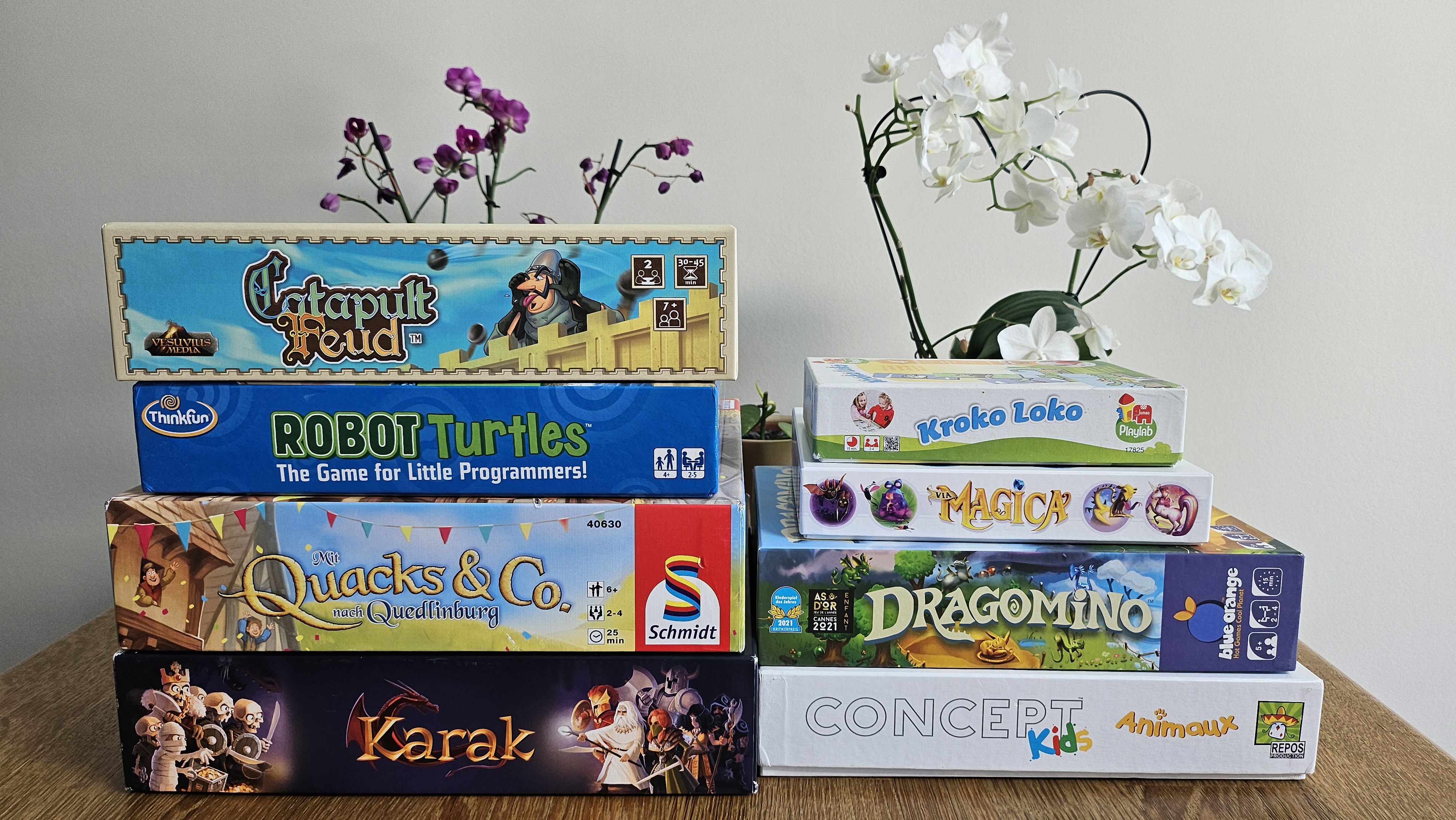
Think board games are boring with a two-year-old? These smart, cooperative patches turn complex games into a smooth-running family system.
In short (~30 seconds)
- What: asymmetric co-op patches so a toddler (2) and preschooler (4) can play the same board game. No colouring books on the sidelines.
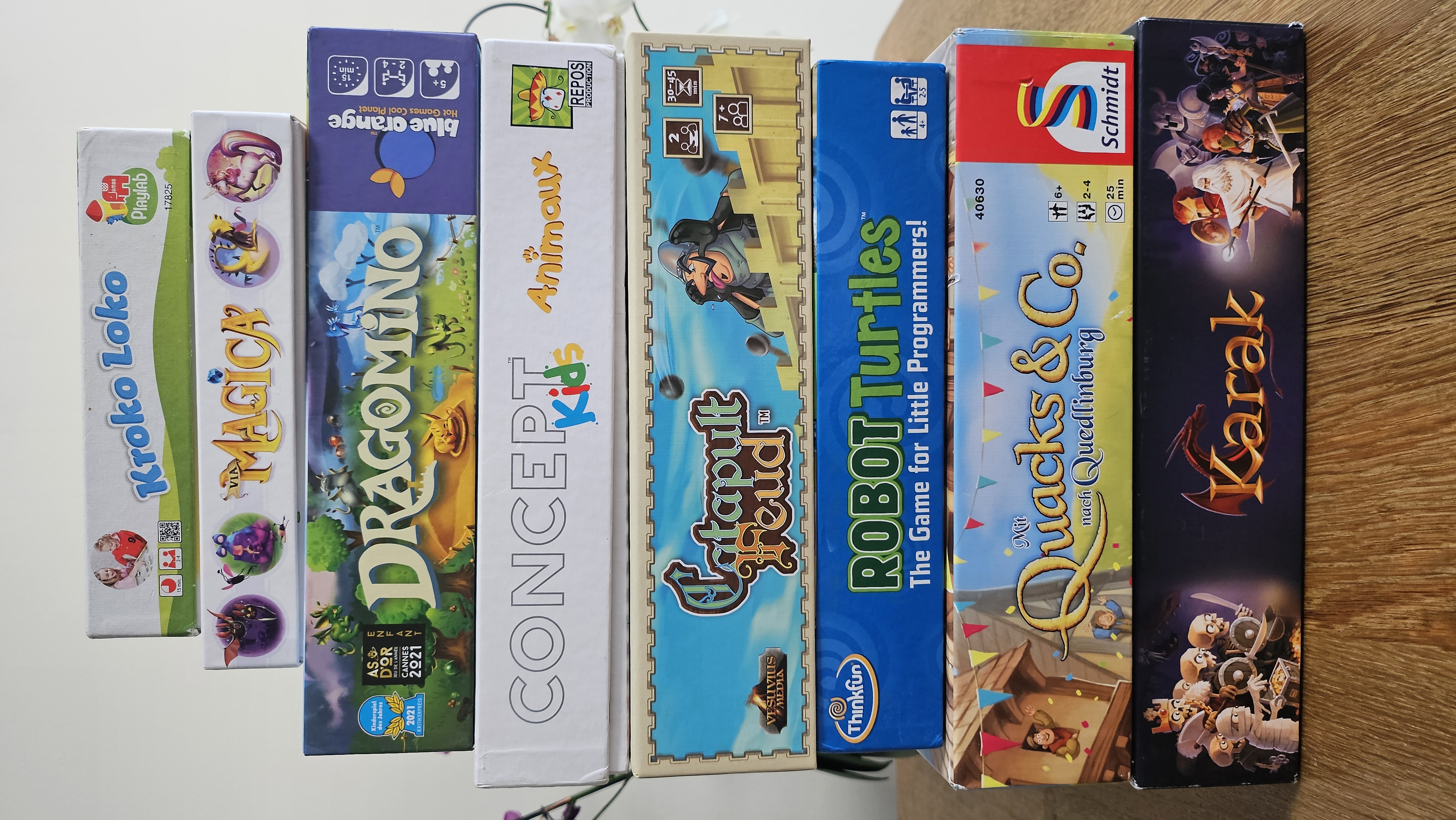
- Examples: Karak, Quacks & Co, Robot Turtles, Kroko Loko, Dragomino, Via Magica, Catapult Feud (co-op mods).
- Core idea: the toddler is not a bug; he gets a real role (grabbing from the bag, flipping tiles, physical actions).
The average board game box is ruthless. Ages 4 and up, it screams in bold letters. Or worse: Ages 7 and up. Traditional parenting advice practically writes itself: park the toddler with a colouring book off to the side so everyone else can play in peace.
But our two-year-old absolutely refuses to be sidelined as a passive spectator or a chaotic disruptor. He pulls up a chair, locks in, and demands a serious role.
If you look at it through a tech lens, what happens at our kitchen table is pure multi-core computing. In a modern computer, different processor cores work together on the exact same application. You have heavy, complex cores and efficient, focused ones. They do not run the same code, and they have different clock speeds and attention spans, but at their own level they execute a shared task perfectly. That is the essence of asymmetric co-op. The toddler is not a bug in the game system; they are a specific processor with a shorter cycle, but surprisingly tight execution.
Logistic systems
Quacks & Co: build the best grab bag
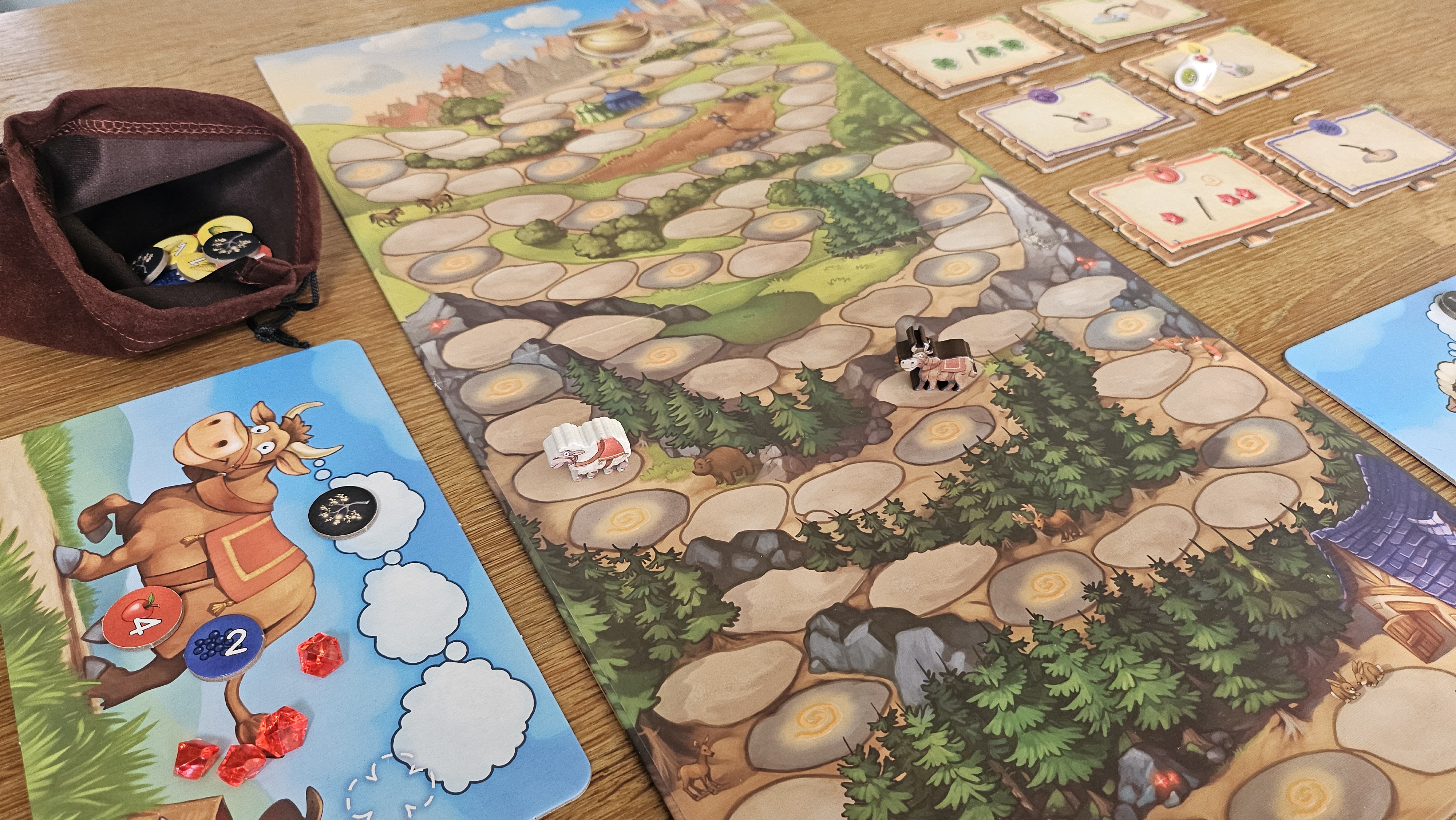
In Quacks & Co (the German edition is cheaper and easy to find on Vinted), everything revolves around bag-building and blindly drawing chips from a bag to get your animal to the finish line faster. My four-year-old refuses to give up any control over his own game and fiercely guards his grab bag. You also see pure preschooler logic at work: he sometimes skips the strategically best move simply to buy chips with a mechanic he finds interesting at that moment, like chips that let him roll the die, or ones that earn rubies. He also frequently turns his back to the table to ‘secretly’ grab the chip that lets his animal take the most steps.
Our two-year-old does not interfere with the preschooler; instead, he becomes the perfect executor for my turn. He takes over the physical bag-grabbing completely. While the preschooler floats between strategy and aesthetics, the toddler excels at pure mechanical precision. He waits calmly, reaches into the bag with intense concentration, and usually pulls out exactly one chip. The contrast between the preschooler (who knows exactly which chips are good or bad) and the toddler (who is just thrilled that his animal gets to move) keeps the tabletop ecosystem beautifully balanced.
Robot Turtles: two navigation engines in one sandbox
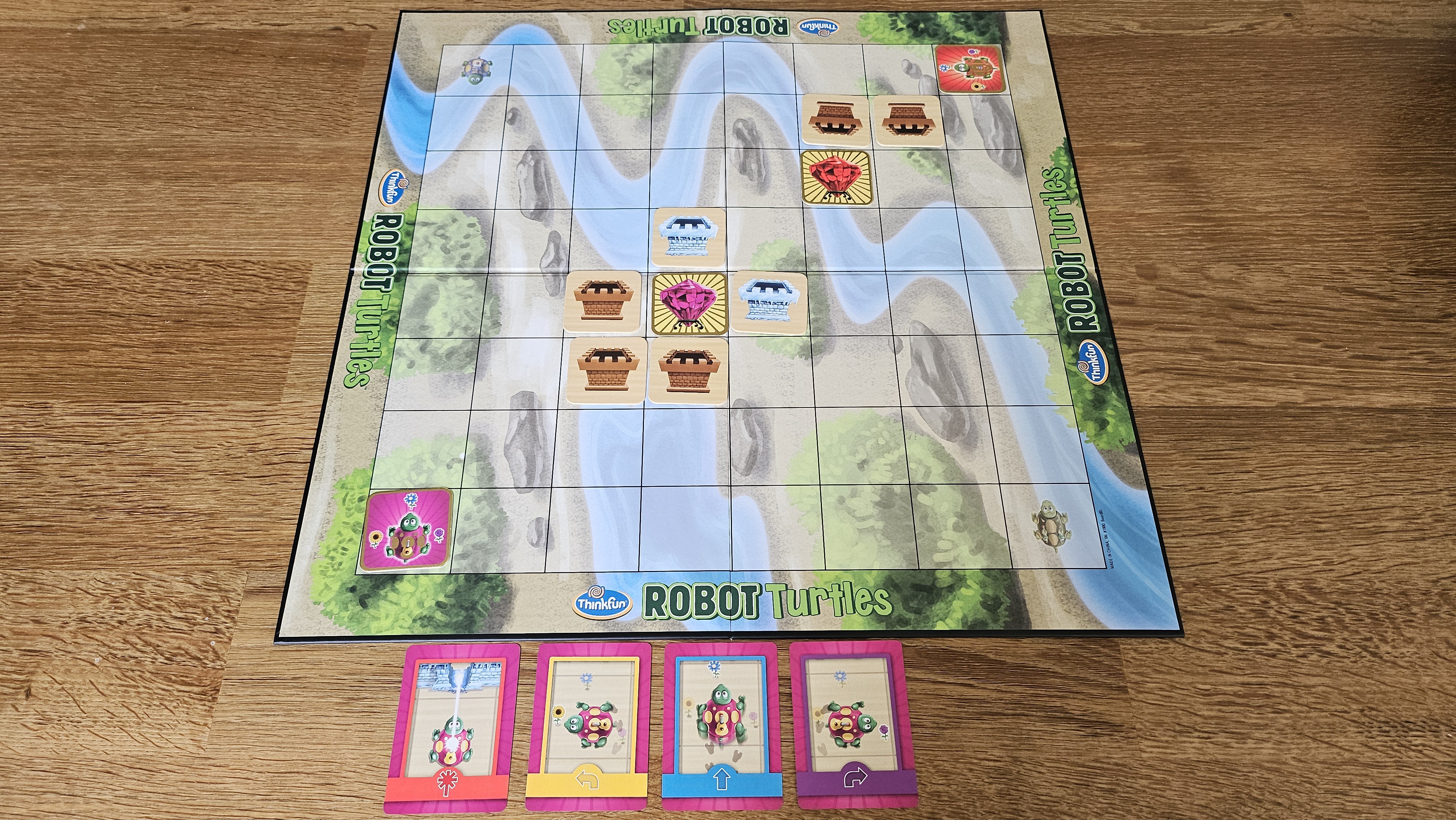
Robot Turtles lets children ‘program’ a turtle to a ruby using playing cards. At our kitchen table, however, two completely different navigation engines run in the same sandbox.
My four-year-old takes the traditional code-writer role: he lays out cards to plan his turtle’s path (one card at a time for now, though later he will probably lay out the whole route in one go).
Once the preschooler has reached the gem and his little brother gets to do the same, the toddler picks up his turtle and moves it straight to the goal. The fascinating part is that he does not follow the cards on the table; he executes the movement entirely from his own internal memory. He remembered how his brother’s turtle moved and runs that route flawlessly from his own cache. Two different systems, one sandbox, each with its own unique way of navigating.
Memory and tactical systems
Kroko Loko: razor-sharp cache memory
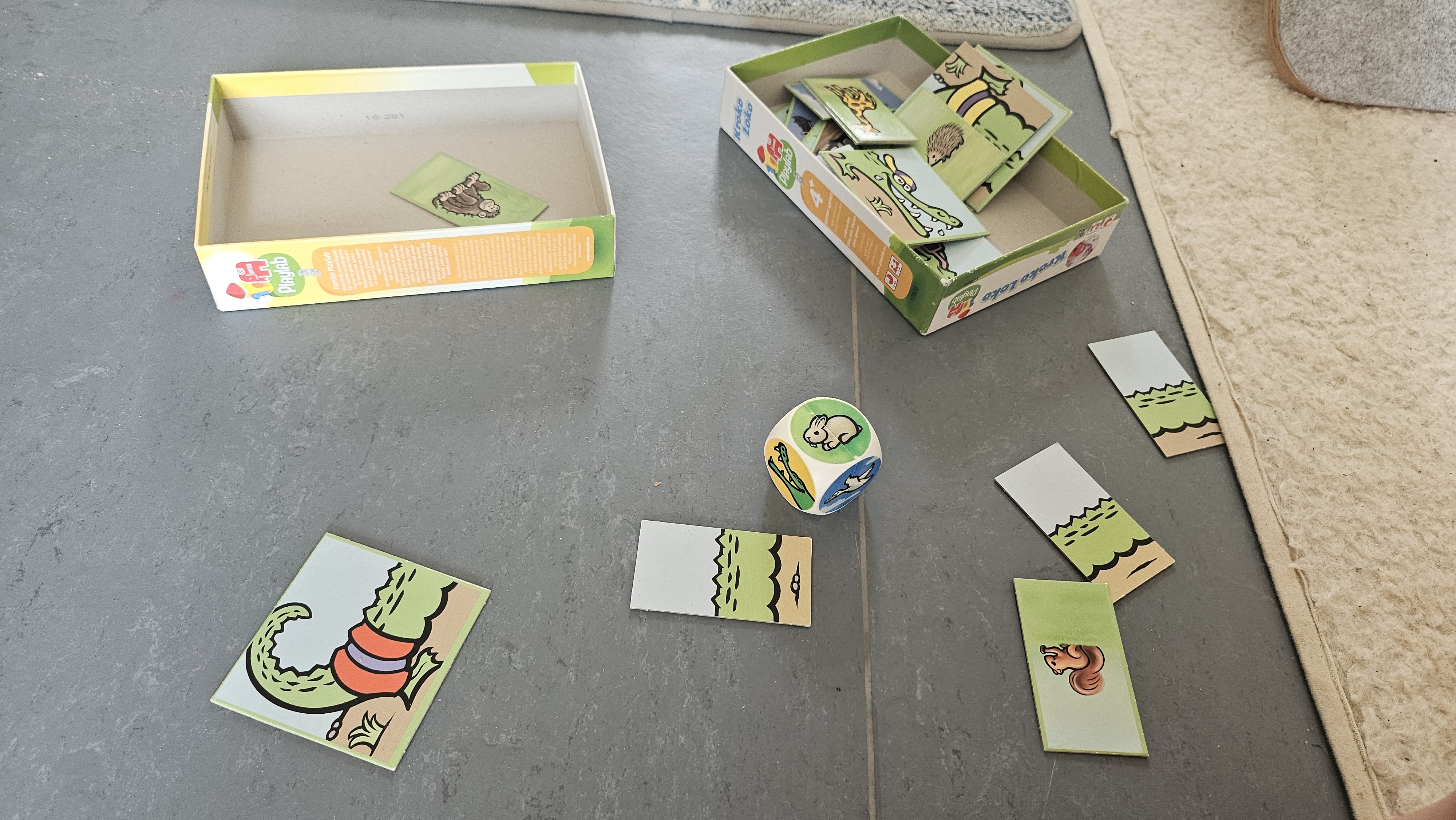
With Kroko Loko, we are not talking about complicated long-term strategies; this is a pure, fast database lookup. The goal is simple: remember which card belongs to which habitat (land, sea, or air) so you can grab the right tile as soon as the die lands on that symbol.
Our two-year-old plays this game surprisingly well. His working memory functions like razor-sharp cache memory. While the four-year-old oversees the larger framework of the rules, the toddler’s hand darts straight to the exact locations of the pictures he stored in his shorter cycle. He has no need for deep tactics; the direct match between die and tile is a flawless hit for him. How long his crocodile actually is does not matter much to him yet. When his favourite animals appear, he sometimes wants to grab them repeatedly instead of the card he actually needs. (Bonus: the pieces also work great for free play.)
Concept Kids: the data labeller with a filter
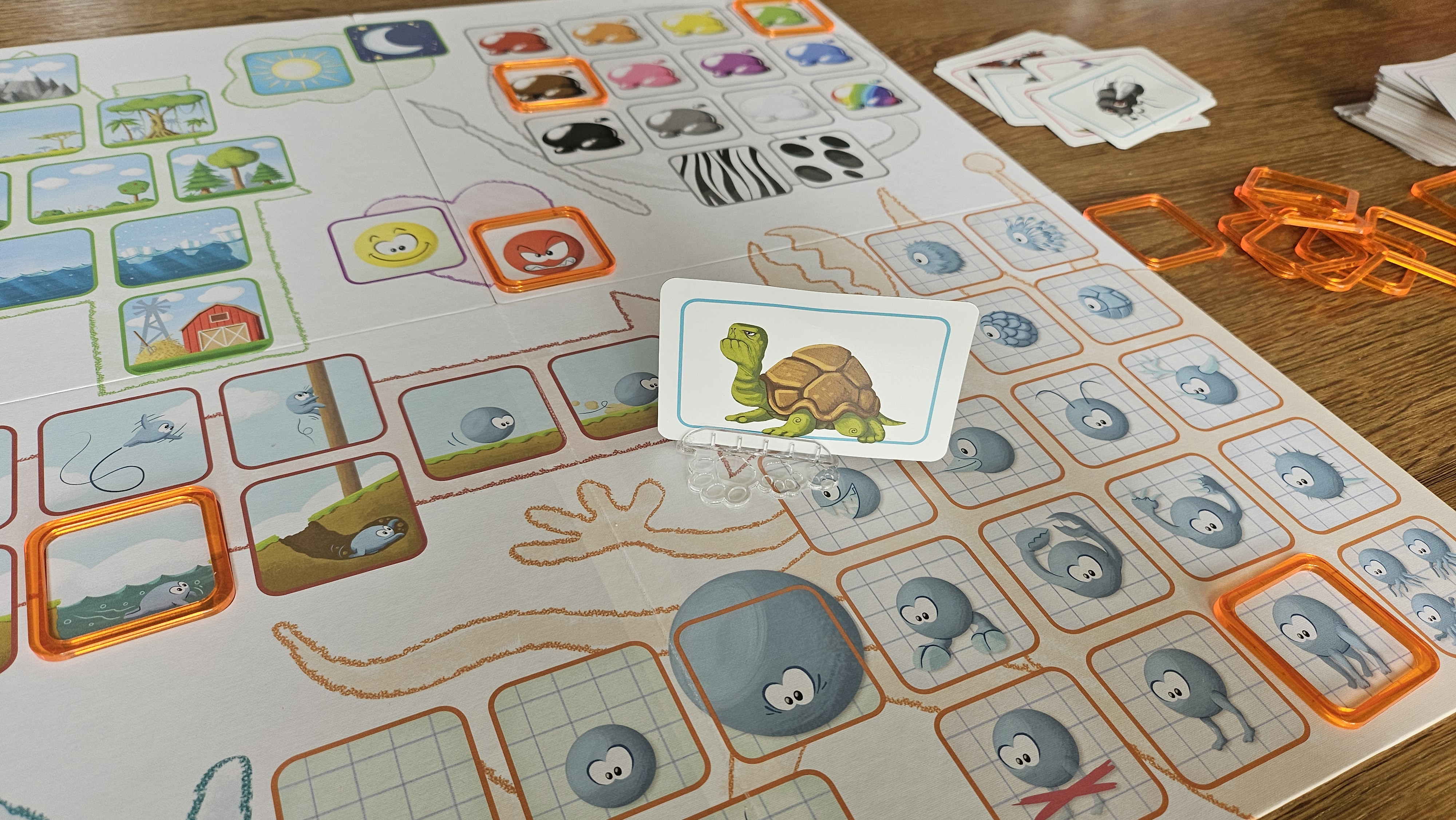
In Concept Kids, we try to guess animals by placing rings on icons that describe their properties, such as habitat or colour. The four-year-old acts as the analysis algorithm: he is kept in the dark about the secret animal and tries to parse the metadata to guess the correct creature.
It is lovely to watch his development when he is the one placing the rings. At first, he gave away too much and made it too easy (for example, mentioning the body part the colours belong to). Other times, his clues were a bit too literal; the colour he chose might just be the random eye colour of the animal on the card, or he would claim all animals live in the zoo. Sometimes he would even give an animal fewer legs because not all of them were visible in the illustration. Over time, though, you see these quirks disappear as he treats the game more abstractly, which makes his clues much better.
The two-year-old is the ultimate data labeller, but one who occasionally causes a data leak. In all his enthusiasm, he quite often shouts the animal’s name out loud across the room. To patch this system, we adjusted the workflow: I keep the card hidden from him and filter the input. I tell him the traits (“the animal is big and can swim”) and then he very carefully places the physical rings on the right icons. The input stays intact, and the preschooler can keep analysing undisturbed.
Physics and content loading
Catapult Feud: building ergonomic firewalls
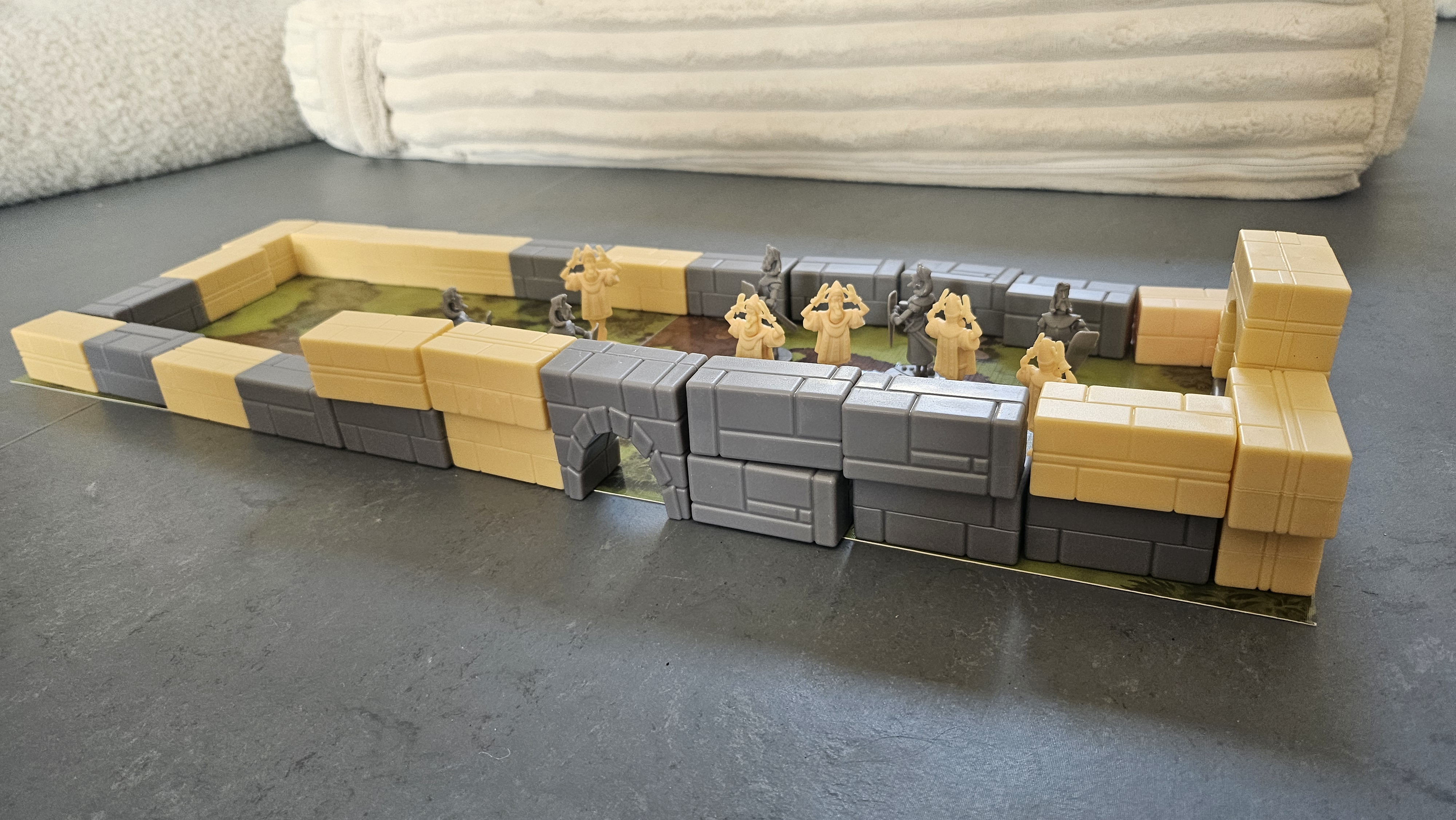
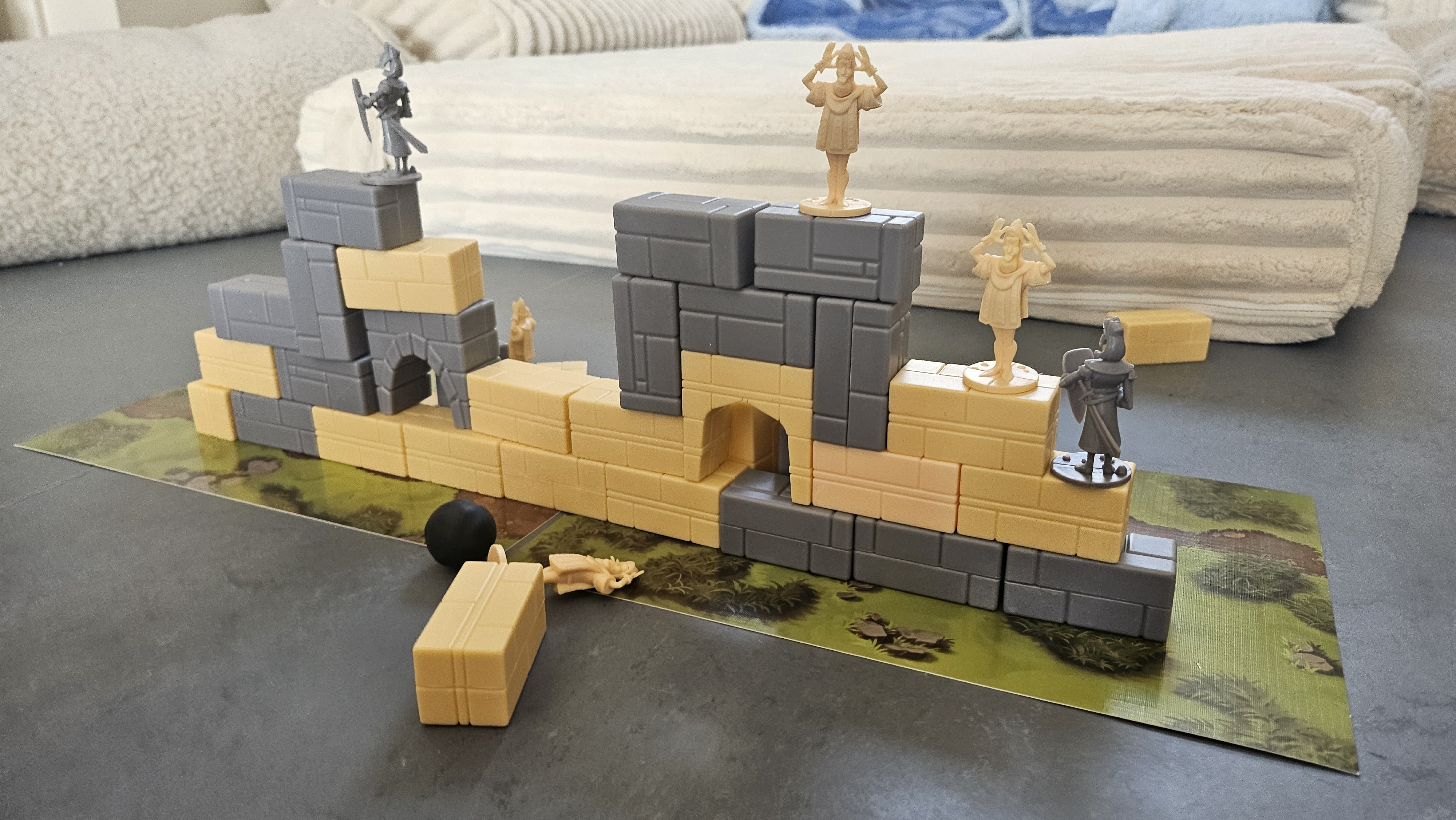
Catapult Feud is a physical battlefield of plastic catapults and castles. There is no clumsy throwing or mindless destruction here; the two-year-old shoots along with serious focus. The four-year-old does not yet approach construction with geometric stability or architectural flair, but he builds a rough, effective wall to protect his figures at his own level.
The biggest challenge is the toddler’s physical motor skills. After he fires his catapult and jumps up to fetch his ammo, his enthusiasm sometimes knocks over a castle. My role as parent here is purely that of a workspace architect. I build a ‘firewall’ by arranging enough physical buffer space between his catapult and his castle. By now, the children have even learned to walk ‘like crabs’ past the fragile structures.
And yes, rubber balls shoot through the living room. But objects fly past my ears at home anyway, so they might as well be aimed at a castle low to the ground.
Karak, Dragomino & Via Magica: organic task division
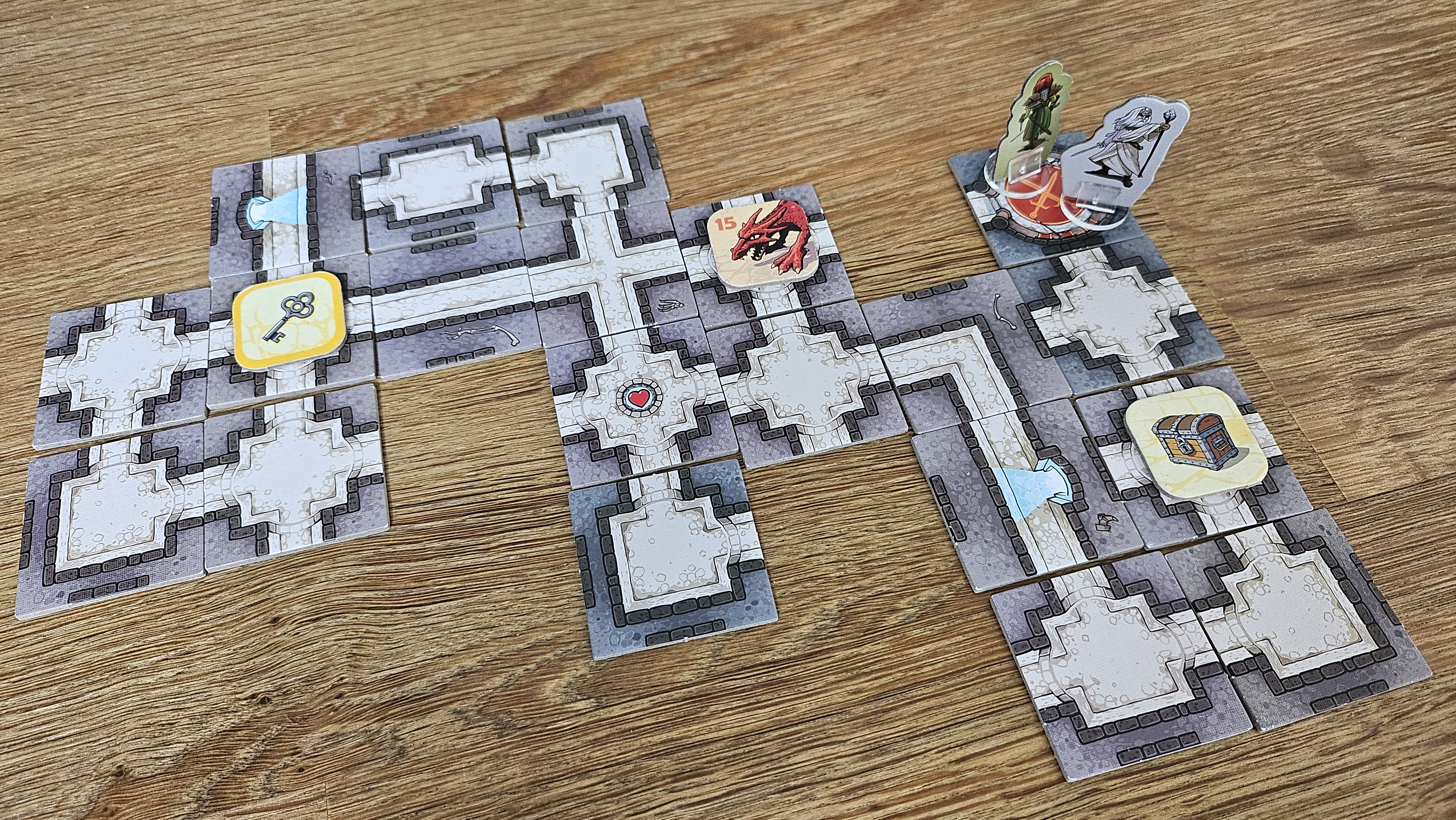
When we start bigger games, you see how roles between the children flow into each other without threatening the four-year-old’s autonomy.
In the dungeon crawler Karak, the oldest absolutely wants control over his own hero. He flips his own corridor tiles, draws his own monsters, and by now knows all the special powers by heart. The two-year-old complements this perfectly by acting as the sub-processor for my turn: he flips tiles at lightning speed, draws monsters from the bag, and rolls the dice.
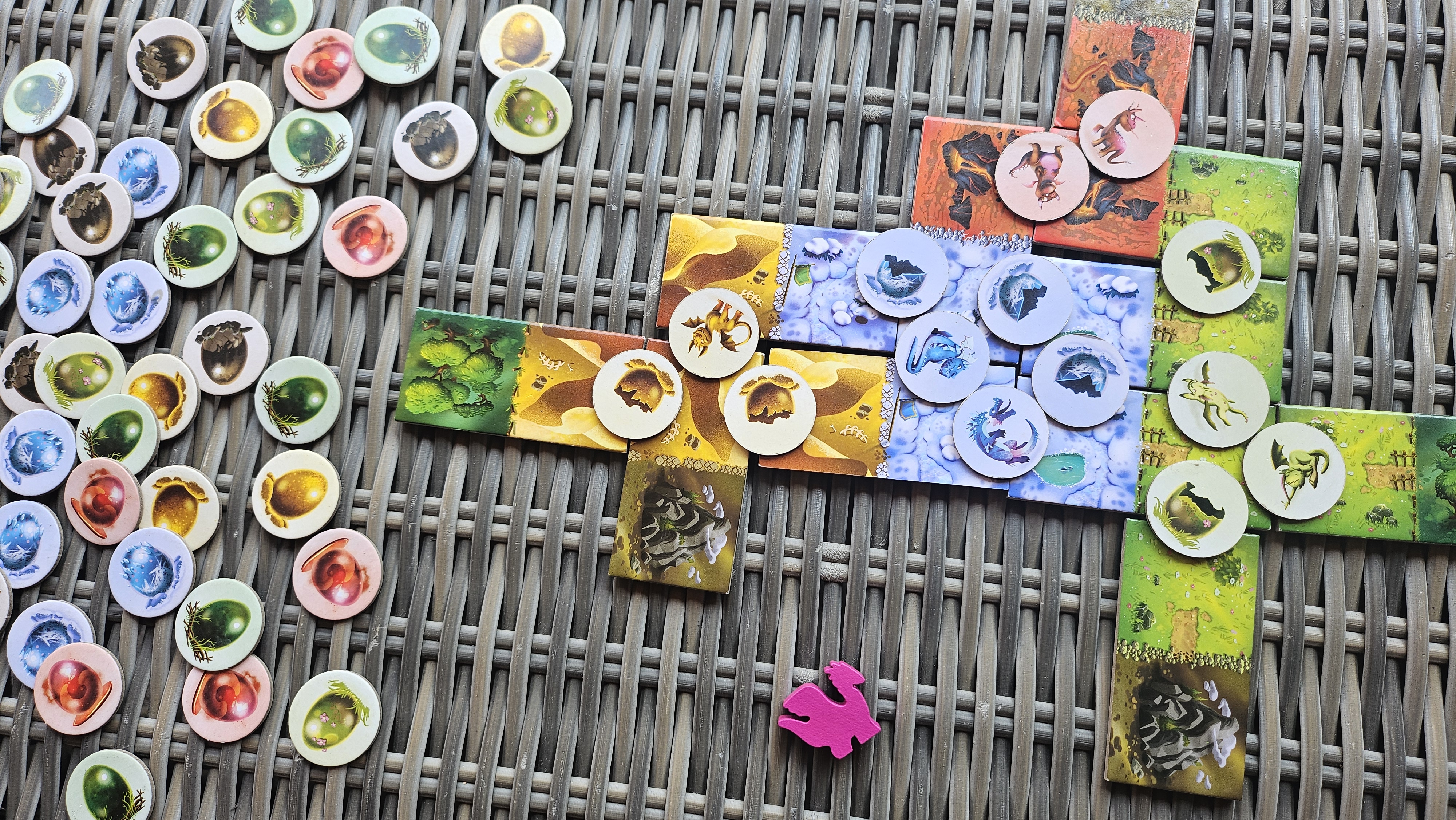
We see the same organic flow with Dragomino. The youngest takes the asset-selector role: he picks the landscape tiles for my turn, places them with a little help, and performs data extraction by flipping and placing the dragon eggs. Meanwhile, the oldest builds undisturbed and strictly autonomously on his own dragon island.
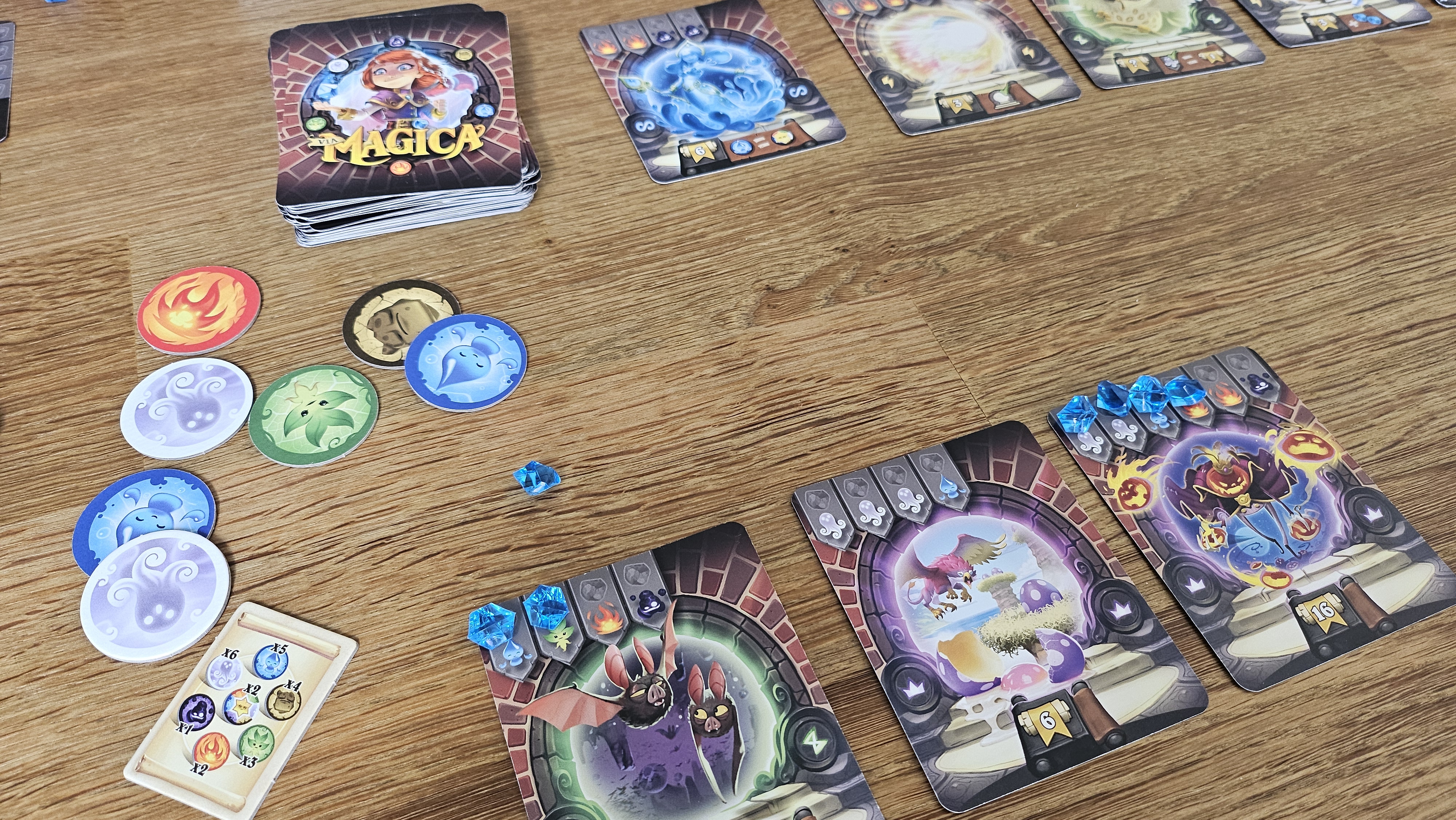
In Via Magica, renamed by the kids as ‘the magical bingo game’, the youngest draws chips from the bag for me and enthusiastically shouts “BINGO!” with every opened portal. The four-year-old, meanwhile, parses his own cards. Although he is getting more tactical, his aesthetic preferences still regularly beat pure logic; he consistently chooses the portals he finds prettiest over the cards that are strategically easier to complete. Fortunately, the luck of the draw evens things out, keeping the competitive balance healthy.
The adaptive playfield (future injection)
Today, we as parents still have to patch the rules manually, filter data leaks from enthusiastic toddlers, and create physical firewall buffers at the table. But the real future of KidTech is not in shiny, addictive tablets that isolate children in an algorithmic bubble. The future is analogue cardboard that breathes intelligently and locally with the whole family.
Looking ahead to 2030 and beyond, we will see a fundamental shift towards Dynamic Spatial Overlay. In a few years, the exact same cardboard tiles of Dragomino or Karak will still be on our kitchen table, but supported by a subtle, privacy-friendly projector built into the ceiling light.
Via local computer vision (edge AI that does not send a byte to the cloud), the system recognises in real time who is touching which piece based on physical table dynamics.
- Toddler mode: As soon as the two-year-old picks up a tile, the visual overlay on the table immediately adapts to his processing power. The system projects a softly glowing path that visually helps with the mechanical alignment of the tile. No screens, no beeps; just intuitive, physical UI support.
- Four-year-old mode: When it is the four-year-old’s turn, the projection layer on that same piece of cardboard switches to a more complex, strategic display, subtly weaving the statistical odds of the next dragon egg into the landscape. The guidance fades as the child grasps the strategy better.
And the kitchen-table friction? That stays exactly as it is. No projector protects you from a frustrated toddler who, in a flash of pure rage, physically sweeps the entire dungeon off the table. But that is precisely the win. Tech should not swallow the experience; it should facilitate asymmetric co-op. It turns classic cardboard into the most inclusive, adaptive interface in the world, while analogue chaos stays firmly in the driver’s seat.
Kitchen table mods: five unofficial co-op patches
Already own these titles and want to test parallel processing live? With a few smart software patches, you can turn competitive games into smooth, shared missions. Here are our five proven kitchen-table mods:
Patch 1. Karak: the ‘shared treasure chest’ & ‘calculus’ upgrade
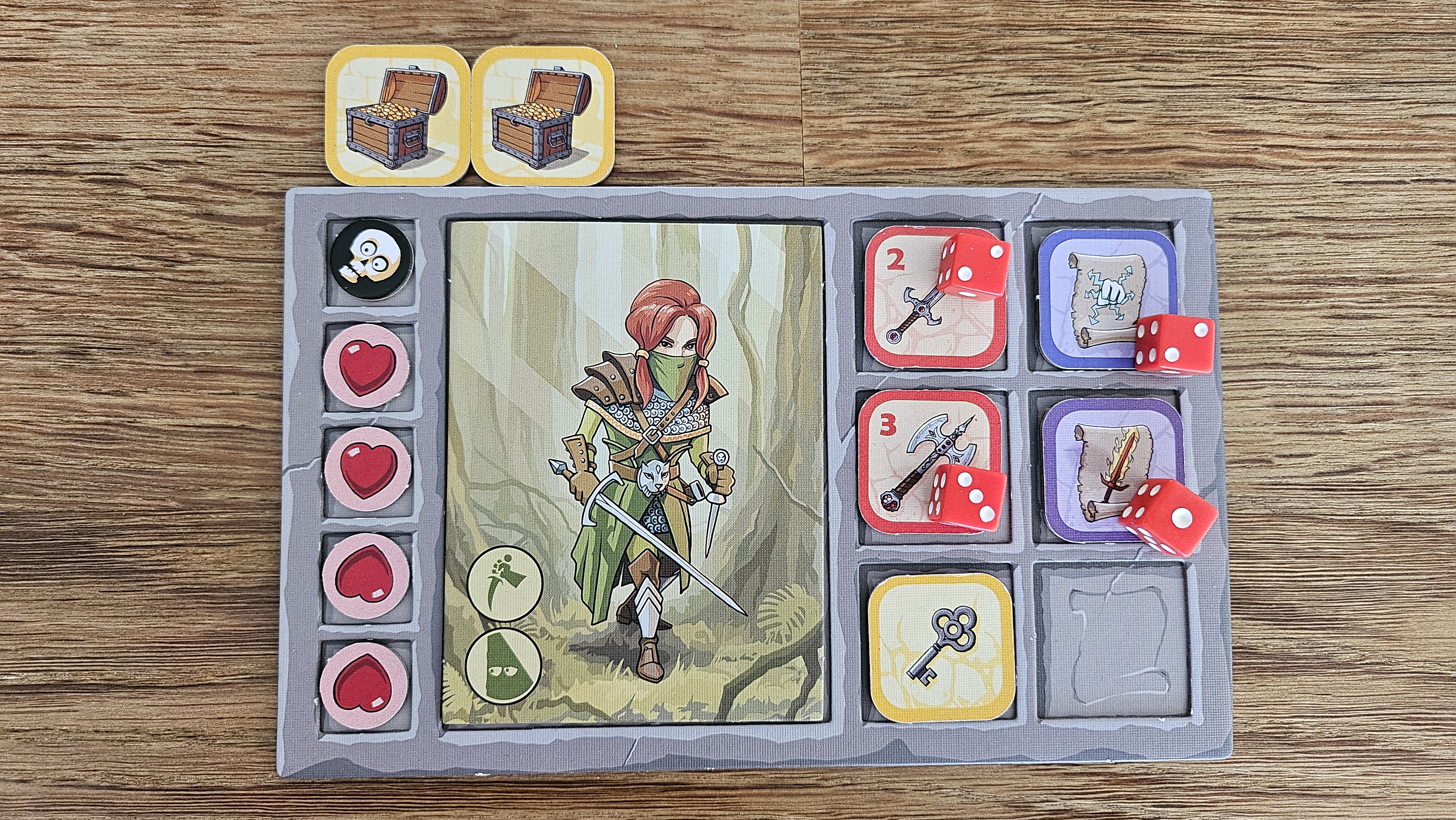
- The mod rule: Drop individual curses and infighting; we play as one team in the dungeon. We agree on a goal beforehand (for example: collect 6 treasure chests together) before fighting the dragon. Battles from the expansion become safe training fights for hearts (lives) instead of loot, and you can use the bat to give a heart back to a teammate.
- The calculus patch: Does your preschooler struggle to add up all the swords and scrolls during a fight? Grab extra physical dice and place them on top of the drawn symbols. That way, they do not have to add bonus points in their head; they can visually match and count them. Early maths success guaranteed. After a few months, they will not even need the extra dice.
- The low-battery hack: Is the four-year-old too tired after a long day? Activate ‘God Mode.’ Just look openly into the bag and grab the best swords together for a quick, successful feel-good run. (This variant was actually invented by my oldest, because cheating is honestly quite fun.)
Patch 2. Robot Turtles: the ‘sandbox grid’ variant
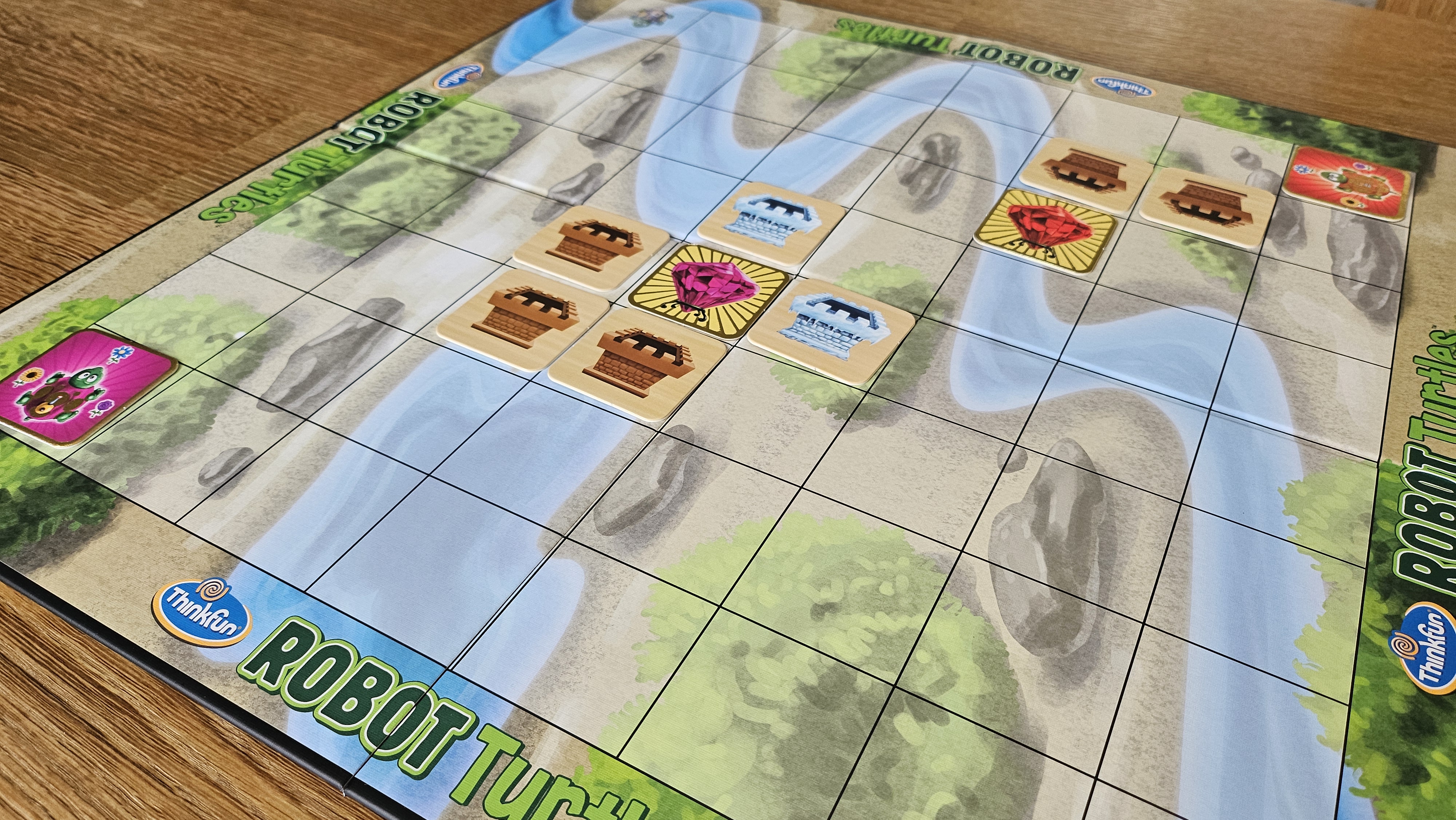
- The mod rule: The youngest does not use the cards yet, taking steps one at a time to grow organically into the system. The oldest gets the coding task of planning the route and learns to resist the temptation to blurt out the answers under the guise of ‘helping.’
- My critique: Do not view this game as an absolute must-have. While I love it from an AI-interest perspective, it is not quite magical enough for my oldest right now. He might warm up to it later, or my youngest might love it in a year, but for now I have to pull it off the shelf myself. You can also replicate this programming concept just as easily without buying the game: take a chess or checkers board with a toy gem and a figurine, or chalk a life-sized grid on the patio tiles where your child is the ‘runner’ and scattered toys are the ‘assets’ to collect.
Patch 3. Kroko Loko & Dragomino: the ‘megastructure’ connection
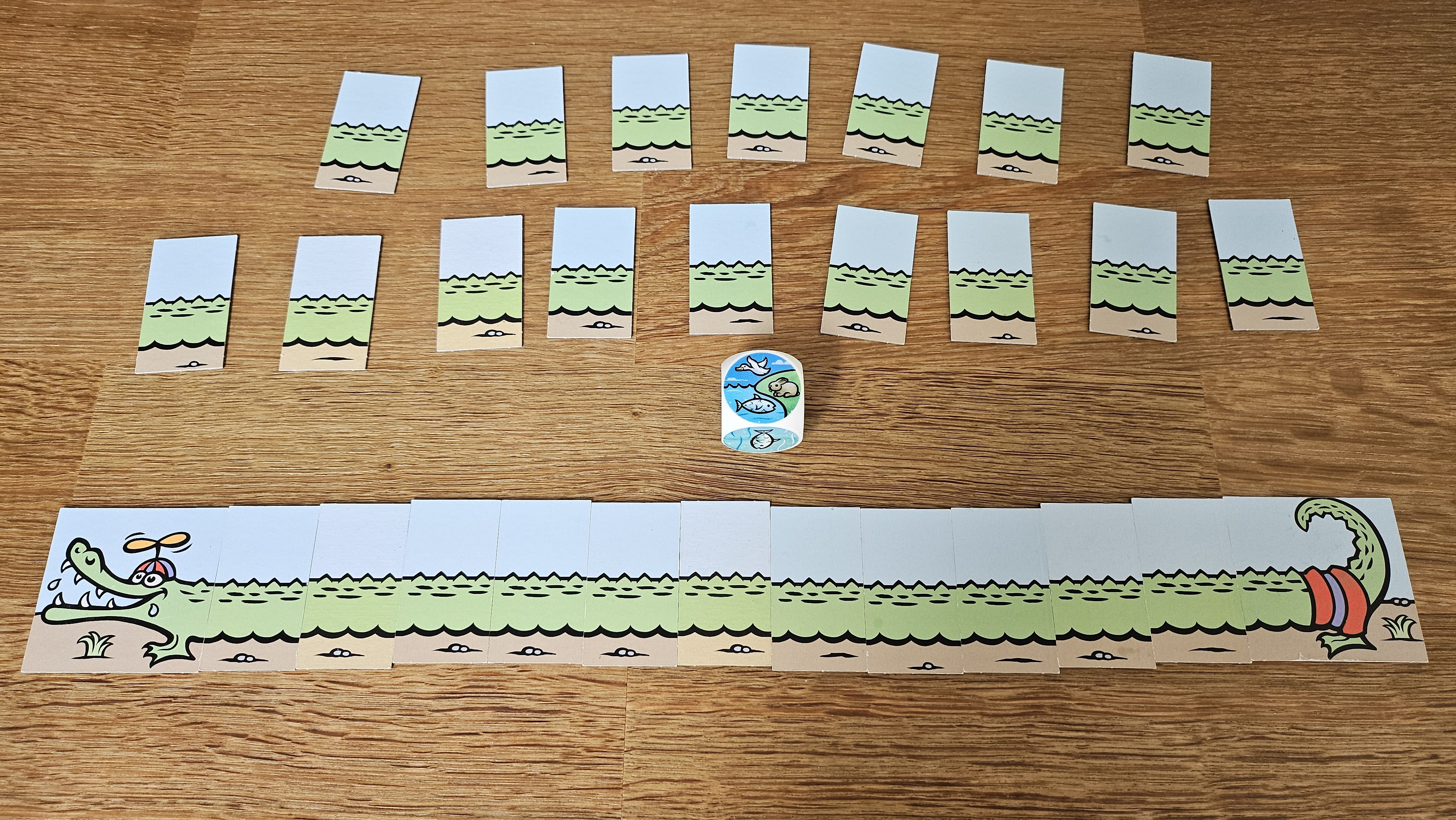
- Kroko Loko co-op: Drop the individual race for the longest crocodile. We build one giant mega-crocodile together. We discuss which cards to flip and where the animals lie that we need to feed the whole system.
- Dragomino co-op: Together, we build one big dragon island to beat our shared high score of found dragons. This is also the variant my son plays solo (a rule he invented himself). The youngest acts as the perfect logistics assistant by pointing out tiles and flipping eggs. (If the children prefer their own islands, let the toddler perform all the mechanical actions for the parent, offering light tips on where the island can connect nicely.)
Patch 4. Via Magica & Catapult Feud: shared goals & shared destruction
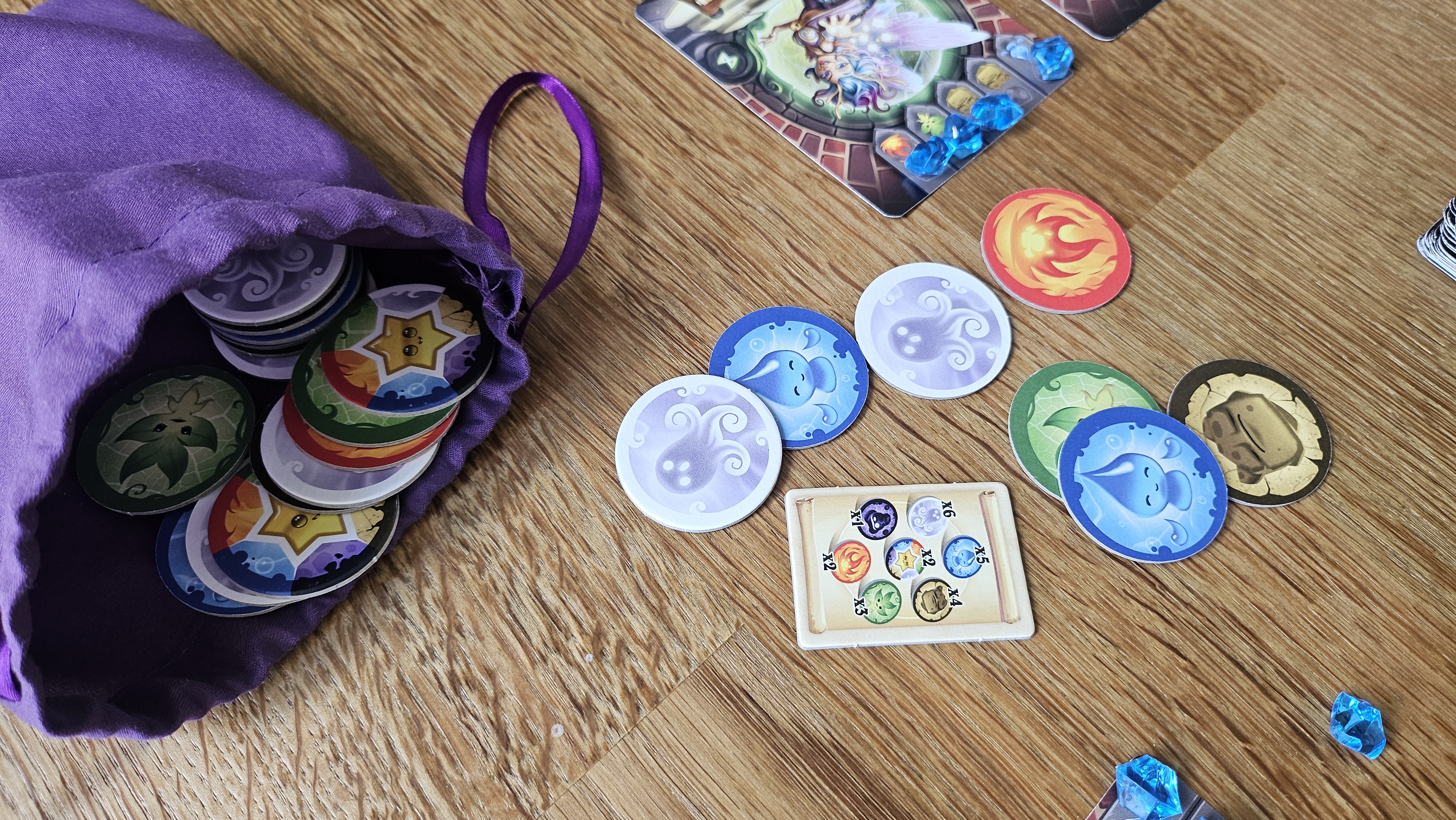
- Via Magica patch: Transform the game from an individual race into a shared server mission: open 10 portals together as fast as possible to win the game.
- Catapult Feud patch: No castles firing at each other. Instead, we build one giant, complex structure on the floor together. Once the construction stands, we deploy the artillery together to knock it down. Pure, shared physics fun without any losers. (The toddler already shoots very well and walks carefully around the structure for the first two rounds; after that, the chances of an accidental stomp rise rapidly!)
Patch 5. Quacks & Co: shared counting power
- The mod rule: In this junior variant, wooden animals race to the finish line by drawing ingredients from a bag. We drop the competition: all four wooden animals must reach the finish line together, because they are jointly carrying the heavy cauldron across the market. As players, we discuss each turn which animal is best to move strategically.
This is how I bend many of my oldest’s favourite board games into something we can enjoy even when the youngest is awake.
Of course, we still regularly play games tailored specifically for toddlers, like My First Orchard, Hop in Galop, and Hungry as a Bear, but I notice my oldest gets more impatient than happy with those. His processing speed just does not match his little brother’s. Fortunately, I can now add Kroko Loko to the list of ‘100% fun for everyone’; with just a few pointers, our play speeds align beautifully and everyone has a blast.
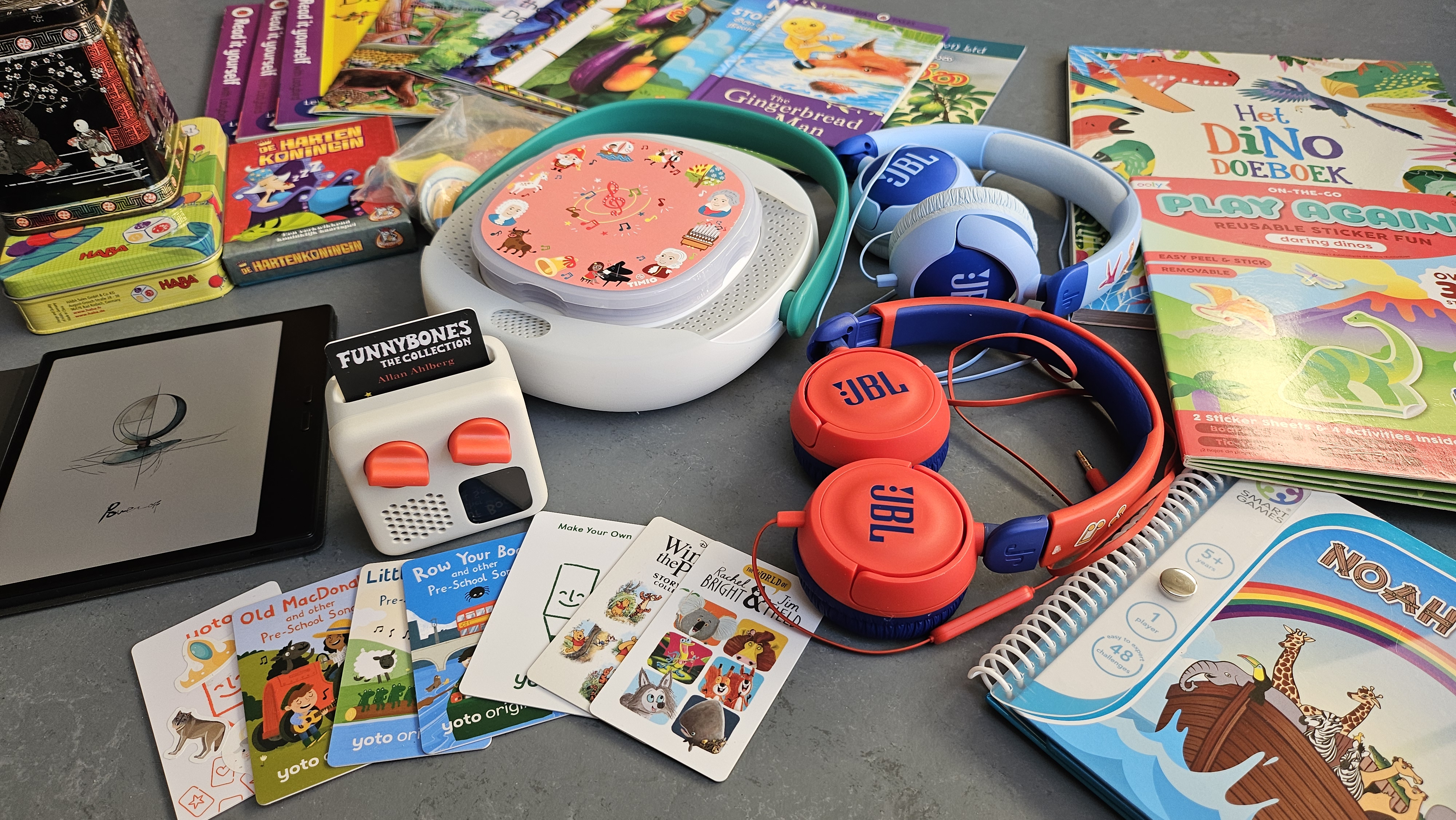
This is the analog foundation; for KidTech products I compare audio players and the bedroom check.
Related articles
More articles on a similar topic.
Comments (0)
No comments yet. Be the first!
Leave a comment
Comments are moderated before they appear.