
Why I practice at home what my work already sees happening

Last month I sat with a new colleague explaining a process I had invented years ago by experimenting, making mistakes, and starting over. At home, my four-year-old wanted a story about a dinosaur and a unicorn. The two-year-old was playing with clay. Those are exactly the kinds of moments I write this blog for.
In short (~30 seconds)
- What: why wheretokim exists; keeping tech legible at the kitchen table, without parenting clichés.
- Not: my children need to become programmers.
- Yes: they need to judge tech, privacy and logic on their own later.
- At home: practising friction, correcting and failing (analog play).
- At work: what I see about AI and entry-level tasks, I deliberately translate into physical games.
- The site: no-hype reviews, calm tooling and structure to practise with.
Let me be clear straight away about what wheretokim.com is for me. It is not a parenting blog telling you how things should be done. I am not an educator; that is also on my about page. I am a mother of two young children (2 and 4) and during the day I work in the world of AI, ontologies and logic. This site is my way of keeping complex tech legible for myself, for my family, and hopefully for other parents who feel the same: that for now, these developments are still within our grasp.
I do not write because I think my children need to become programmers. I write because tech and AI will be part of every job, even if you become a baker, nurse or linguist. And because I want them to be able to judge, choose and have a say in how we use technology: ethically, with an understanding of what is under the hood, and without panic when an app hiccups.
Why this is not a side hobby
If you only read my product reviews, wheretokim looks like it is mostly about the Yoto Mini, TIMIO players and screen-free hacks. That is partly true. But underneath all those tests runs a common thread: I want to prevent AI from becoming an impenetrable black box for the generation growing up with it. While the technology is still evolving in steps, we can expose the mechanisms — by making them analog.
Co-creative AI literacy, for me, means I use AI intensively as a sparring partner for this blog. I do not blog against AI; I blog with AI, but I do not let my children passively consume what an algorithm predicts. They see me use AI to design; they hear the difference between my improvised dinosaur-and-unicorn story and what an app predicts. Life at home is chaotic: a book with pages torn out, cars that have to fly off the racetrack instead of winning the race as fast as possible, a preschooler who would rather jump into the water table himself than use the boat that came with it. That is not an Instagram-perfect family. It is my laboratory. The blog posts and the tools I’m gradually adding to the site are, for me, the same project: translating KidTech to the home situation, without diving into the parenting genre.
And yes, sometimes I do nothing with ‘learning’ for weeks on end. Reading is reading, playing is playing. I follow their pace. But I do often pause deliberately on the logic behind things we are starting to take for granted. Not out of nostalgia, and not because I am afraid of power cuts, but because my work shows me every week what happens when you skip those steps.
The pipeline I can explain
At work I regularly teach new colleagues the skills I built up over years. Not picked up in a course, but by experimenting, failing, leaving something half-finished, identifying the friction points, and then doing it differently. Last month we went back to the basics by doing step by step, manually, what a prompt can automatically prepare for us. Only then do you see again how impure your data sometimes is, but also which opportunities you miss because the data has become richer. You discover chances to add more detail so retrieval from the database becomes more accurate and faster. Even with perfect output, your logic can be outdated so something that once worked perfectly now delivers suboptimal results. It lives in that nagging, uncomfortable feeling that something isn’t quite right.
More and more often, that built-up knowledge will already sit inside an AI pipeline. On top of that you can fall back on documentation, templates, automatic checks (including periodic analysis of the logic) and an assistant that writes the first version. I can explain the pipeline and the why. Step by step. With screenshots and examples the AI prepares for me automatically.
But how do you teach someone the feeling that the logic needs adjusting?
A language model can give a perfectly phrased answer about why a process works. It cannot reliably feel when reality has shifted: an edge case that was not yet in the training or data, a stakeholder who meant something else, or that perfect scientific graph that is not ideal for what the applications want to do with it. You only recognise that once you have been through the muddy version yourself. Once you have had to analyse, formulate and rearrange your logic a hundred times yourself, and screwed up your development branch multiple times along the way.
Young professionals let AI write their first drafts. That’s understandable; it saves time, and I do it too. The problem isn’t the tool. The problem appears when you’ve never learned what a well-thought-out version actually feels like. You miss the intuition to see that the output sounds plausible but completely misses the point. You miss the hallucinations, or worse: you don’t notice the question itself was wrong.
I call that the junior paradox. If AI takes over all entry-level tasks, how do people grow into the ones who formulate the vision, guard quality, or decide the whole framework was wrong?
When the app does not do it

The same paradox plays out at home, only with different stakes.
My four-year-old wants a story. I can ask an app to generate something about a dinosaur and a unicorn and he gets a polished, neatly structured story. He listens. He consumes. There is no friction, no search, no moment where he has to think up what happens next himself.
The day can also unfold differently than expected. If certain toys cannot be found or a tool doesn’t work — right when that game was promised upon arrival at home — it’s the end of the world.
That’s not a prepper scenario. That’s Saturday.
School does an incredible amount, but I have the sense that pupils are often already a step ahead of policy and the curriculum. I do not yet know how I will connect with the AI world my future teenagers will actually live in. The applications I look for and deal with in daily life are different from theirs. What I can do at home is give my children practical tools for judging AI and tech, and for building understanding so they can always reach for analog alternatives when their go-to tech hiccups. I can deliberately make room for the messy steps that will soon seem unnecessary anywhere, because an app will do it.
Not every day. Not as a pedagogical project. But regularly enough that my children practise structure without a tool, remembering without a photo, correcting when someone (or something) makes a mistake.
Three exercises that help
These are not tricks to prep your child for an office job. They are exercises that train the same brain muscle as at my work, only with the contents of your kitchen cupboards, loose toys and picture books. My children cannot read yet; everything here works with talking, pointing and sliding.
The floor plan on the floor
We need a plan for making breakfast, a fort for Catapult Feud or an obstacle run past lava and dinosaurs. Three totally different things, but the pattern is always the same.
First we dump everything that belongs to that idea on the counter, the floor or the tiles. No order. My four-year-old shouts what needs to go where. My two-year-old quickly claims his catapult so he is not forgotten, or starts eating already. That counts as participating too.
The skill: sort what belongs together, then lay out a row of what has to come first. Out loud, with pointing.
| Situation | What we do (the mess) | The logical skill |
|---|---|---|
| Breakfast | Plates, cups, nuts, fruit, bread and spreads in a pile. | Sorting & optimising: what comes first? How do we fill the plates efficiently without opening the fridge or pantry five times? |
| Catapult Feud | Blocks, figures, catapults and balls mixed up. | Structural logic: where do the walls go to protect the figures? What is the safe route around the fort? |
| Obstacle run | Pavement chalk, stepping stones and dinosaurs in the backyard. | Layer logic: lava first (the ground), then the islands, then the dinosaurs. Otherwise you have to colour around everything. |
Sometimes the plan fails before the row is finished: the toddler eats the nuts early, or we accidentally knock over the fort. With Catapult Feud we already know that from playing at two speeds. Then we find a fix and start again, just like debugging in app development.
Later, when AI fills in a table of contents or step plan in three seconds, they will once have felt what it costs to first think about what belongs where, and what can only come after.
Three things out loud
After a walk in the neighbourhood the children can always tell which cats were ‘at home’ and which were not. I even pay attention to this myself when I walk without the children. Animals move and stand out most, but what other things did we see three times along the way?
The green bin. A red car. A poppy. My four-year-old names them out loud in his own words. My two-year-old joins in with what he remembered; sometimes that is one word (bird!) and sometimes he says what we did not see (penguin no). Not answering the question, but still actively joining the conversation.

We do this without taking a photo or writing anything down. Only looking around more consciously, thinking back, and recalling what your eyes captured, rather than your camera roll.
AI and photo albums remember everything for us. But if your brain does not make active snapshots, you cannot draw connections later. You scroll back through a gallery instead of understanding and remembering.
The AI checker
The most important skill of the coming years is not only creating, but also judging.
I sometimes play the glitchy AI. I tell a familiar fairy tale but build in subtle mistakes. And then Little Red Riding Hood grabbed her iPhone to call the hunter. My four-year-old picks up on it. Wrong! I think a number of the Borre books do this well too; in Borre Saves a Kitten the dog suddenly grabs a phone to call the fire brigade, for example.
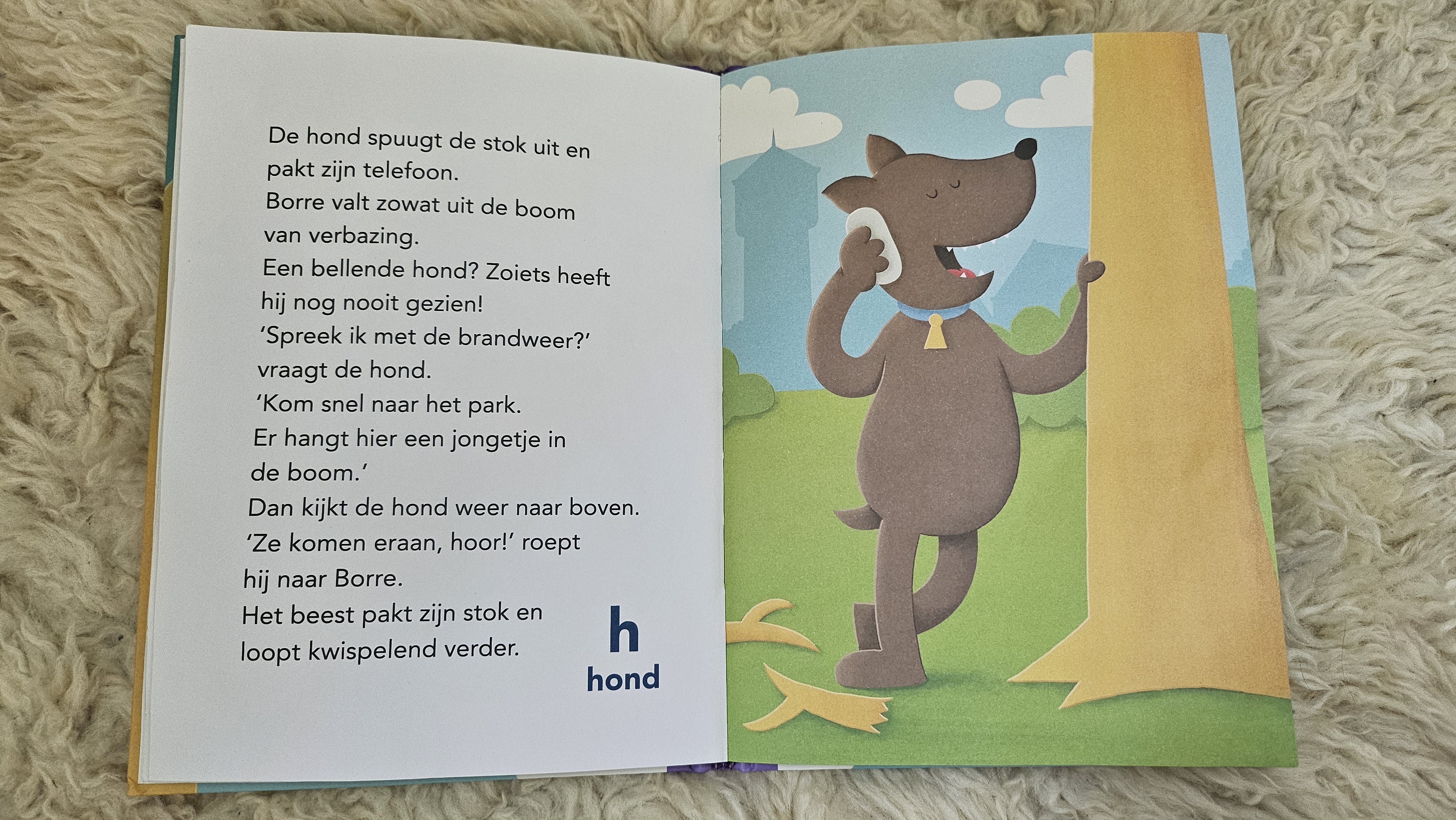
We do the same with algorithmic read-aloud: deliberately a bug in the code, talking loudly while the lion sleeps. He corrects me straight away. That is not a simple game. That is a bullshit detector in training. This also happens when I accidentally make a mistake while reading; my four-year-old knows his favourite books almost by heart.
Later, when a language model writes a school essay or a policy note, they will have practised the feeling that something does not have to be right, even if it looks neat or a ‘reliable’ person tells it.
Global citizens, not just wifi-proof children

If I only talk about power cuts and offline hacks, I miss my own point.
I hope my children can build a good life later, handle what they have ethically, understand the world, and be self-reliant. Even if that means finishing something while the help is temporarily gone. But at least as important: I want them to be able to have a say in decisions. Which data the smart speaker collects. Whether a school app is needed and who may see their results. How AI may be deployed in healthcare or politics.
That does not start online. It starts when your four-year-old asks why the Yoto needs to be online for some cards, or why mum sometimes says ‘no’ to an app. At work the guardrails are set by specialists; at home I have to set the policy. Those conversations connect to hidden costs of screen-free listening and my AI teddy checklist. For products I find interesting, I am also building a bedroom check and an archive of privacy pages, so I can see when promises shift. Practising having a say works just as well at the kitchen table as at the office.
Tech will be woven through their whole lives, more than I can imagine now. Life skills are therefore not a separate subject next to AI for me. It is analog practice in thinking, planning, remembering and judging: the floor plan on the floor, three things out loud, correcting the fairy tale. School helps. Work teaches the hard lessons. At home I add everyday situations and toys lying around.
Playbook for what I deliberately do not outsource
Three things I keep in mind when the week gets busy again:
- Protect friction: We do not have to answer every question straight away with a search on the phone. Thinking together what the answer might be, trying to find the answer ourselves (without Google / an LLM) or coming back to it later: that is learning, not a crisis.
- Practise correcting more than creating: Wrong fairy tale, wrong line when reading aloud, wrong order in the floor plan. The feeling this is not right is a skill.
- Leave room for failure: Some floor plans end on the ground before prep is finished. Sometimes nobody wants to name three things. The world does not always cooperate.
Where we will be in five years
I do not know exactly which apps my children will use in upper primary school. I do know the junior paradox will not disappear. AI will get better at entry-level work. The question remains: who judges, who adjusts the logic, who decides the framework was wrong?
I write wheretokim because I want to practise and share that at home, honestly about what works and what does not. The reviews, checklists and archive are the same laboratory for that: no hype, but practice in judging. Not to prep my children for Silicon Valley, but to raise them as global citizens who understand tech well enough not to be overwhelmed by it.
Maybe my four-year-old will read this in ten years and laugh hard at the dinosaur and the unicorn. Maybe he will recognise the feeling: that you can explain something, and still need to feel when it is not right.
Until then I will keep practising at home what I already see happening at work.
Related articles
More articles on a similar topic.
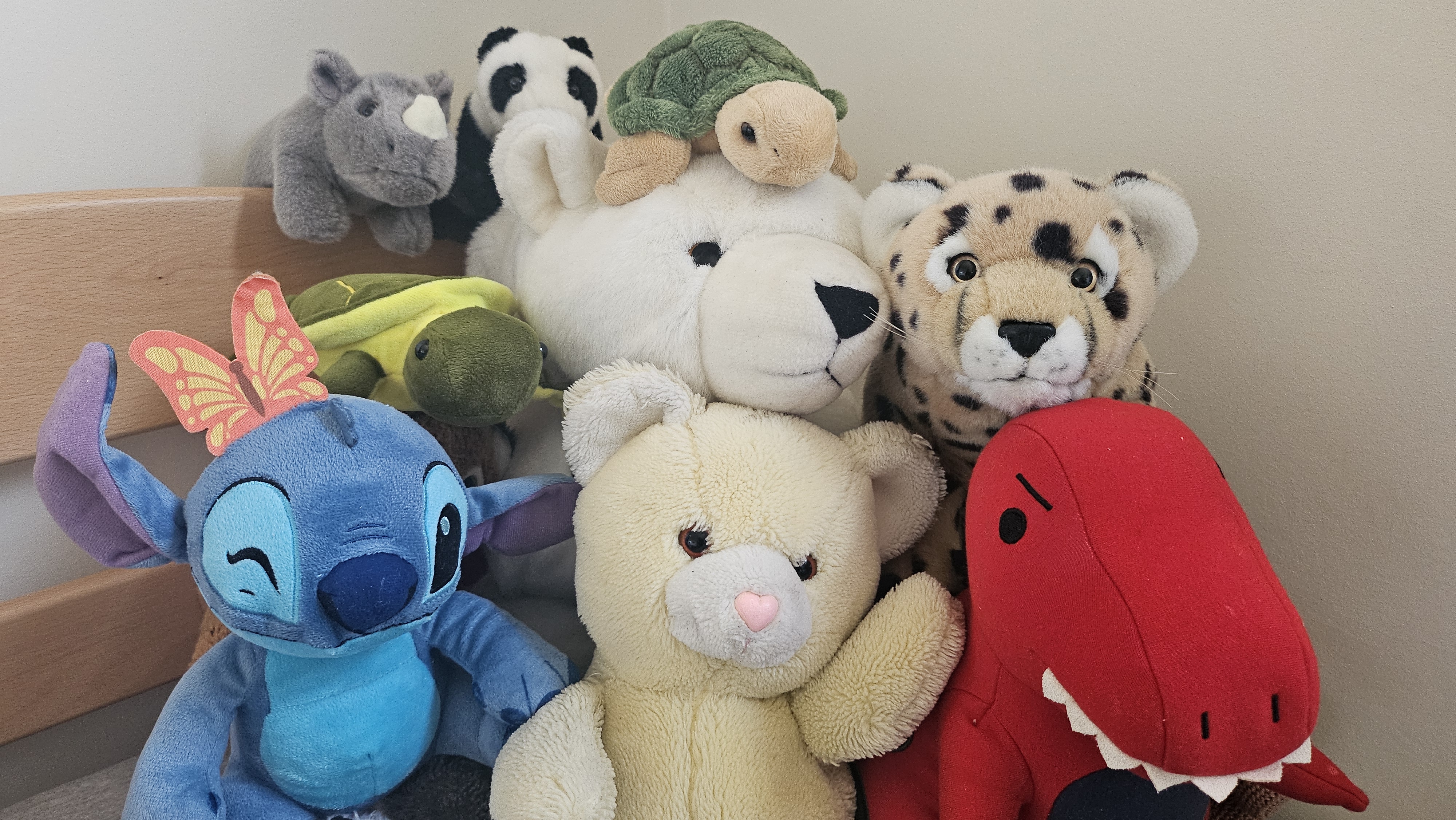
Buying an AI teddy? Five privacy questions before it enters the bedroom (2026)
Read more →

Comments (0)
No comments yet. Be the first!
Leave a comment
Comments are moderated before they appear.