
Buying an AI teddy? Five privacy questions before it enters the bedroom (2026)
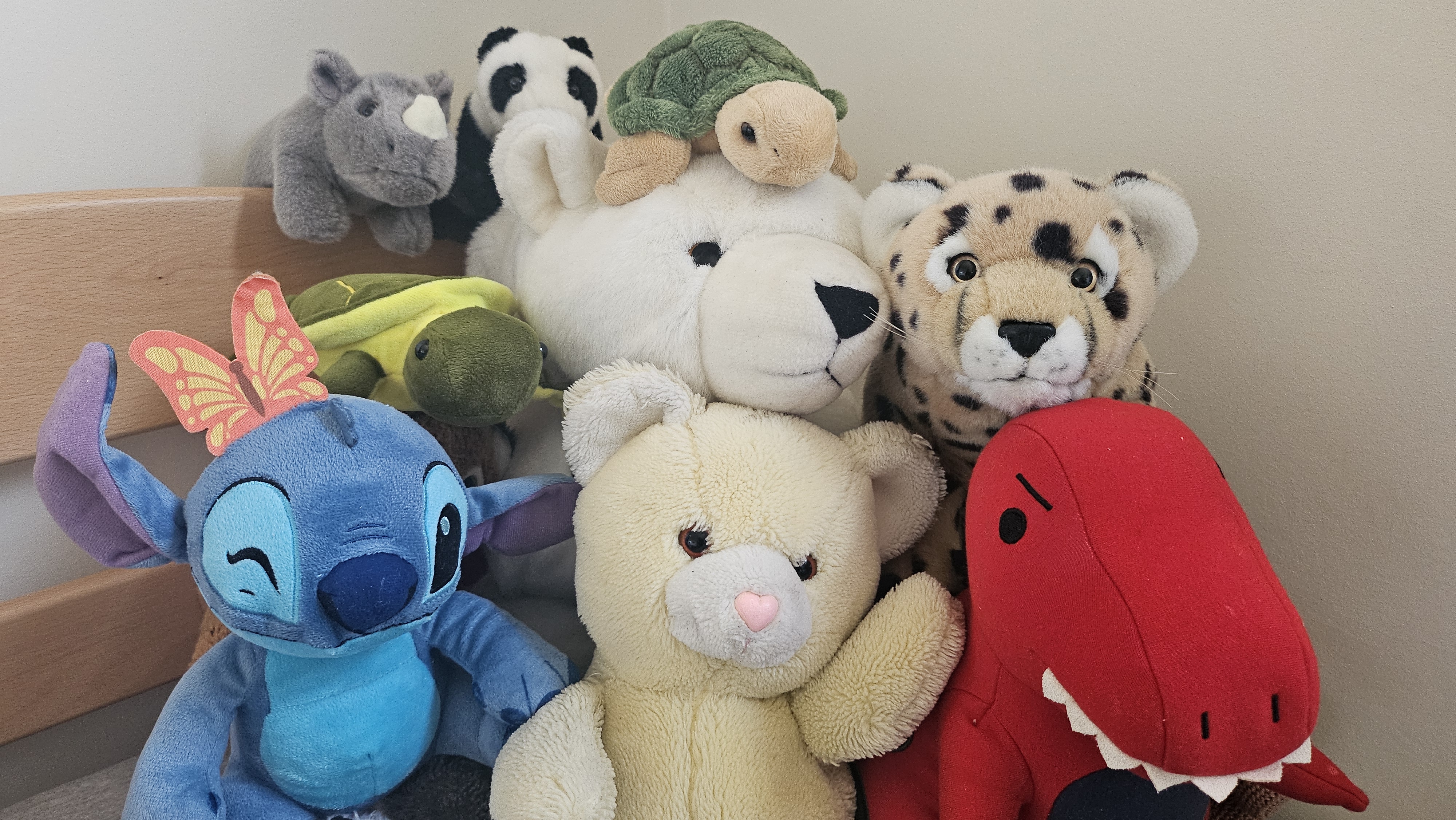
The talking teddy sounds sweet, but what happens to everything it hears when your child takes it into the bedroom? Before microphone data starts feeding into our nightly routines, I want to know where those bytes land and who else might be listening in.
In short (~30 seconds)
- What: five questions before AI toys (especially talking teddies) enter the bedroom — not legal advice.
- Red flags: data to cloud without a hard mute; unclear privacy page; toy that removes social friction or replaces the parent.
- Check: where data lives, who feeds the answers, algorithmic diet, does it replace people, what is the real upside.
- Bedroom: no always-listening device without a physical off switch; active play ≠ sleep.
- Counterweight: offline audio, board games, read-aloud, co-creation under your roof — tech must add something you consciously choose.
- Tool: interactive bedroom check — same five questions, applied per product.
The short answer for the toy shop
Is a talking teddy on the wish list for the holidays? These are the five things I would check on the box and the maker’s website, before you even look at the price:
- Does it listen all the time, or only when you press a button? And can a physical switch really turn the microphone off?
- Does what your child says go to the cloud, or does it stay on the device?
- Do you need an app and an account to make it work?
- Can you see and delete stored conversations yourself? And does it say how long they are kept?
- Who is the maker and where is the company based? If you can’t find that, it doesn’t come into our home.
If you hesitate on any of the five, it certainly doesn’t belong in the bedroom. Below I explain each question.
Want to run the five questions on a specific product straight away? Use the interactive bedroom check: the same dimensions as below, linked to our product database (TIMIO, Lilypad, talking teddies and more). Not legal advice; it is the checklist I use at home. The rest of this article walks through the questions; the tool helps when you already have a brand in mind.

Here at the kitchen table, while the children are having a who-can-sing-the-loudest contest, I look at this pragmatically. I am hugely tech-positive. I love technological progress and gaming, and I use AI a lot for co-creation because I have the wild ideas but lack the drawing skills. I will never build a wall to keep the future out, but I do want to think carefully about the stage of maturity at which it enters our home. Tech should enrich our journey of discovery in a safe and pleasant way, not take it over.
A few weeks ago, news from the United States gave me extra reason to take that attitude seriously. In New York, the Senate and Assembly passed a bill in early June 2026 for a temporary, five-year ban on the sale and production of all chatbot toys. And not just for toddlers and preschoolers. The law still awaits Governor Hochul’s signature and is strongly backed by prominent former OpenAI researchers and the Center for Humane Technology. The concern: children under thirteen could already be leaving too much voice data, conversation content, and emotional inference with companies that call it ‘analytics’. Lawmakers and experts are seriously worried about the emotional dependency these ‘smart’ algorithms can trigger in a developing child’s brain. We must not let the playroom quietly turn into an unregulated test lab for large language models, the warning goes.
As someone who builds AI applications and ontologies by day, I understand those lawmakers very well. This news once again confirms why I need a checklist at home before a talking teddy crosses the threshold.
There is no ban in the Netherlands, but strict European rules already apply, specifically the EU AI Act, the EU Toy Safety Regulation, the Cyber Resilience Act, and the GDPR:
- Voice data, conversation content, and children’s profiles are considered personal data;
- For children under sixteen, you as a parent must give consent for online services; and
- Transparency about storage, retention periods, and training data is not a nice-to-have, but a legal requirement.
If an AI teddy violates a child’s privacy, the Dutch Data Protection Authority (AP) steps in. If that same teddy gets hacked, the Dutch Authority for Digital Infrastructure (RDI) gets involved. And if the software tries to psychologically manipulate the child, the AI Act may not even allow it onto the European market (with the NVWA enforcing that ban). AI toys sit under several laws at once; there is no bedroom certification on the box.
And that is a good thing: you do not want your conversations at home, your child’s spoken thoughts and fears, ending up on a marketing dashboard. A teddy with a microphone that does not switch off automatically after active use can keep listening while you think everything is turned off. That is why I pay close attention to the following points before bringing this kind of toy home: does it have proper certification, what does it actually do, and where does our data end up?
Unfortunately, under the EU Digital Omnibus (final approval June 2026), the strictest high-risk obligations for embedded AI, including toys, shift to 2 August 2028.
I have spent the past few weeks going through Europe 2031: a scenario, not a prediction. The project maps continental choices about sovereign compute, edge AI, and digital sovereignty; for KidTech, that is the kitchen-table version of who hosts the model my child talks to, where inference runs (cloud or chip in the bear), and which data must never leave the house, even when marketing calls it local and privacy-first. That sounds far away until you have a talking teddy in front of you.
My family’s data diet
I deliberately do not share recognizable pictures of my children’s faces or their names on my blog. I extend that baseline rule to anything that happens outside my own hard drive: no photos, videos, or audio clips of my family in AI applications or other tools that process our input.
It helps to draw a clear line. On one side, you have closed, safe systems such as audio players with no internet connection. On the other sits the newest generation of toys running on large language models, listening and responding on their own. That calls for completely different rules. Products like ChattyBear show why a ‘screen-free’ label on the packaging does not reassure me; my preschooler can say the most varied things to a talking teddy, whereas he barely even talks to the TV.

A talking teddy does not only listen when you ask to be left alone or not to repeat something; it also hears the sob after a nightmare, the conversation with a sibling, and the song you belt out in your room when you think nobody can hear you. Privacy here is not an abstract GDPR article, but the difference between a secret you choose to share and a device that listens because it is always on.

Five questions for the ultimate AI toy check
Before a talking teddy, robot, or smart toy with a microphone crosses our threshold, I ask these five questions. It’s not legal advice, just the checklist I use myself.
Arvind Narayanan and Sayash Kapoor write in AI Snake Oil that we should stop lumping all AI together. What is marketed on the box as a single smart system is often a mix of technologies, each with its own limits. Generative AI can hold impressive conversations, but predictive AI that claims to know what your child will need tomorrow fails far more often than marketing suggests. The authors call that snake oil: products that do not work as promised, and whose promises are not yet achievable. That applies even more to AI toys. There is often no evidence to back up the word ‘educational’; ‘AI’ is not a certification of quality. I read those words as an invitation to look more closely at the toy through the five questions below.
| Question | What to check | Red flag |
|---|---|---|
| 1. Where does the data live? | Cloud or local on the device? Is there a physical button to truly mute the microphone? | Everything goes to the cloud with no hard mute. No transparency about storage. |
| 2. Who feeds the AI? | Who decides the teddy’s answers? What happens if I influence the answers myself? | Unknown developer. You unknowingly build an echo chamber inside a toy bear. |
| 3. Zombies or self-starters? | What does the toy do to our children’s algorithmic diet? | The toy automatically adapts to every interest. The child no longer has to invent anything. |
| 4. Does it replace people? | Its role versus a parent, sibling, or playground friends. | The playroom becomes fully automated. Social awkwardness is smoothed away as if it’s a programming bug. |
| 5. What is the upside? | Infinite patience with repetitive questions, or fuel for curiosity? | No concrete benefit compared to what you can already offer offline. |
1. Where does the data live, and is there an emergency brake?
Does the talking teddy or robot store everything in the cloud, or does processing happen locally on the device itself? And if it goes to the cloud, is it stored and used as training data for the model? Most important of all is the hardware: is there a physical button that lets me truly switch the microphone off when we want an undisturbed family moment?
Update July 2026: With its handbook and GDPR checklist published on 13 July, the AP reminds us that data protection in generative AI applies to smart toys too. Social robot Moxie serves as a warning about cloud dependency: after Embodied’s bankruptcy in late 2024, the robot looked dead, then got a second life via moxierobots.com. As long as the servers keep running, at least. A strong real-world case for question 1.
2. Who feeds the AI (and what if we do it ourselves)?
In my work, I spend every day improving the quality of our AI applications. That makes me wonder who decides what the right answers are when a teddy talks to my child. Often, we do not even know which developer in Silicon Valley we have unknowingly handed a piece of our parenting to.
But there is another side: what if you can fully personalize and train the toy with your own norms and values? That sounds fantastic, but an AI copies human blind spots flawlessly and amplifies them. Before you know it, you have built an echo chamber inside a toy bear that gives your child a heavily skewed view of the world. Narayanan and Kapoor warn in AI Snake Oil about another kind of snake oil: the impression that a machine can deliver empathy as if it were a human trait you can simply dial up. A teddy that ‘always understands’ how you feel sounds reassuring on the box; in practice, it is a statistical pattern that recognizes your tone and words, not your child as a person.
Here, I would also draw a comparison to the talking portraits in Harry Potter: each portrait still carries something of the character and agenda of the person depicted. It doesn’t have to be a talking teddy: what if someone makes a talking portrait of a parent? Or a teacher? The question of who the maker is, and which political ties or version of history they represent, may become the most important question of all.

3. Are we raising zombies or self-starters?
We all know the effect of the automatic Netflix button or endless scrolling: the algorithm takes over and we become passive. If an AI constantly adapts to your child’s current interests, you unknowingly lock them into an algorithmic taste bubble. They get fewer chances to grow or accidentally discover something completely new, purely because the system removes all friction and challenge.
We really need to think about our children’s algorithmic diet. Just as we would not feed them sugar all day, we should guard against a cognitive diet of quick, pre-chewed dopamine fixes. I think we all want children to be able to set their own boundaries and figure out for themselves what they want to build (with technology), instead of passively following along.
With adaptive stories or toys that adjust to overheard ‘interests’, the question is not whether it is technically possible, but whether it does something useful. Where is the room for friction? Cheating with a gleeful grin during a board game. Giving up when something is hard, then picking it up again weeks later and pushing through, powered by their own strength.
4. Does it replace a toy, or does it replace a person?
Do we really want the whole playroom wired up and automated? However well a talking AI listens, it must never replace a parent’s presence. Or the awkward, muddy, totally unpredictable reality of making real friends at the playground. Social awkwardness belongs there; it is a learning moment, not a programming bug we should smooth away.
The talking teddy looks like a Tamagotchi in fur, but behaves like a social robot: an object we assign trust, comfort, or company to. A teddy with Wi-Fi goes much further than a pet or a lifeless stuffed animal. The question is not whether children like such a teddy, but what role we give it. Does it replace comfort after a scraped knee, or fill the silence that should really be space to learn self-regulation? If you treat a talking bear like family, the way many people treat a pet, you also have to ask real family questions about who sits at your table and whether you want them in the bedroom.
5. What is the unmistakable upside?
If the guardrails are safe, the potential is huge. An AI has endless patience for preschoolers who ask for the hundredth time why they have to do something. Especially for children who want to learn new things fast, a safe tech environment is a great way to dive deep into topics. It democratizes learning and gives children access to knowledge we cannot always offer offline right away.
Pediatric researcher Dana Suskind is publishing Human Raised in July 2026, a framework for judging smart baby and toddler products. I have not read the book yet, but her public HOPE principles already align with my checklist: human connection is irreplaceable; the early years deserve protection; technology should strengthen interaction, not take it over. Suskind frames it as a ‘Human Edge’ no algorithm can copy: critical thinking, empathy, real creativity, and resilience. When I ask question five (‘what is the upside?’), I filter for the exact same things. A teddy with endless patience for repetitive why-questions can be a great tool, as long as it does not replace waiting for a real parent or hearing an annoyed sigh from an older brother.
Playbook for the bedroom check
Before smart toys enter the kids’ bedrooms, it helps to watch for the following:
- Read the privacy page before buying: Look explicitly for cloud storage, microphone standby, data retention periods, which third parties receive data, and whether conversations become training data. If it’s not clear, it doesn’t come in.
- Test the physical brake: Turn the device on, press mute, and check whether it really stops listening. No hard switch means no bedroom access. Sleep mode is not enough.
- Separate active play from sleep: Many toys fit the play corner at night much better than the bedroom. Anything that can communicate outward is better kept in the living room at a young age.
- Ask about the upside: If the only plus is that it is cute or new, a board game, magnetic building blocks, or a book beats a talking teddy. Tech should add something you as a parent consciously choose, not just act as digital candy.
- Plan counterweights: Intentionally schedule parts of the day without technology or listening gadgets. That keeps the value of friction and imagination front and center.
Counterweights at the kitchen table (and on the laptop)
Not everything needs to carry a tech metaphor. Colored pencils, craft paper, and plain old storytime are not ‘KidTech’, but they are essential parts of the picture: friction, inventing something yourself, and no device listening in. Below is what we actually do at home, plus what is on our wish list.
Karak and rules you can bend
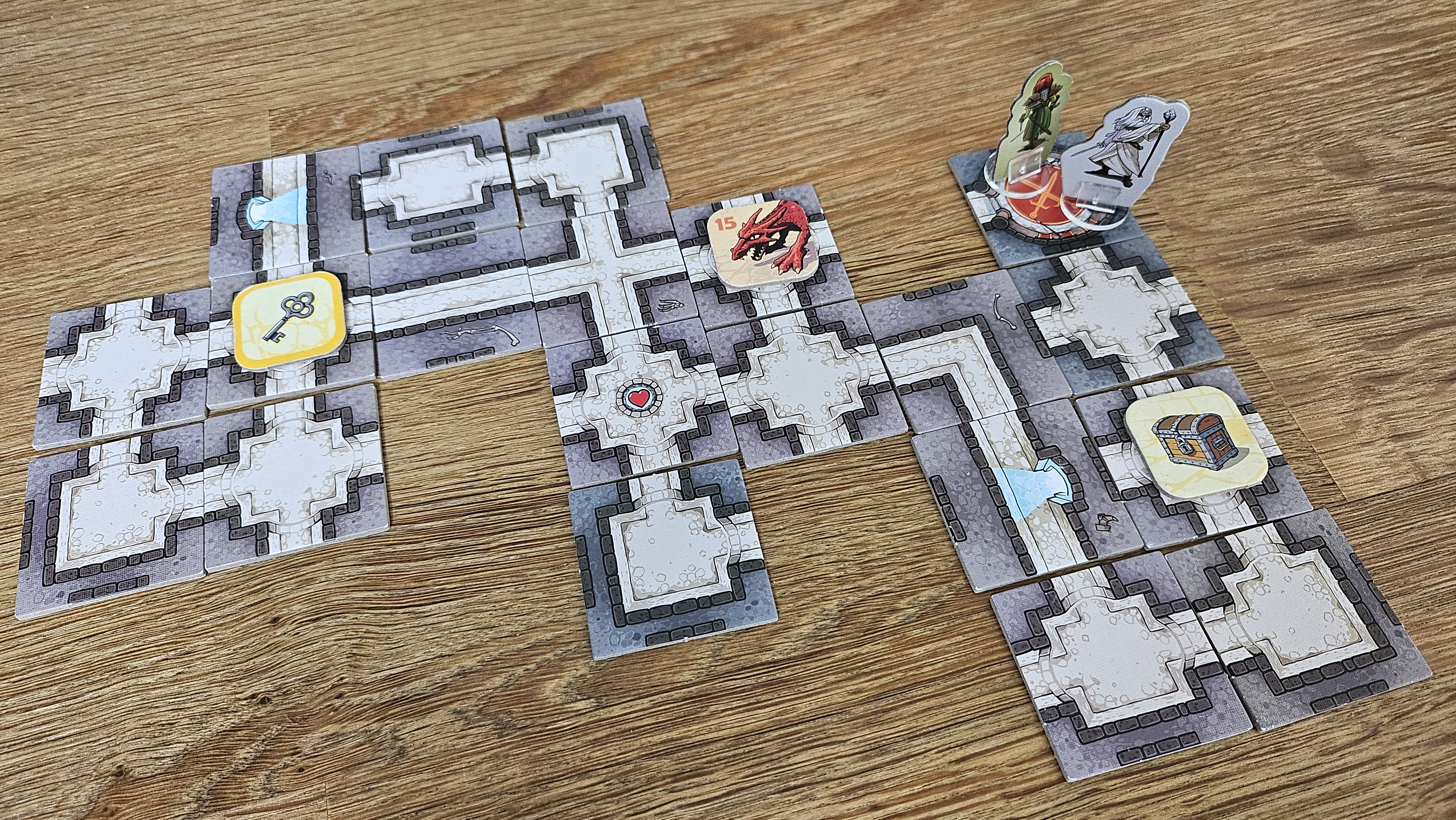
You have just opened your first treasure chest in Karak, when the four-year-old decides you are no longer playing against each other, but with each other. On top of that, he wants full control of the bag of monsters, and he barely tolerates his little brother drawing for me. Usually, I am completely fine with that: if you ask what he loves to do the most indoors, it’s playing a game with me. In his bedtime games, he can do whatever he wants with the rules. If we play around lunchtime, I sometimes ask him to stick to the rules. It means more of a challenge for both of us, and stops me from just passively ‘being present’. Everything has its time and place. Losing, or a Pyrrhic victory, is part of the experience.
Connetix, SmartMax, and no undo button
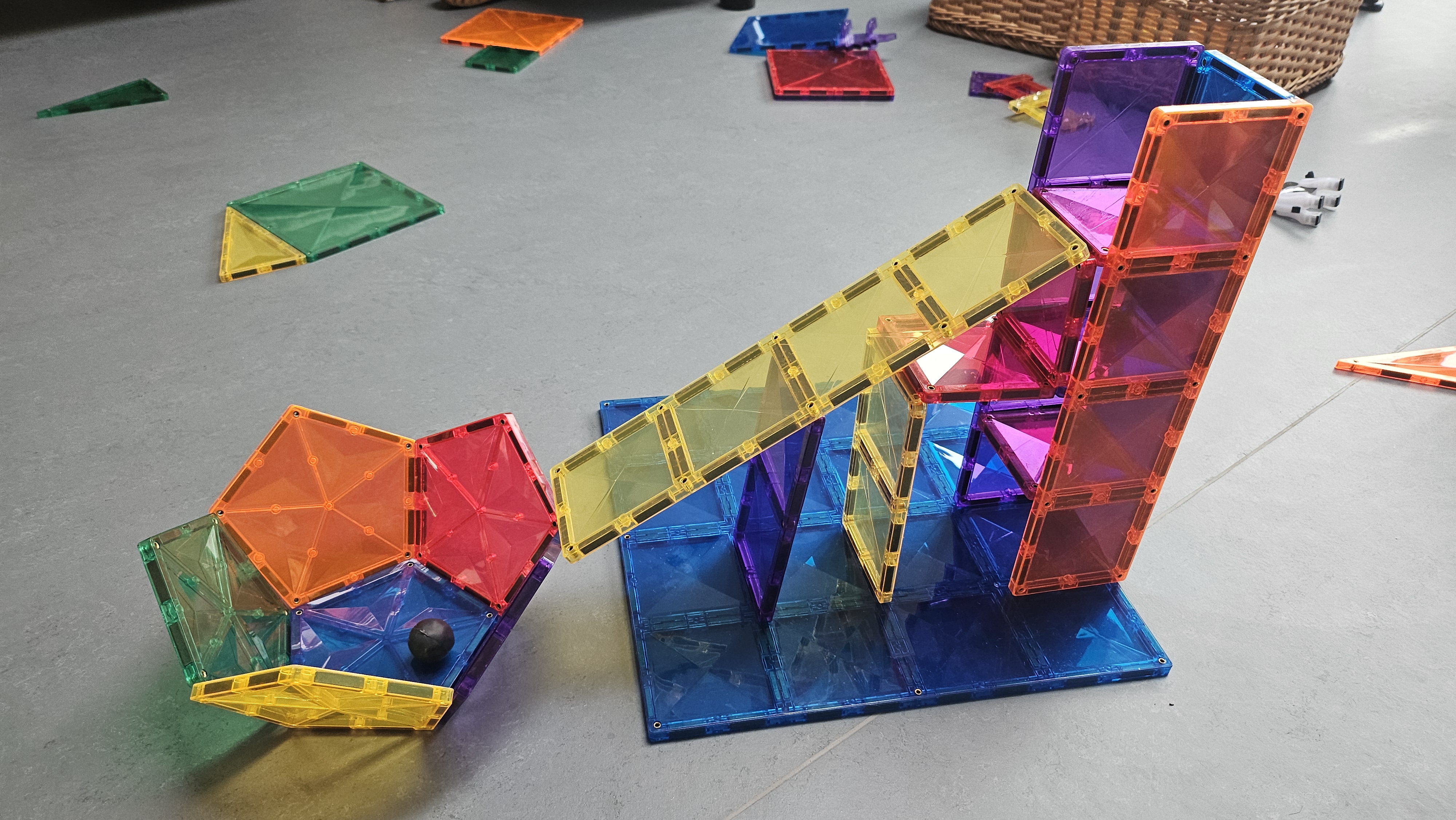
On the floor lie Connetix tiles next to a pile of SmartMax rods and magnetic balls. We have a lot of SmartMax; the youngest is still discovering what happens when he pushes two things together or pulls them apart. The oldest builds a Connetix palace, placing his brother’s favorite SmartMax animal or the Magna-Tiles farm animals in one of the palace rooms. What will happen when the youngest spots his animal?
The game spreads out into a stained-glass floor that gets walked and run over. And a marble run that mama builds, which gets destroyed on purpose after the very first falling tile. Towers do not last long either with two children in the room (and of course, the best part of the game is letting the tower collapse at the end). There is no cloud backup here, just pick up the pieces and start again. Gravity and magnets are the physics engine here; the children learn that building fails without someone else smoothing it over for them. Falling down and getting up. No saving and reloading; it’s a bit like how I remember Prince of Persia from back in the day: running the first section a hundred times until you finally make it onto the boat.
Freddi Fish and fixed stories on the laptop
Screens and privacy are not automatically opposites. Sometimes we open the laptop for classic adventure games like Freddi Fish. A fictional world, a fixed script, and no microphone listening into the bedroom. I sit beside them; my child clicks and discovers; the game does not adapt when things are going poorly or when my child is actually a bit tired. That is a completely different category from a teddy that ‘understands’ how you feel.
Fictional stories and pictures
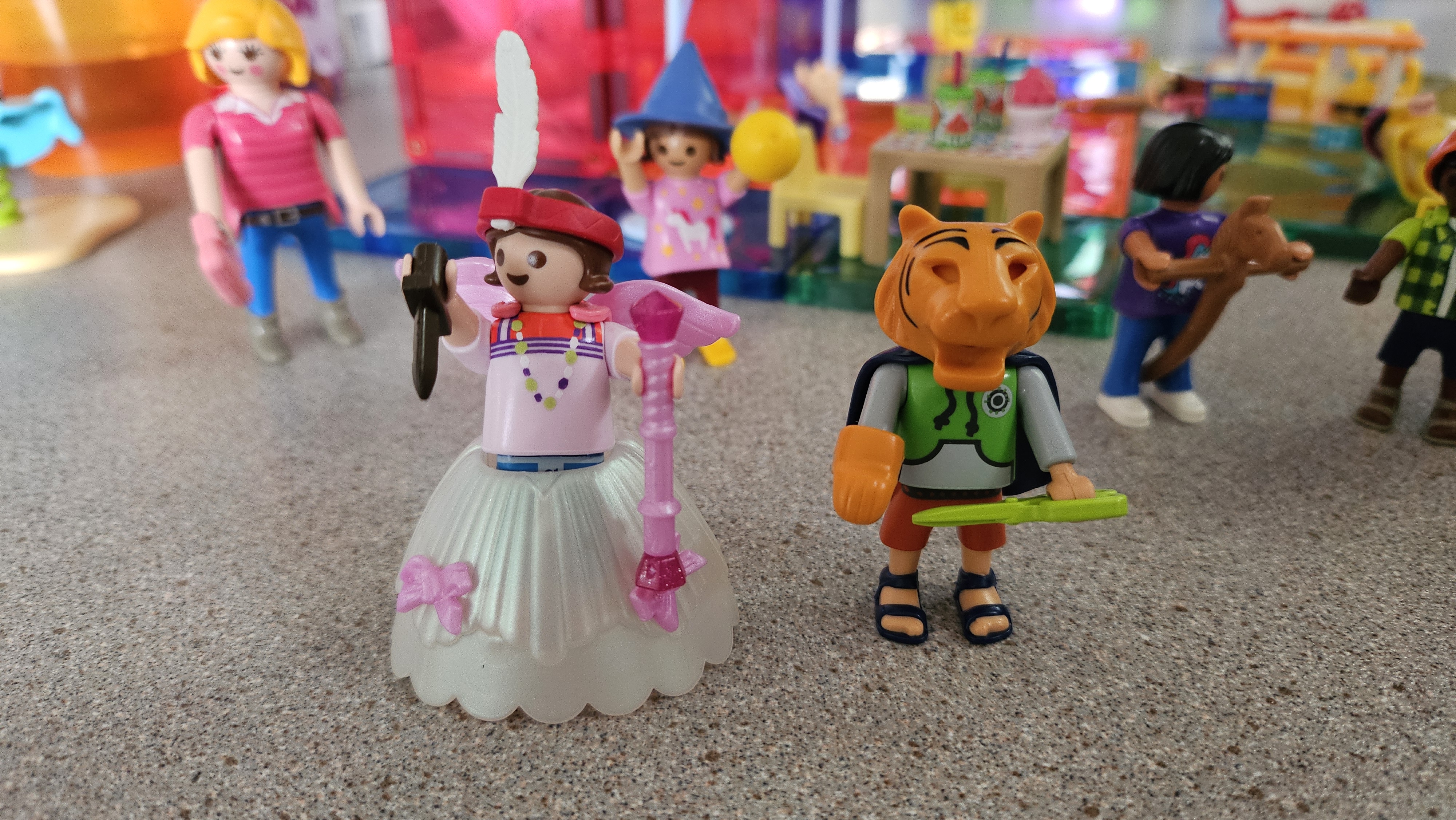
My four-year-old loves making up his own stories. Sometimes those are drawings on paper; sometimes we make fictional pictures and mini-books together on the laptop (think Gemini Storybook), but only featuring invented characters and situations. No recognizable photos of the children, and no names in the AI cloud tied to their real identity. It is co-creation under my roof. Sure, that data still goes to the cloud and may train models, but it’s only a good thing if AI models learn a bit more about dino-unicorns, right?
Bookinou and NFC (on our wish list)
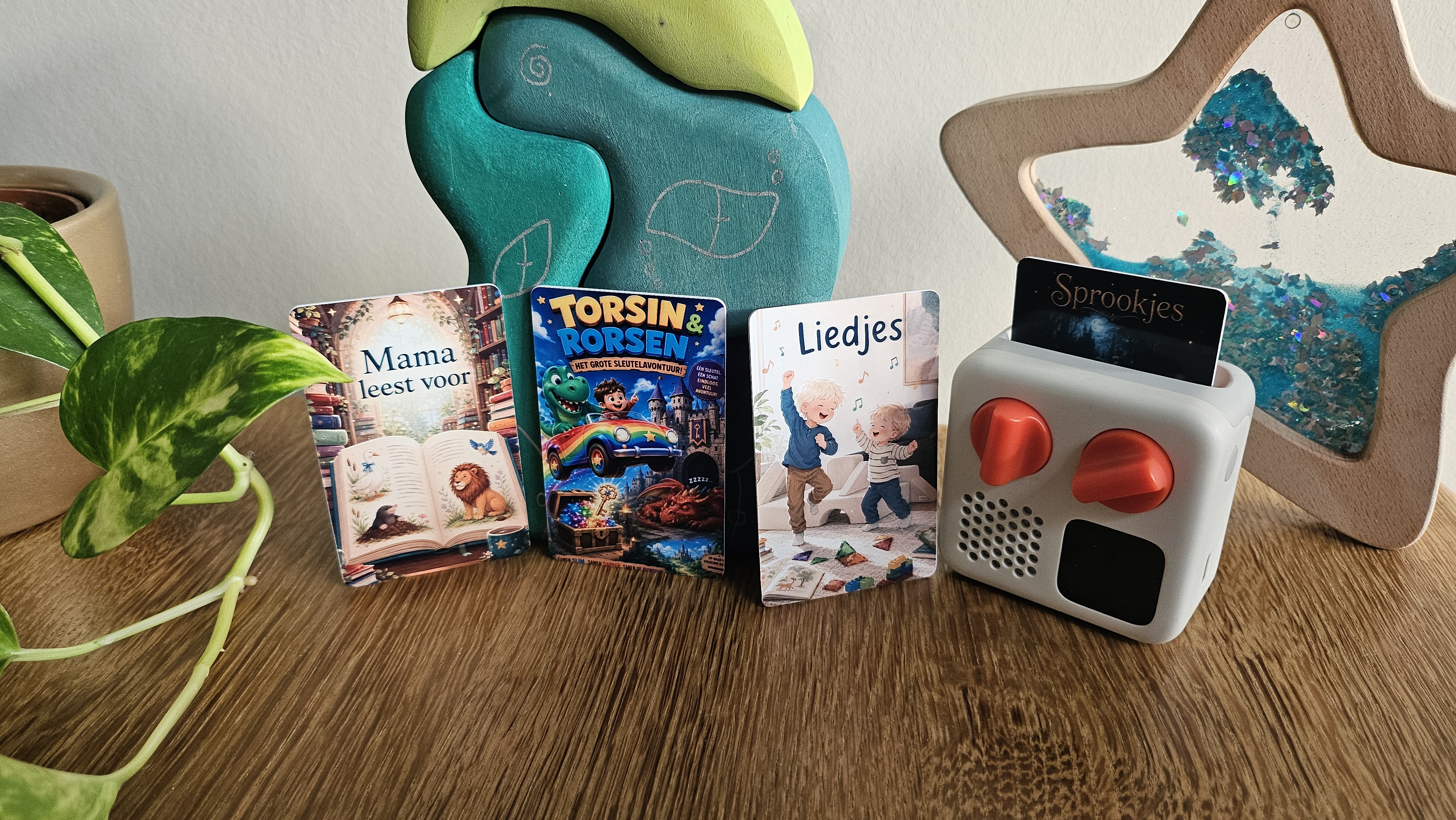
I haven’t worked with NFC stickers myself yet, but Bookinou and DIY audio cards are on our wish list: linking your own sounds to physical objects, similar to what Yoto MYO does, but without the brand lock-in. It’s something we want to experiment with soon. If it is fun, I will write about it later.
What absolutely stays outside the door
Some tech gadgets promise ultimate creativity but actually deliver nothing but passive consumption. These two stay outside:
The prompt-and-done box
This kind of toy removes the necessary friction from the creative process. When a preschooler presses a button and a perfect result rolls out immediately, they learn that creation is effortless. Skipping the motor skills and mental struggle (the pen slipping, the paper tearing, fixing a mistake) makes the creative mind lazy. It does not stimulate imagination; it stimulates passive consumption. And if the result isn’t perfect, you can’t easily adjust that specific example anyway.
Adaptive real-time story apps
This is the danger of the ultimate algorithmic diet. An app that continuously smooths the storyline in real time to avoid friction, boredom, or difficult words denies the child an important psychological lesson: learning to handle disappointment and unpredictability. Real stories have rough edges and force emotional growth; adaptive algorithms only want to please to maximize screen time.
The uncanny valley of the playroom
Within the next five years, we will no longer be talking about simple talking teddies with a Wi-Fi card. We are heading toward toys with persistent memory: a bear that remembers your child’s birthday from last year, analyzes their emotional vulnerabilities, and subtly smuggles in the commercial values or biases of a tech giant. The difference between a cute memory and surveillance in fur form mostly comes down to whether you ran the checklist before the toy entered the bedroom.
The real fight in 2030 will no longer be about screens versus no screens. The fight will be about physical autonomy versus algorithmic steering. We need to teach our children now that a device, however empathetic it sounds, is a programmed object with a profit motive. And that resilience does not start in front of a talking teddy, but in family interaction and playing together on the laptop: a four-year-old bending the rules of a board game, a two-year-old and four-year-old cheering together at the collapse of their Connetix creation, or playing Freddi Fish together while the ‘smart’ toy sits lonely in a corner.
Frequently asked questions about AI teddies
Does an AI teddy listen all the time? It depends on the model. Some only listen while you press a button, others sit on standby. If there is no physical switch that really turns the microphone off, I assume it can listen in. Sleep mode is not the same as off.
Is an AI teddy allowed under the GDPR? Yes, but a child’s voice, conversations and profile are personal data. Below a certain age (16 in the Netherlands) a parent has to give consent, and the maker must be clear about storage, retention and training data.
From what age is an AI teddy suitable? There is no legal age limit. Our rule at home: anything that can communicate with the outside world stays in the living room at a young age, not in the bedroom.
What is a calm alternative to an AI teddy? An audio player without a microphone such as Yoto or TIMIO, a picture book you act out together, a board game or magnetic building. None of them listen in.
Related articles
More articles on a similar topic.


Comments (0)
No comments yet. Be the first!
Leave a comment
Comments are moderated before they appear.