
Three types of screen-free toys. What does it replace?
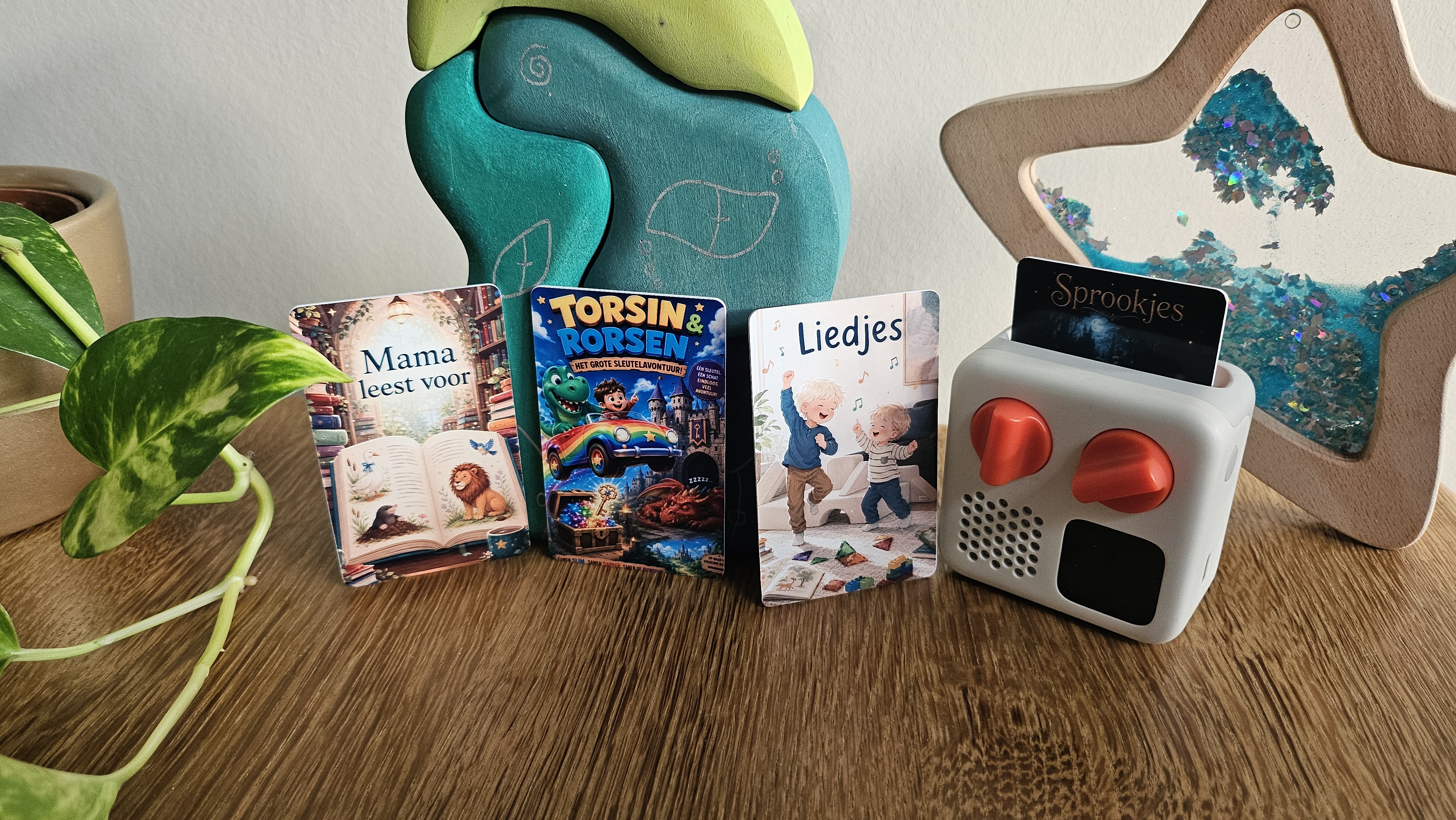
Three boxes in the same ad carousel, all labelled screen-free. An audio player, a drawing tablet, a talking teddy. At home those are three different afternoons, and three different things you do not have to handle yourself for a while.
In short (~30 seconds)
- What: the screen-free sticker on the box covers three trade-offs: a voice, a skill the hands are not ready for yet, a game master, or a playmate.
- What I watch for: what the toy replaces, and whether I want that trade-off today. Not whether there is a screen on it.
- Question at home: would analog toys or a screen do this job better?
Three boxes, three afternoons
My online ads have gone all-in on toys without screens. That is partly because I am looking for them myself, so the algorithm is happy to help. Screen-free is often no longer better than screen-based toys, in my view. The sticker on the box mainly says what is missing. Not what you are bringing home.
I see how proud my four-year-old is when he has taken a lovely photo of his little brother. Something that stays on the table after we print it, something he can point to later. I sometimes look for that pride in toys, and then I get stuck. Because screen-free on the shop shelf covers three very different trade-offs.
Listening replaces a voice: yours, or the TV’s. Making replaces a skill the hands cannot handle yet, or works better on the go. Interactive offers a game master, or a playmate. All three can be a gift on Tuesday and a let-down on Saturday. The Yoto Mini in the garden is a song my children pick themselves while I cook. On a morning when nobody reads aloud, that same player suddenly becomes the whole bookshelf.
Albert Borgmann called this the device paradigm: a device delivers the result and hides the work. Warmth without fire, a story without a book. Screen-free toys can still be that kind of device. So the sticker does not help me much. I want to know which trade-off I am making.
Listening replaces a voice
This is what most parents mean by screen-free. Your child starts a song or a story without the phone showing which track is playing, and without the TV screensaver still drawing attention. The body sits still (except during dance songs), the hands too. It is not active play. It is a voice you do not have to be for a while.
At our house they grab the Yoto Mini or the TIMIO themselves when they want to hear something. They choose what. That is the trade-off I brought home first: my voice for fifteen minutes, or music without the TV. Bookinou flips that trade-off around. The physical bookshelf becomes the trigger; you record the stories yourself. I did the same for our Yoto Mini. I love the idea. Most days I can read a lot of books aloud. I just cannot sing all day.
Within this category you have to separate plain listening stories from listening adventures and games. A Yoto or Toniebox listening story offers a voice. Tonieplay or an interactive Yoto card offers a game master who talks you through the game and the choices. I have created one of those interactive cards for our Yoto because that middle ground interests me. Listening that can grow into an adventure, without bringing a full game platform into the house straight away.
The snag: when your child only hears what the ecosystem allows. Then you are not just replacing your voice. You are replacing the library and the bookshop.
Making leaves something behind
The philosopher Hannah Arendt distinguished labour from work. Labour lives in the doing and is gone afterwards, like harvesting what you eat. Work leaves a thing behind in the world. Listening and screen-free colouring books are often the first. But much of what gets sold as making promises the second: a drawing, a photo.
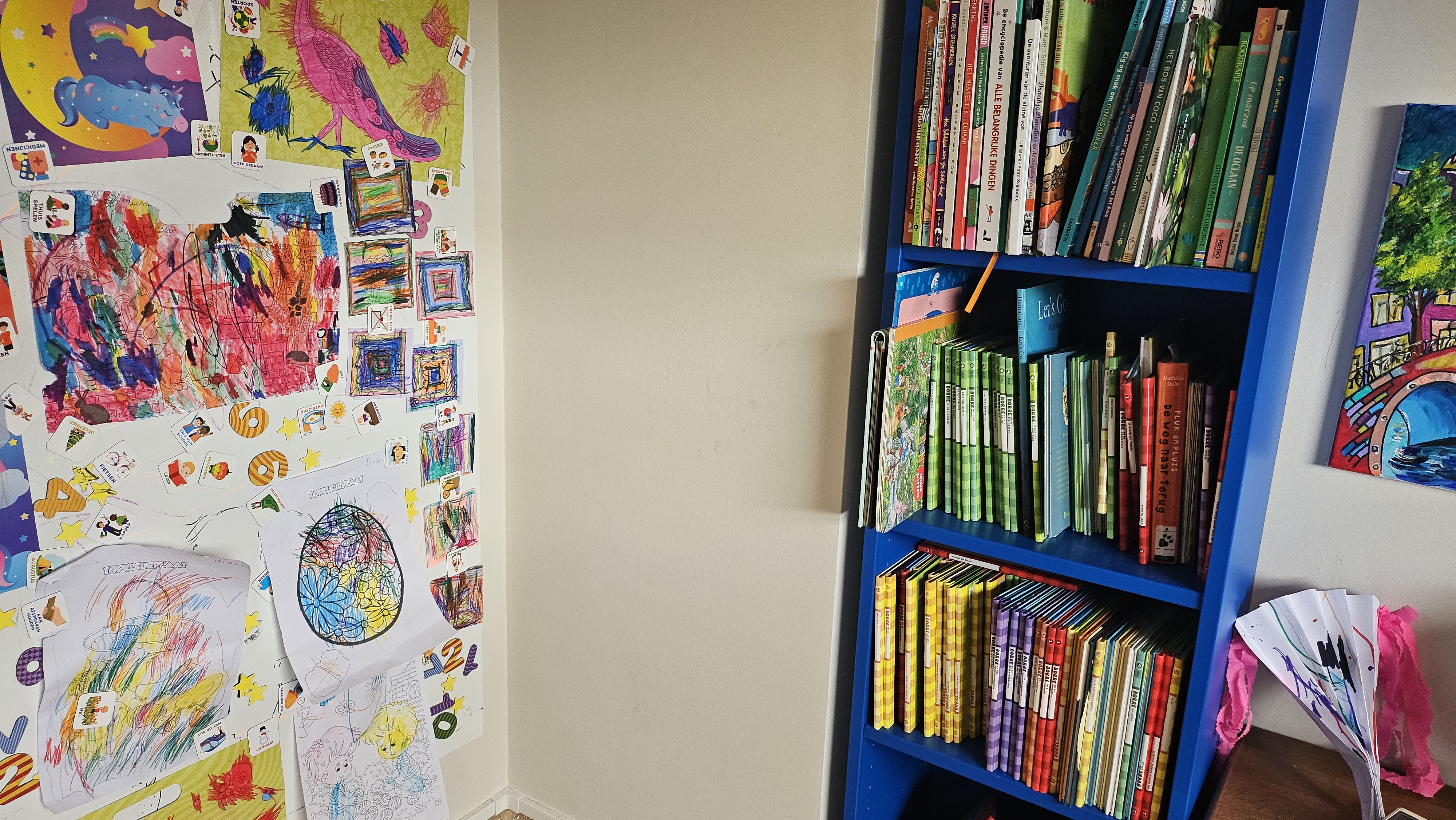
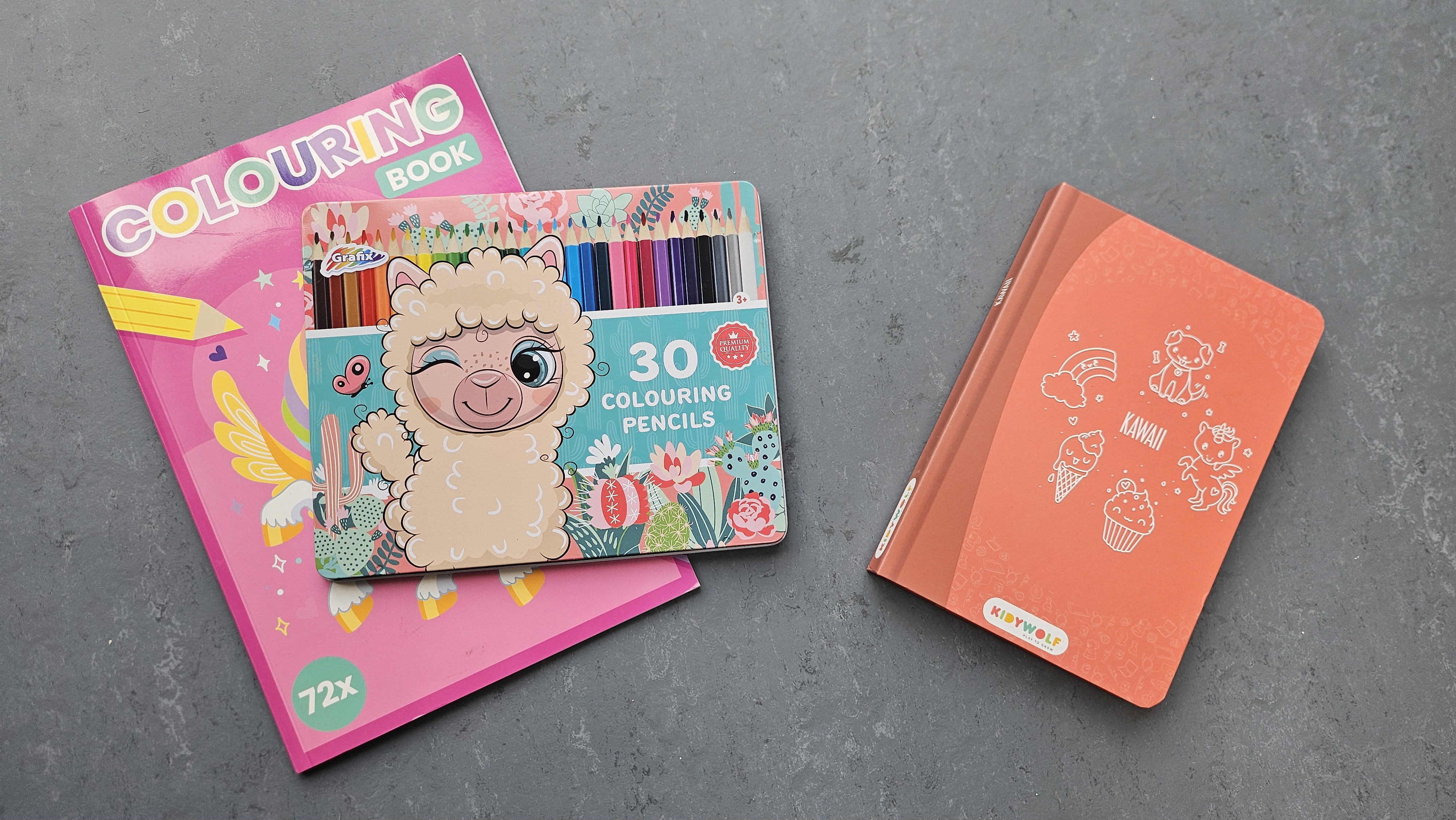
Here, autonomy is less often the reason to buy. The trade-off sits somewhere else. Sometimes it is compactness: everything in one booklet, no box of pencils in the car. Sometimes it is a bridge when the picture in their head is ahead of their motor skills. A good drawing tablet guides the fantasy in their head into something visible; AI does the same for images I cannot get onto paper myself.
We have a KidyDraw Mini at home: a drawing book with an LCD screen my children trace, colour, and wipe clean to start again. They do most of the work. The trap is the sticker box: your child speaks an idea, the AI prints, and the creativity is over. I have not brought that box home. On the laptop we do make silly pictures together, precisely because we can still steer and turn it into a little video.
A kids’ camera or walkie-talkie sits in the same corner: pretending to do what mum does, with buttons a toddler or preschooler can manage.
When the child’s input is minimal, it is not making. Then it is receiving, and little stays behind that is truly theirs. Paper and magnetic toys ask more of the hands, train fine motor skills, and afterwards end up on the fridge or on the floor to admire (for a while). The KidyDraw wipes your drawing clean. That is fine in the car, but at home I would rather have a drawing they can hang up.
Interactive offers a game master or a playmate
Interactive is the broadest word on the shelf, and the sloppiest. Under this screen-free label sit two trade-offs. One offers a game master: with instructions built into the toy and choices to make, it is an adventure your child can have alone or with you. The other borrows a playmate: something that talks back, soothes, and is always there.
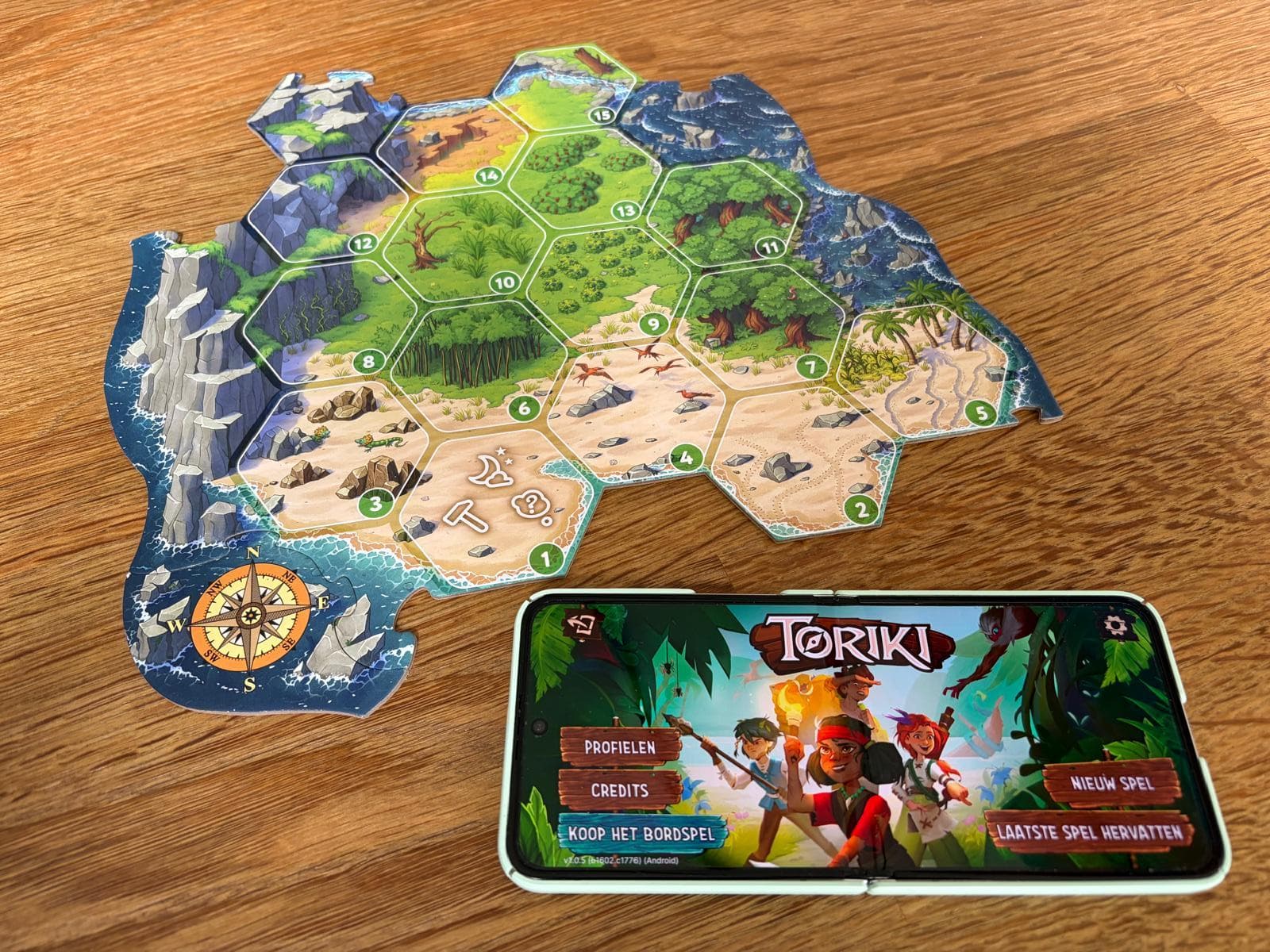
Tonieplay belongs to the first. So does Toriki, except Toriki is not screen-free at all. It is a board game with a mandatory companion app. The phone lies on the table. I read aloud, my son chooses where we go and what we craft. The mood music and the small magical moment when something is achieved make the island feel more adventurous than a guided storybook. The app enriches the board. It does not become the third player at the table; the people around the table are the playmates.
The trap is the AI teddy bear. There the toy becomes the playmate. I keep those teddies outside the door. I have not yet seen a version where the microphone and the cloud put me at ease, and even if one arrives I am not sure I want an always-available friend in the house. They have a brother for that ;)
Before it goes in the bag
Before I buy something, I think about my why.
- What gets replaced? A voice, an unlearned skill, a game master, a playmate, or mainly my attention for fifteen minutes?
- Do I want that trade-off today? An audio player in the car is not the same as one in the play corner. In bed the stimulation is different from the play corner.
- Would a screen do this better? Sometimes yes. We invent silly pictures on the laptop. We play Toriki with a phone beside the board. When we want something to stay behind, paper still beats a wipe-clean drawing tablet.
Screen-free is a marketing layer, not a category. The industry is shifting toward physical toys, and that means a lot of new KidTech will land on the market in the coming years. The good and the bad.
Have you already brought KidTech toys home?
Related articles
More articles on a similar topic.
Buying an AI teddy? Five privacy questions before it enters the bedroom (2026)
Read more →

Comments (0)
No comments yet. Be the first!
Leave a comment
Comments are moderated before they appear.