
The next smart toys won't need a screen
The most advanced AI of the future will not need a screen, because it behaves like toys with (local) physical awareness.
In short (~30 seconds)
- What: a look at screen-free smart toys (Stickerbox, Bitzee, LEGO Smart Play) and what I do and do not bring home.
- Privacy: interest in Edge AI (on-device) vs cloud toys; Stickerbox still not bought because it is one-way output.
- LEGO Smart Play: the SMART Brick is the engine; expansion packs without the base do nothing (~€70 base).
- Stance: not anti-screen; physical play for toddler/preschooler, laptop later for making and coding.
For clarity: I am absolutely not a parent who bans all screens at home. When we make digital things together, we simply open the laptop. There we invent the funniest AI pictures together and play computer games (who else still plays Freddi Fish and Putt-Putt with their kids?). And when the boys are a bit older I really want them to learn programming and creating behind a screen. But for a two-year-old and a four-year-old? At that age I am a big fan of physical play, with magnetic toys, the play bench, and coloured pencils.
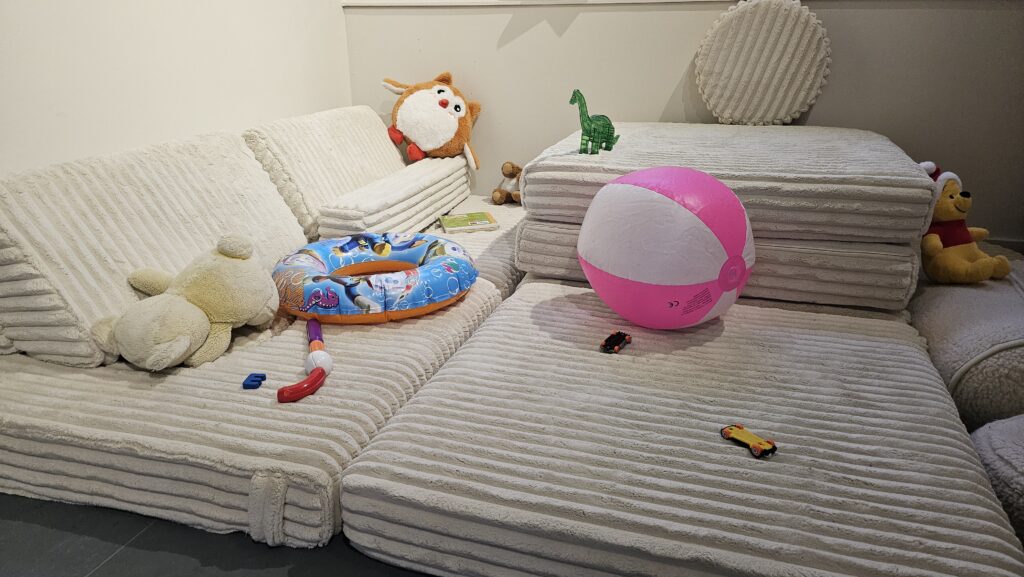
What strikes me lately is that the toy industry is starting to see this too. We are slowly moving away from toys that always need a linked iPad or other tablet. Technology is shifting to the background. I have a few striking developments on my radar that show what that physical play will look like soon.
The AI Stickerbox
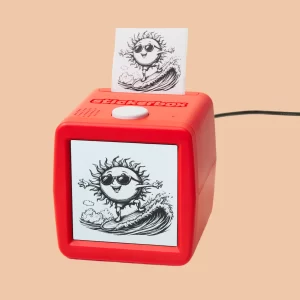
One of the devices I follow with great interest is the Hapiko Stickerbox. It is a compact, screen-free box with a thermal printer. Your child presses a big button, says what they want, and the AI immediately prints out a black-and-white sticker.
This concept appeals to me enormously: a beautiful experience that feels magical because you get a result straight away. Moreover the children can do it completely independently; they do not need me to get a print right away.
Still I have not brought it home yet. I am afraid I will miss the creative process. When my four-year-old comes up with a “rainbow t-rex unicorn” on the laptop and we get something even more absurd, we can laugh about it together and refine the prompt. With this box it is one-way traffic: what if it is not exactly what you want? Then you cannot adjust and refine it together anymore. What happens then to the creativity I want to bring into my house?
Somehow I also expect the Stickerbox will be used like this: within ten minutes my children have printed hundreds of unrecognisable black-and-white stickers that then end up on the living room floor. Possibly they try to steal their brother’s sticker while the device is printing and you end up with half an image. I fear that for the children it quickly becomes a fun gimmick that does not add much, or a device I use to prepare a certain game.
At this stage I find it much more fun via the laptop, where I can come up with the most varied pictures together with my children. In addition there is a considerable risk with the Stickerbox: the device is fully dependent on the servers of the company behind it for its intelligence. If that start-up pulls the plug or goes bankrupt in a few years, your device may suddenly stop working. What Hapiko does very neatly, by the way, is safeguard privacy via hardware consent. The microphone only listens when you physically press the button. Let go and the connection is broken.
The promise of Edge AI
Does the Stickerbox sound like something I want? Certainly, but I would rather wait for the next big step: the development of Edge AI. This means the AI model runs locally, directly on the chip of the toy itself. There is then no cloud server or wifi connection needed at all. That solves not only the problem of bankrupt servers but also offers the best privacy. I have good hope for a toy like this coming into existence, while my children are still young enough to really play with this. Until then I will keep following developments and not give in to a cheaper, less safe alternative in the meantime. Installing Edge AI myself is, however, again a big temptation.
The Tamagotchi makes a comeback
My children are still very young, but I am secretly looking ahead to the phase that comes after. Around five years old their motor skills are developed enough that they can operate devices increasingly well. They want to game together and have a lot of interest in interaction, like their own digital companion to care for, but a game console or smartphone of their own is still too early. On social media and platforms like Amazon you now see a wave of interactive ‘tech pets’ passing by that try to fill that gap.
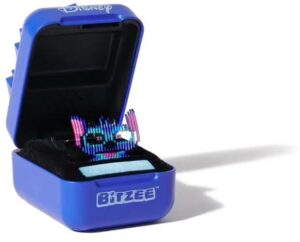
The best known of those is the Bitzee costing around €32-38. Maybe you have already seen it in the toy catalogue: a purple plastic box you flip open. It looks like a Tamagotchi, that is really floating in the room. Technically it is a kind of mini screen on a flexible strip that vibrates up and down very fast with LED lights, creating a kind of hologram. The idea is that your child tilts, swipes, and presses his figure down to pet the creature. There are now complete variants with Disney characters or a ‘dog kennel’ where fifteen different puppies live.
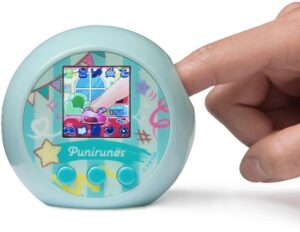
A similar gimmick is the Punirunes, where you stick your finger in a hole on one side of the device to ‘pet’ a digital creature on the screen. This appeals to me somewhat less.
If I base it on how much my toddler wants to be boss of the nappy bin and my oldest boss over everything else in my house, I can very well imagine they would be completely in their element if they got the responsibility to feed and play with a creature for a few days.
The big advantage of this kind of closed system is that it is a very controlled intermediate step. Your child gets that highly coveted interaction, but is not stuck with an online internet connection, algorithms that hijack attention, or sneaky in-app purchases (and you are not tied to a pet). It is technology with a clear off button. The chance exists (knowing my children a very big chance so I am not buying this) that the box disappears forever at the back of the toy cupboard after a few weeks. The fact remains that the first step toward interaction with holograms has been taken.
But let us not forget reality here either. A Punirunes, where you stick your finger in a hole to ‘stroke’ a virtual creature? How do you come up with it; could there not be a spot on the outside? That hole becomes a hygienic nightmare within three days because of all that poking with snotty or sticky fingers.
The pitfall of the new smart LEGO
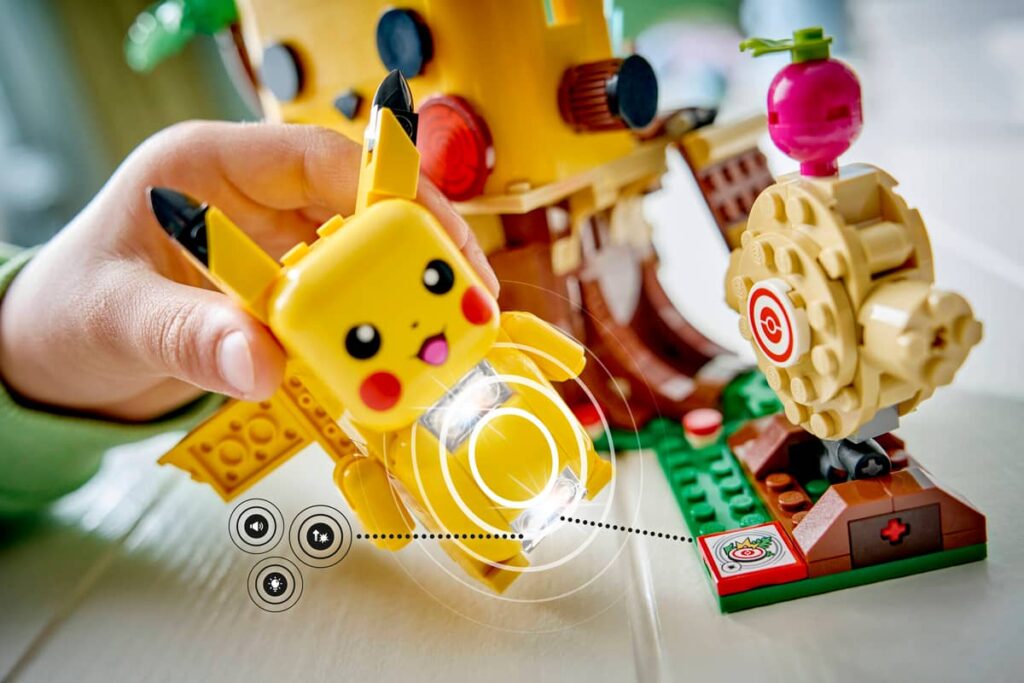
Another big screen-free development is the new Pokémon SMART Play line from LEGO, coming out on 1 August 2026 (but not immediately in the Netherlands). In the past you had to awkwardly scan ‘interactive’ LEGO with your phone camera, but now the technology is built into the bricks themselves.
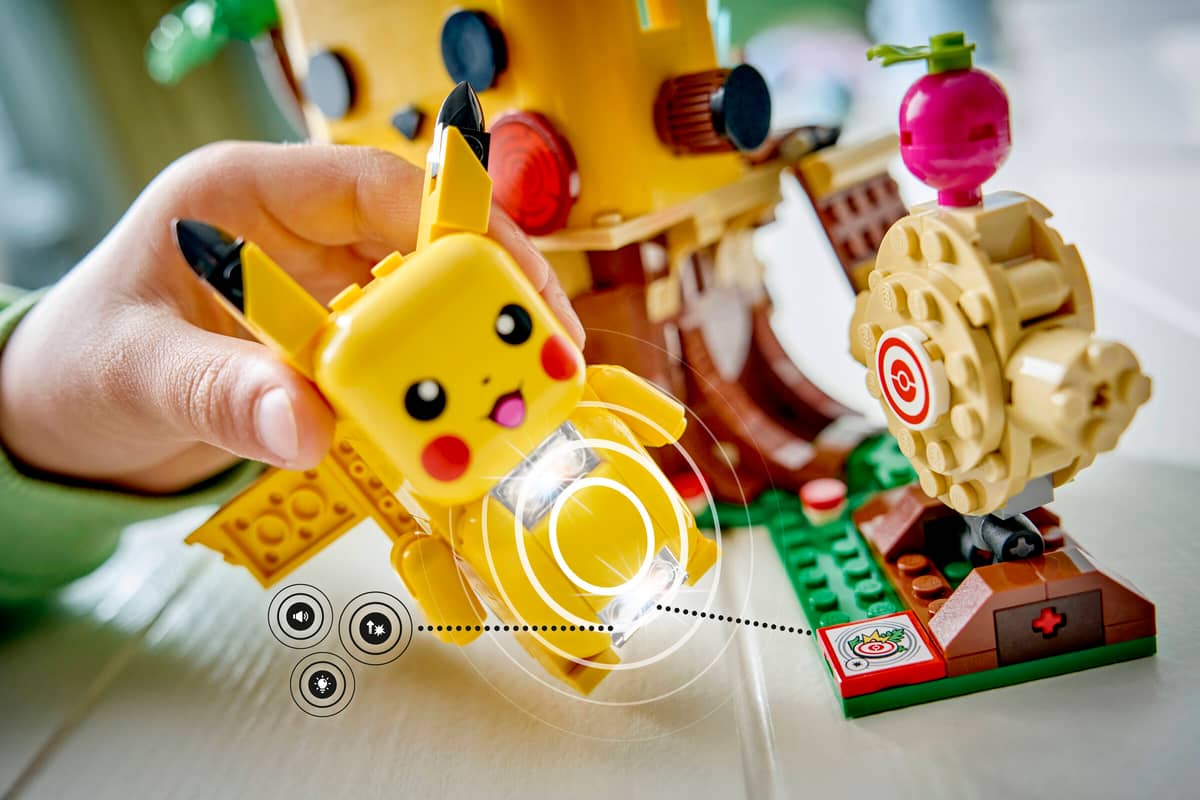
This really opens up a whole new kind of play. The bricks and figures contain invisible sensors. As soon as you physically connect specific builds or place figures against each other, the system reacts directly. Sound effects play and the bricks light up, depending on which combinations you build. The consequences are tangible and audible. No screen is needed at all to bring the blocks to life.
But watch out, there is something you need to know before you put this on the wish list. The whole interactive system relies on one fairly pricey ‘SMART Brick’: the hub brick of every set. When you only ask for the cheaper expansion sets (around 15 euros) for a birthday party, that box only contains passive bricks with tags inside. Without the smart hub brick from the base set those expansions do absolutely nothing and you are actually giving plain LEGO as a gift. So always start with the right base set, like the Training House with Pikachu for €69.99.
What does the future bring?
There are so many incredible toys on the horizon. Maybe I secretly find most of them even more fun than the children themselves; I would have found this fantastic as a child. The favourite toy of my boys is ultimately never quite what I expected beforehand.
But when we let go of screens at a young age and technology shifts invisibly to the background, we will really start to see interesting things. Imagine: your children’s teddy bear actively learns from the way they play. Without a screen, but with a warm voice or soft light. The bear hears that your toddler gets frustrated because his magnetic blocks keep falling over. The bear then reacts not with a pre-programmed phrase, but with a situation-based play tip: “Try putting the red block at the bottom!”
The most advanced AI of the future will not need a screen, because it behaves like a toy with (local) physical awareness.
Before cloud-connected toys enter the bedroom, I compare them with offline audio players and the bedroom check.
Related articles
More articles on a similar topic.
Buying an AI teddy? Five privacy questions before it enters the bedroom (2026)
Read more →
Comments (0)
No comments yet. Be the first!
Leave a comment
Comments are moderated before they appear.