
Multi-agent orchestration at the kitchen table: why parenting is really dynamic routing
By day I am already a kind of multi-agent system: I design logic, delegate to subagents, and choose which model gets which piece of work. At home, two children sometimes show up for the same job. Day to day, I ask my four-year-old to do something my two-year-old cannot handle, and the other way around. That is not favouritism. It is routing.
In short (~30 seconds)
- What: an essay on asymmetric capabilities at home, parallel to how you ask people and AI agents different questions.
- Who it’s for: tech parents who see MCP and orchestration at work; parents of toddlers and preschoolers who want to move beyond ‘share fairly’.
- Core idea: rules are state of the moment. Tomorrow a child or model may be capable of more than today.
At work, a task splits itself naturally. One agent analyses, another writes code, a third reviews the output. I am the orchestrator: I decide who gets to do what, when something needs a rerun, and when a cheaper model is enough. At home it looks different, but the logic feels surprisingly similar.
Equal treatment is not equal division
‘Share fairly’ sounds just until you notice that fairness and symmetry are not the same thing. A four-year-old can take in a rule, wait a moment, and ask follow-up questions. A two-year-old lives in snapshots: now, immediately, again. Handing out the same task does not lead to equality. Sometimes a task or toy simply belongs to one child; they are allowed to claim it.
Capability is not a fixed sticker, but processing capacity differs sharply. My preschooler can follow a longer story and break a big task into smaller ones. My toddler learns through repetition and short bursts. If I ask the toddler what I ask the preschooler, I do not get a ‘difficult’ child; I get a meltdown. If I ask the preschooler to do what the toddler can handle, he gets bored or takes over entirely.
Different blades for different hands
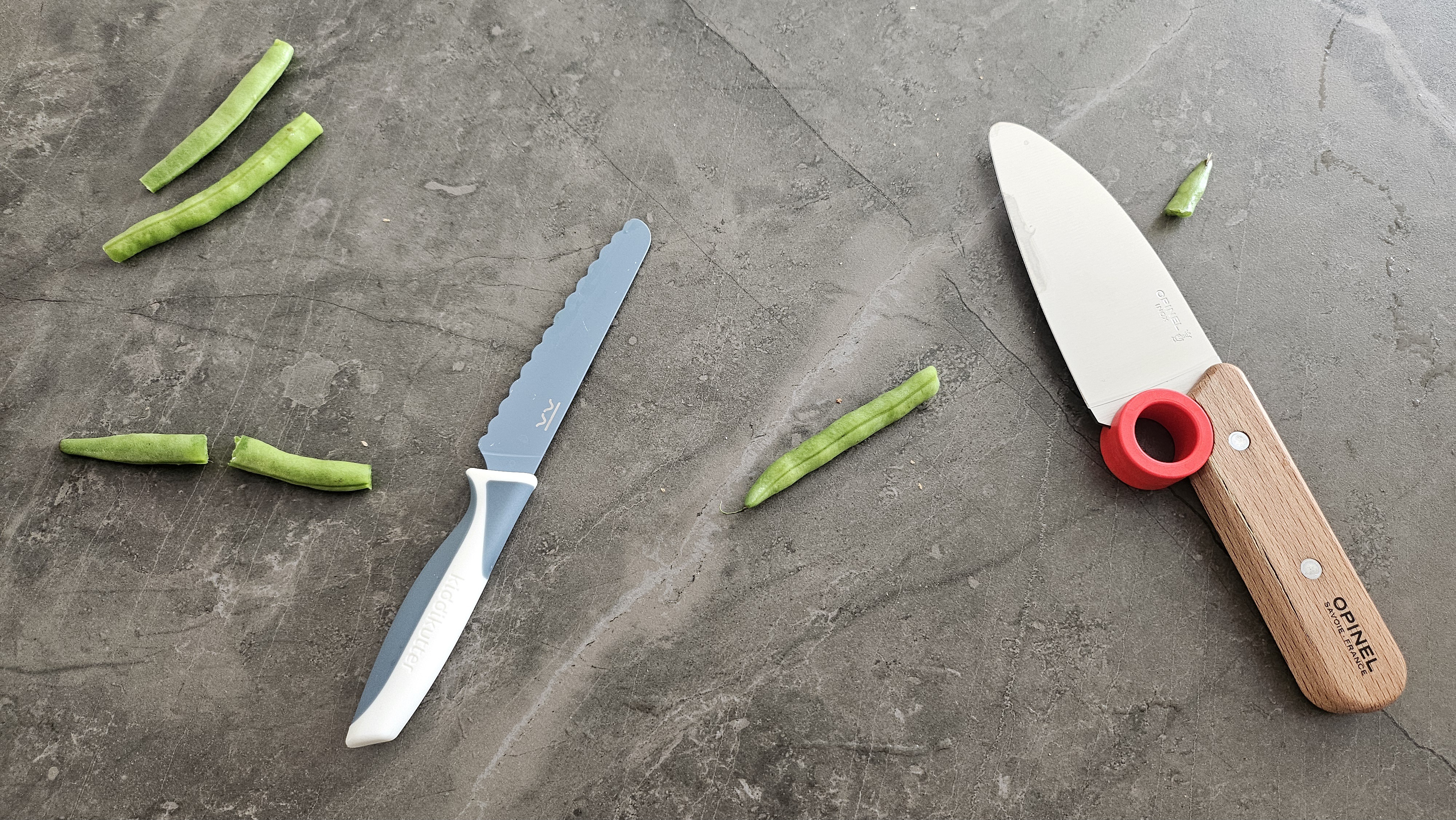
My preschooler cuts vegetables with a children’s kitchen set (Opinel Le Petit Chef) or a real potato peeler under supervision. My toddler gets a Kiddikutter and enthusiastically saws his banana, cheese or green beans into pieces. Not the same task, but the same ritual of helping. Where one was allowed to stir a hot pan for the first time at fourteen months, it took the other well over a year longer.
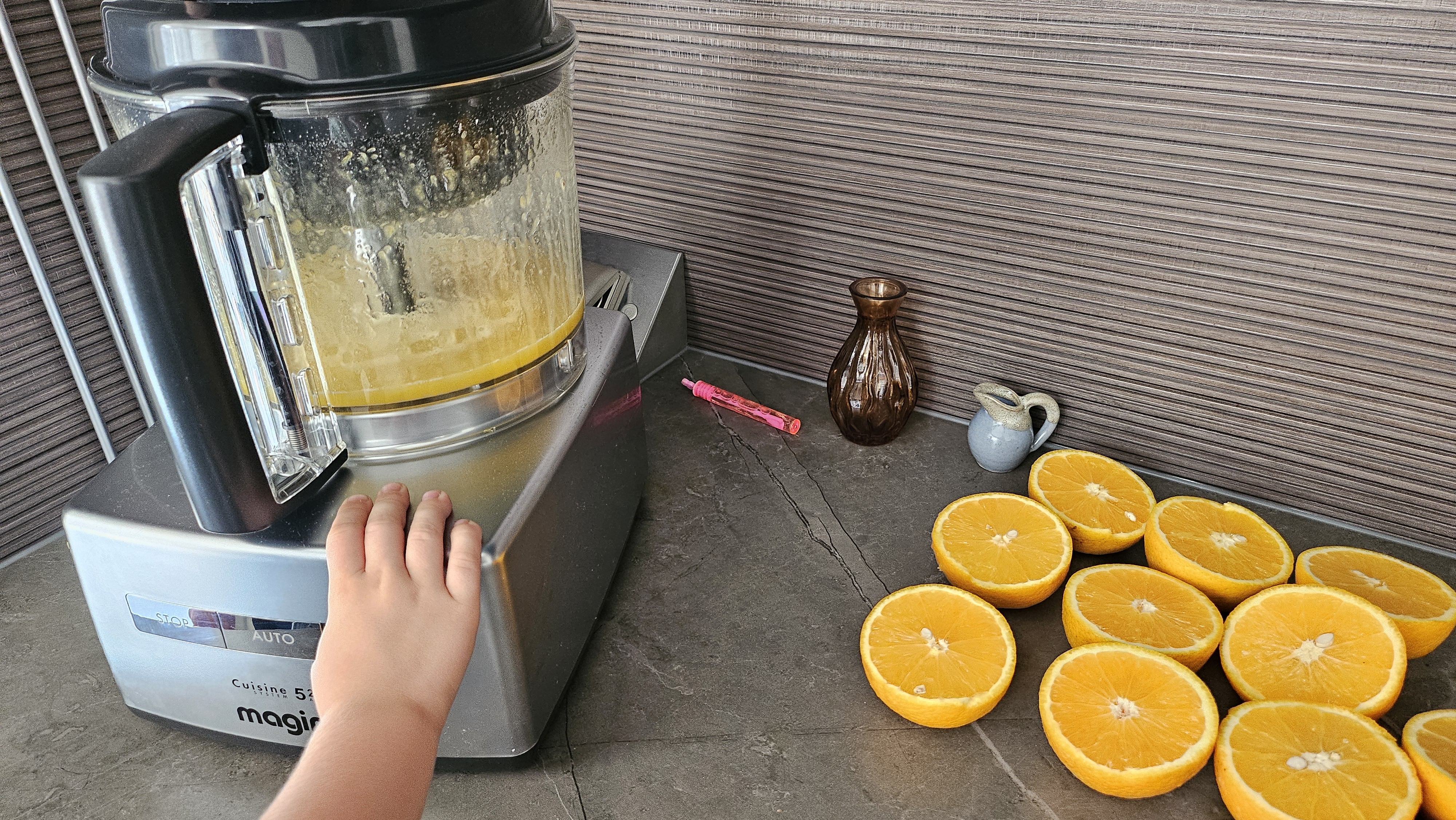
Every weekend my toddler and I press orange juice with the Magimix. For him, that is his job. If he gets skipped or I do not wait for him, he is angry. My preschooler joined in when it was new; the novelty is gone, so he does not want to do it every week. In that sense they are different from AI agents. Where the toddler delivers equal, reliable results every time, the preschooler tests my reaction speed by wanting to do everything as fast as possible (and perfectly), and sometimes presses the button too early.
That is not randomness; it is capability matching. Adults do this intuitively: you do not ask your GP for bread, or your baker for blood values. Children learn that routing implicitly. For comfort, they go to whoever they trust; ‘How does this work?’ goes to whoever has time to explain. Not every player in the system needs to be able to do the same things.
No single model is the default
If you throw everything into one AI chat window, you get mediocre answers. At work and in Cursor I choose my tools deliberately: heavy frontier models for architecture, fast composer or flash variants for repetitive edits, ChatGPT or Leonardo for visual work, and Gemini for co-creating with my son. For brainstorming I often reach for an Anthropic model; my brain and archive live in Obsidian, and Cursor deploys subagents there.
At home I run the same capability matching. I pay in patience, not tokens.
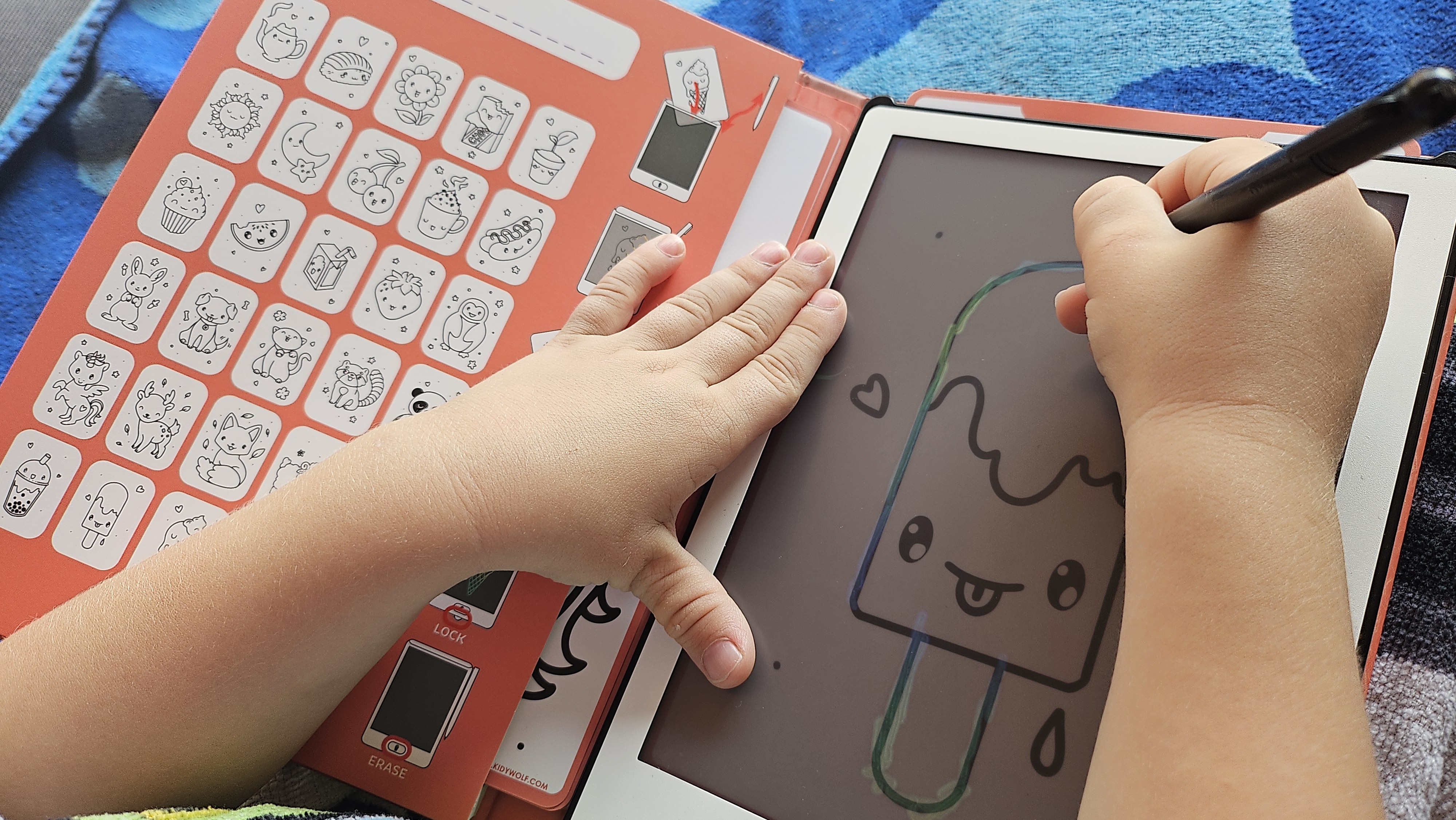
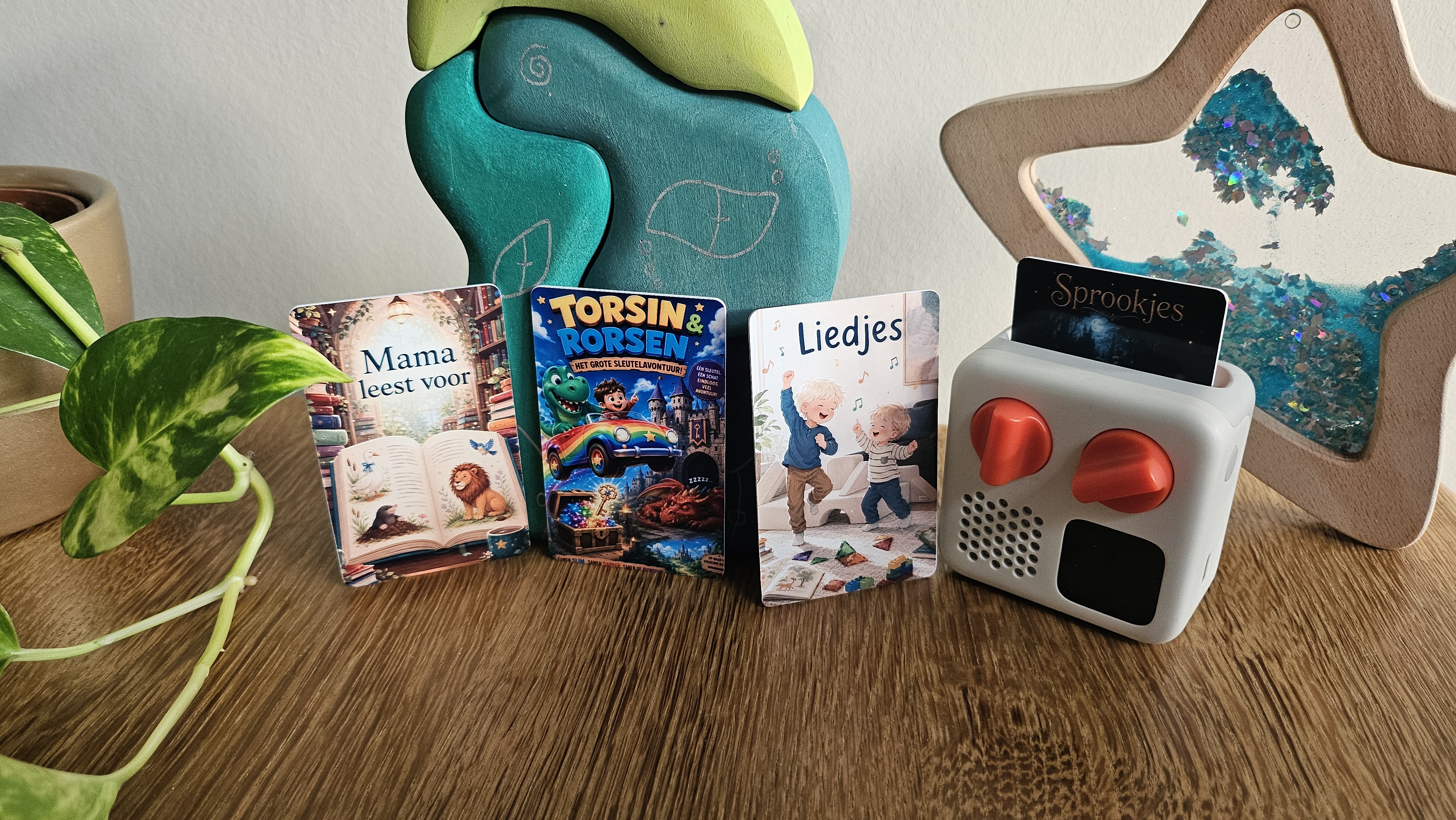
I do not need to rebuild a datacentre at home. I do want my children to understand that ‘the AI’ is not one thing. Soon there may be a smart plushie, an AI sticker box or a smart drawing tablet. A sticker generator is not a listening companion. A pet AI that always says yes is not a doctor. Ask out loud: what can this AI do, what can it not, and what am I concretely asking it for?
Privacy belongs in the same conversation: alongside your name, school and photos, your voice, experiences and dreams now belong on that same list. Not everything that answers gets to know everything.
Working in parallel and co-creating
Orchestration is not opening a chat window and waiting; it is actively selecting and steering. When we make a read-aloud story together or set up a scavenger hunt, we work in parallel where we can and serially where we must.
My preschooler adds ideas only he could come up with. A faster model helps us structure the plot, ChatGPT generates the illustration, and with Gemini we try to add music or moving images. With a topic from my toddler we do the same.
- What do you not outsource? The unique idea that comes from your child’s head. And the thing that you love doing the most.
- What do you outsource? Structure, spelling in speech bubbles, and thinking up variants when inspiration runs dry. And tasks that drain your energy.
AI remains a tool that follows your instructions, not a replacement for your own input.
Rules for now, not forever
Months ago my toddler wanted nothing to do with an activity; now he wants to join in, up to a point. My preschooler had grown tired of something and then, out of nowhere, finds a new angle.
The AI field works exactly the same way. Fixed workflows go stale as soon as one step gets automated. The answer is flexible rules:
- Not: “You are not allowed to cut with this”, but: “Today this knife; next month we reconsider.”
- Not: “For pictures we always use tool X”, but: “This month this model works best; later we test again.”
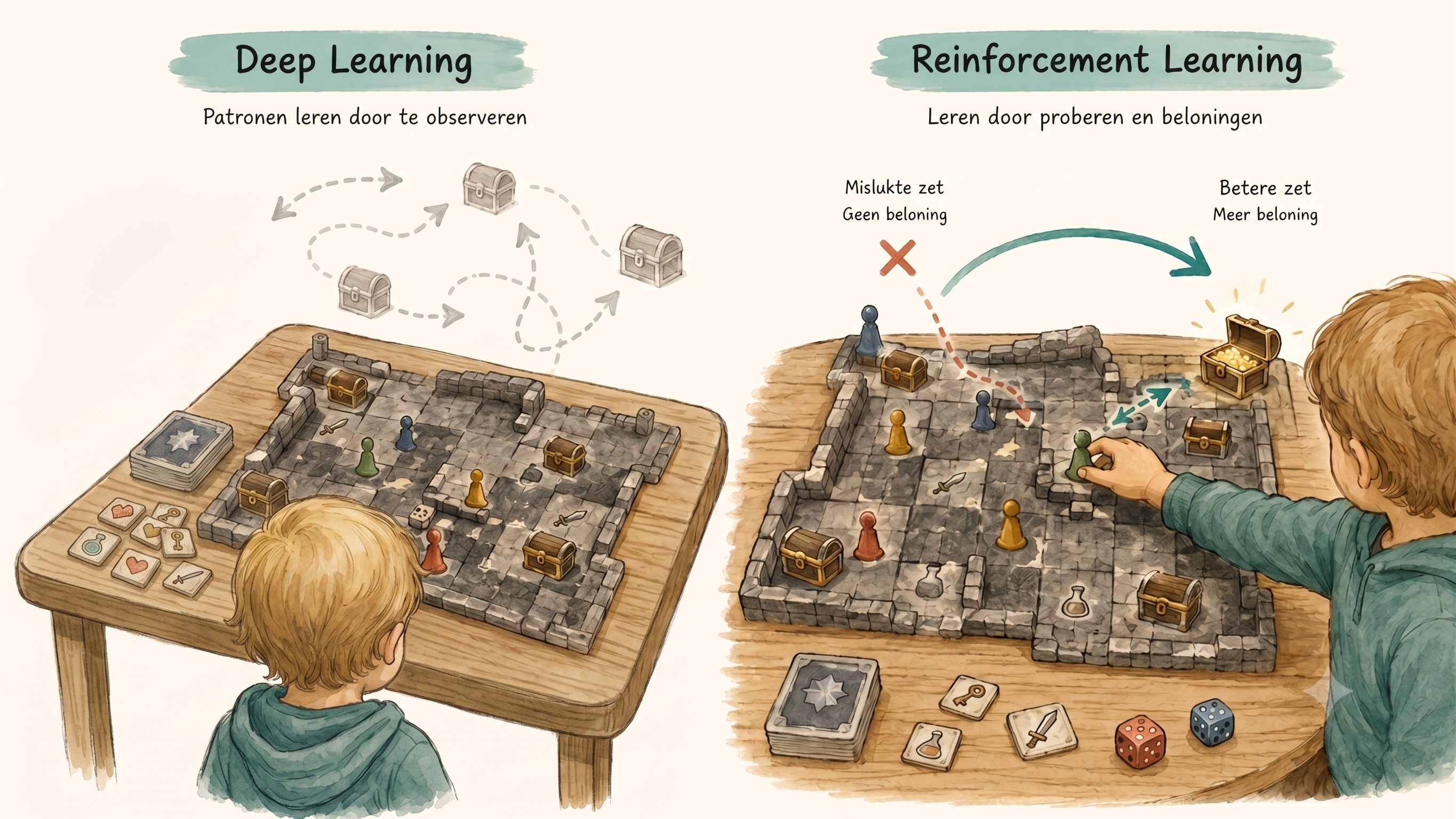
That also applies when nothing seems to be going on. When my toddler sits quietly on my lap watching a board game, he is not actively participating. But just like Deep Reinforcement Learning, his internal model picks up patterns through countless hours of ‘watch time’. Until one day, step by step, he beats us at a strategic board game.
Conductor, not passenger
Stay informed, but do not drown in release notes. It is about rhythm: every few months, revisit which model and which kitchen tool fits the current state.
Also ask where you yourself have strong skills. I like writing and shaping the flow of a story myself; AI challenges me but does not replace my voice. I did not inherit drawing skills; there a model may lift me to an acceptable level. My oldest son already sees the difference between a picture from Gemini Storybook and ChatGPT. He also sees that I do some things myself and sometimes ask for help.
Your output matches the thought that went into the input. A generic prompt gives a generic answer. With your own words, your own steering and a spontaneous thought from your child, the result becomes special.
Children who watch while you mix tools learn implicitly not to ask everything of everyone. And I learn that I need to give my children a fresh chance every month to try something they could not do yesterday.
How comfortable do you feel with the different AIs?
Related articles
More articles on a similar topic.

Comments (0)
No comments yet. Be the first!
Leave a comment
Comments are moderated before they appear.